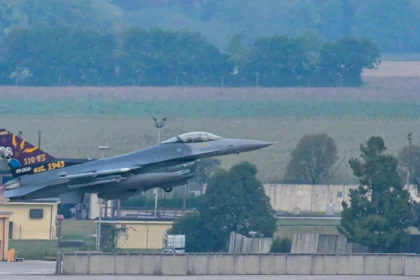


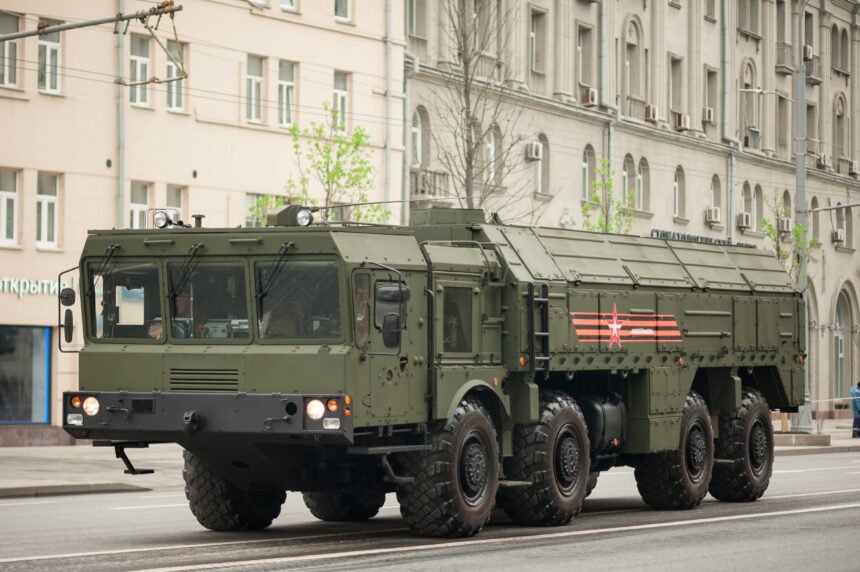
Kaliningrad is Russia’s Baltic semi-exclave, wedged between NATO members Poland and Lithuania and cut off from mainland Russia by land. It hosts the Baltic Fleet’s main base and long-range missiles. In late September and early October 2026, Moscow framed any attempt to isolate it as grounds for using “all weapons.” NATO says no blockade is planned.
- Key takeaways
- Contents
- What is Kaliningrad?
- How the geography works
- Kaliningrad at a glance
- From Königsberg to a NATO lake
- Military posture: asset and vulnerability
- The Suwałki Gap
- Why the nuclear rhetoric now
- Strengths and limitations (for each side)
- Common questions
- Is Kaliningrad part of Russia?
- Does Russia keep nuclear weapons there?
- Is NATO planning to blockade Kaliningrad?
- Why do people mention the Suwałki Gap in the same breath?
- Could Europe reinforce the Baltics without the Gap?
- Sources
Key takeaways
- Kaliningrad is a Russian territory on the Baltic with no land border to the rest of Russia. It borders Poland and Lithuania and is about 360 km from the Russian mainland (International Crisis Group).
- The Suwałki Gap, a roughly 65 km Polish-Lithuanian land corridor between Kaliningrad and Belarus, is NATO’s only overland route to reinforce Estonia, Latvia and Lithuania (ICG; BBC).
- The region hosts Russia’s Baltic Fleet headquarters and ice-free port access, plus Iskander missiles that open sources treat as nuclear-capable (El País; ICG).
- President Vladimir Putin said Russia would put “all arms” on the agenda if Kaliningrad came under direct attack (Valdai remarks reported 1 October 2026 by the BBC).
- Admiral Giuseppe Cavo Dragone, Chair of NATO’s Military Committee, told la Repubblica on 14 October 2026 that NATO “is not preparing any blockade of Kaliningrad” and called that threat a scenario that does not exist.
What is Kaliningrad?
Kaliningrad Oblast is Russia’s westernmost region. It sits on the Baltic Sea between Poland and Lithuania. It is a semi-exclave: Russian territory that does not share a land border with the rest of the Russian Federation. Overland travel to mainland Russia has to cross other countries’ territory, mainly via Lithuania in peacetime rail and road transit, or go by sea or air.
Until 1945 the area was German East Prussia, with Königsberg as its capital. After the Second World War the Allies agreed the Soviet Union would keep the territory. The German city was rebuilt as a Soviet, then Russian, city under the name Kaliningrad. The International Crisis Group puts the population at about one million and the land area at roughly half the size of Belgium.
For Moscow, Kaliningrad is an advanced Baltic foothold: the main base and command centre of the Russian Baltic Fleet, and Russia’s only Baltic port that is widely described as usable year-round. For NATO, it is the piece of Russian territory that sits next to the land corridor the alliance needs to reinforce the Baltic states, and a base for missiles, air defence and electronic warfare that can reach deep into northern and central Europe.
How the geography works
Three facts drive almost every Kaliningrad argument.
1. Isolation from mainland Russia. There is no Russian land bridge. Peacetime freight and passengers rely on transit agreements through Lithuania (and historically routes involving Belarus or Latvia). In a crisis, sea and air links would matter more, and both would run through a Baltic Sea that is now largely bordered by NATO states.
2. Proximity to NATO. Poland and Lithuania are both EU and NATO members. Finland joined NATO in 2023 and Sweden in 2024. Crisis Group notes that the Baltic is now largely surrounded by Allies, with Kaliningrad’s coast and Russia’s mainland shore between Estonia and Finland as the main Russian exceptions.
3. The Suwałki Gap sits next door. Between Kaliningrad and Belarus lies a short stretch of Polish and Lithuanian territory. That corridor is the only continuous land link from Poland and the rest of NATO Europe to Lithuania, Latvia and Estonia. Close it, and Baltic reinforcement by road and rail becomes far harder.
Those three points explain why a small oblast keeps appearing in nuclear rhetoric, defence plans and cable-protection missions such as Baltic Sentry.
Kaliningrad at a glance
| Item | Detail | Source |
|---|---|---|
| Political status | Russian oblast (semi-exclave on the Baltic) | ICG |
| Borders | Poland, Lithuania, Baltic Sea | ICG; El País |
| Distance to mainland Russia | About 360 km | ICG |
| Population (approx.) | About 1 million | ICG (May 2026) |
| Area (approx.) | Roughly half the size of Belgium | ICG |
| Naval role | Main base / HQ, Russian Baltic Fleet; ice-free port access | El País; ICG |
| Notable strike systems (open source) | Iskander-M brigade (~12 launchers reported from 2018); anti-ship missiles; air defence including S-400 historically reported | ICG; El País |
| Nuclear status | Missiles are nuclear-capable in design; warhead presence not publicly confirmed. Russia says none are deployed there (per ICG) | ICG |
| Suwałki Gap | ~65 km Polish-Lithuanian corridor between Kaliningrad and Belarus; only land link to the Baltic states from Poland | ICG |
| NATO land presence nearby | US-led Forward Land Forces battlegroup in Poland; German-led battlegroup in Lithuania (nine FLF battlegroups on the eastern flank overall) | NATO |
Compiled by GRYD on 14 October 2026. Missile and troop figures are open-source assessments, not Russian official disclosures.
From Königsberg to a NATO lake
- 1945: Potsdam arrangements leave the Königsberg area with the Soviet Union; it becomes Kaliningrad.
- 1991 onward: After the USSR dissolves, Kaliningrad remains Russian while Poland and the Baltic states move toward the EU and NATO.
- 1999-2004: Poland (1999) and the Baltic states (2004) join NATO, placing Kaliningrad next to Allied territory.
- 2014-2017: After Crimea’s annexation, NATO creates an enhanced Forward Presence; battlegroups deploy in Estonia, Latvia, Lithuania and Poland by 2017.
- 2016-2018: Open sources report Iskander deployments and related storage modernisation in Kaliningrad (El País; ICG).
- 2022: Russia’s full-scale invasion of Ukraine; NATO doubles eastern battlegroups and later agrees to scale some to brigade size when required. Lithuania’s 2022 transit limits on sanctioned goods briefly raise “blockade” language in Moscow, though El País reported no supply crisis on the ground.
- 2023-2024: Finland and Sweden join NATO, tightening the Baltic geography around Kaliningrad.
- January 2025: NATO launches Baltic Sentry to protect undersea infrastructure.
- September 2025: After drone and aircraft airspace incidents, NATO launches Eastern Sentry.
- Late September to 1 October 2026: Russia warns over Kaliningrad isolation; Putin says all weapons would be on the agenda in a direct attack (BBC).
- 14 October 2026: Cavo Dragone says NATO is not preparing any Kaliningrad blockade (la Repubblica).
Military posture: asset and vulnerability
As an asset, Kaliningrad lets Russia project naval, missile and air-defence power into the Baltic. ICG summarises a mix of Iskander-M, anti-ship missiles (including Kh-35 and Oniks families in upgraded forms), layered air defence, and early-warning radar. El País notes Lithuanian intelligence concerns about GPS interference and electronic warfare launched from the exclave. In a crisis, those systems could complicate NATO air and sea movement and threaten targets far inland.
As a vulnerability, the same geography that makes Kaliningrad a dagger also makes it hard to sustain. There is no secure land corridor from mainland Russia. A long war would force Moscow to supply the oblast by sea and air under NATO surveillance. Crisis Group reports that ground forces assigned to Kaliningrad shrank sharply after 2022 as units went to Ukraine (an anonymous European official cited an roughly 80% drop in ground troops), even if air and naval elements held up better. El País similarly reports British intelligence findings that some S-400 systems were moved toward the Ukraine fight.
That mix (strong missiles, thinner ground garrison, awkward logistics) is why analysts describe Kaliningrad as both fortress and hostage. For a wider look at how NATO now talks about stopping a land attack, see GRYD’s analysis of the alliance’s “block, blunt, break” theory of victory.
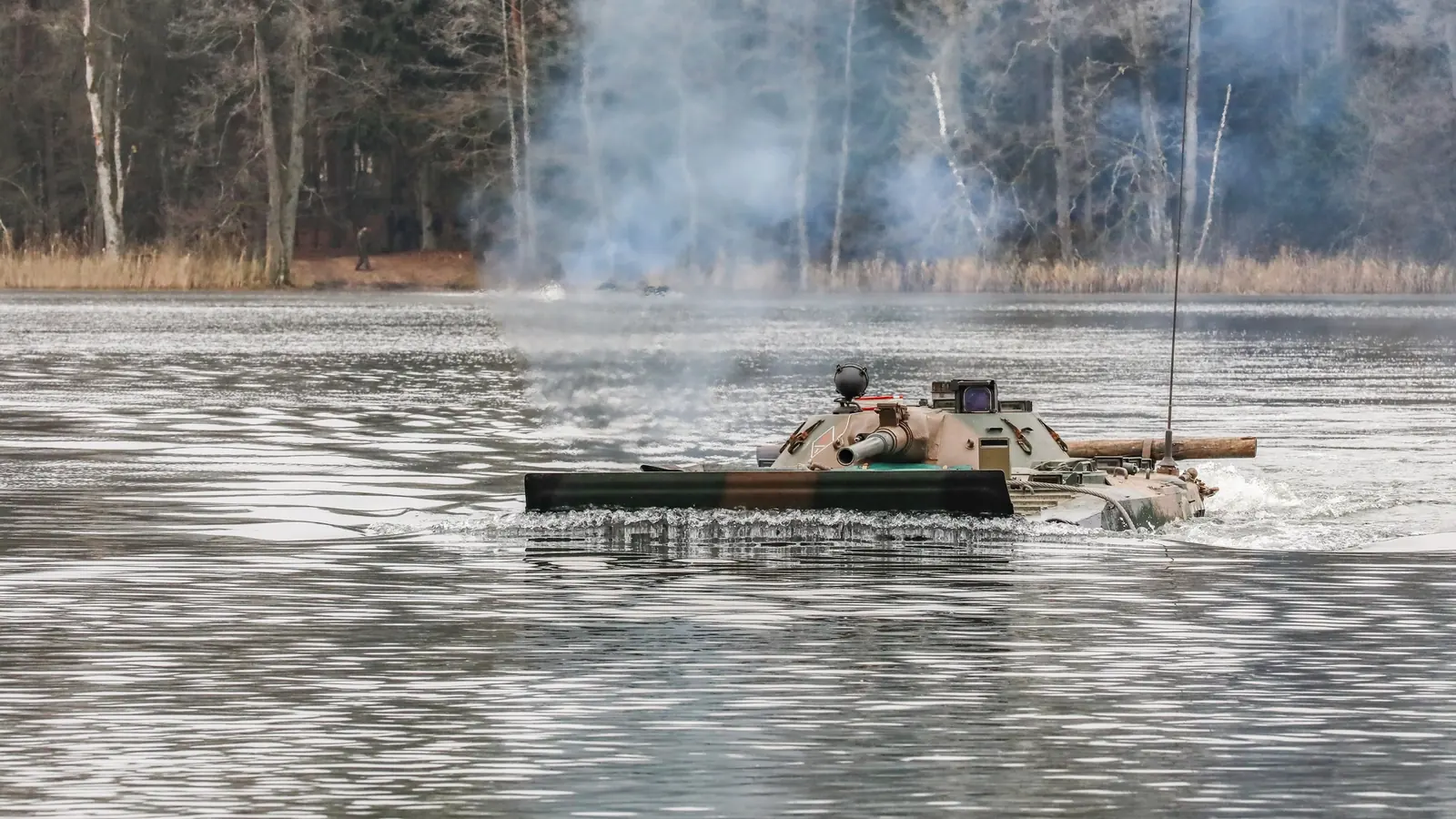
The Suwałki Gap
The Suwałki Gap (also spelled Suwalki) is not a mountain pass. It is the short stretch of Polish-Lithuanian border country that separates Kaliningrad from Belarus. Crisis Group puts the relevant corridor at about 65 km. It carries a limited road and rail network through forests and wetlands.
For NATO, the Gap is the land umbilical to the Baltic states. Western planners have long worried that Russia, operating from Kaliningrad and/or via Belarus, could try to cut it early in a conflict so that Estonia, Latvia and Lithuania would depend on sea and air reinforcement under missile and air-defence threat. The BBC notes the same fear in its Kaliningrad coverage: that Russia might use the short distance between the exclave and Belarus rather than trying to invade Kaliningrad itself.
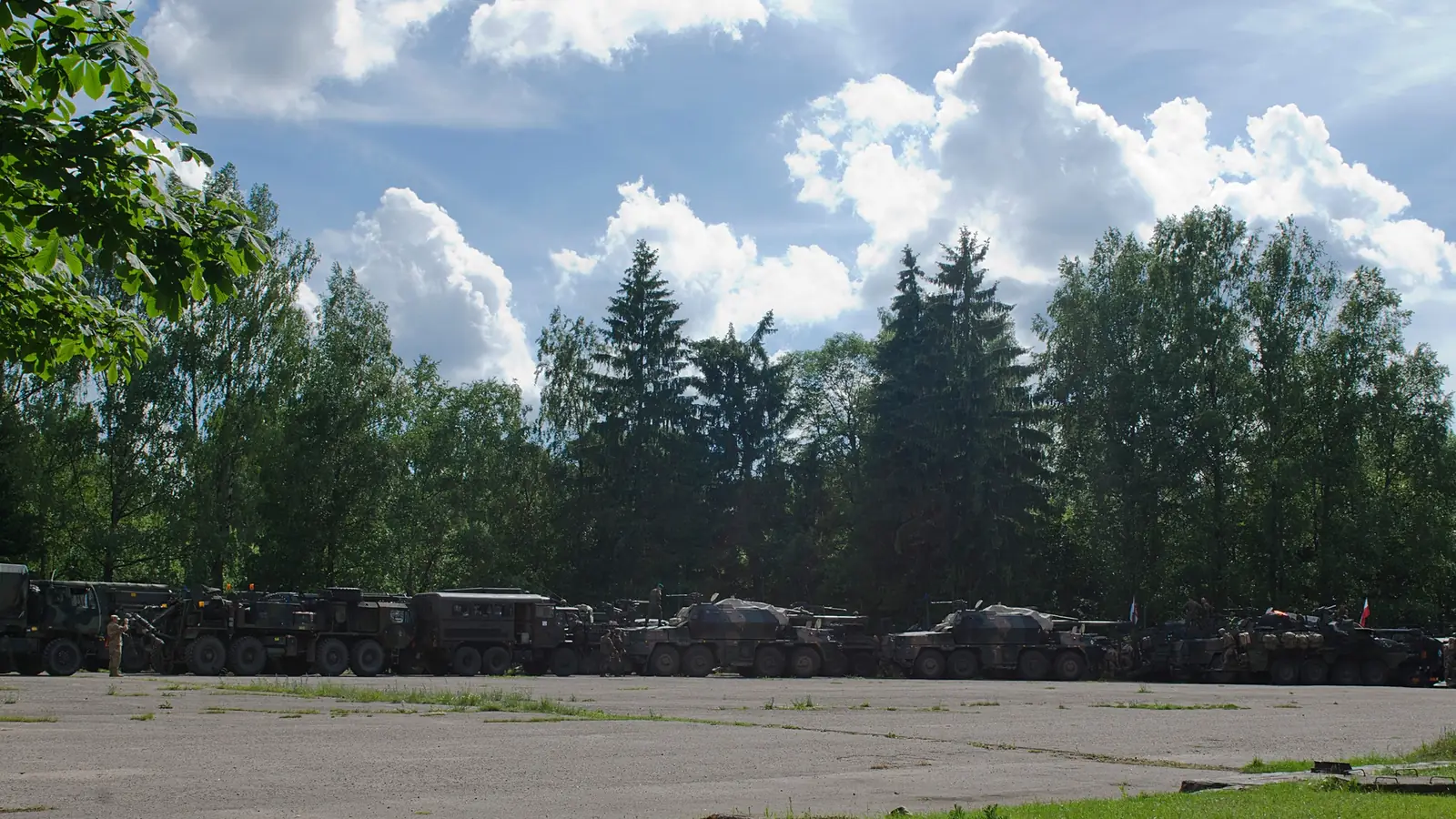
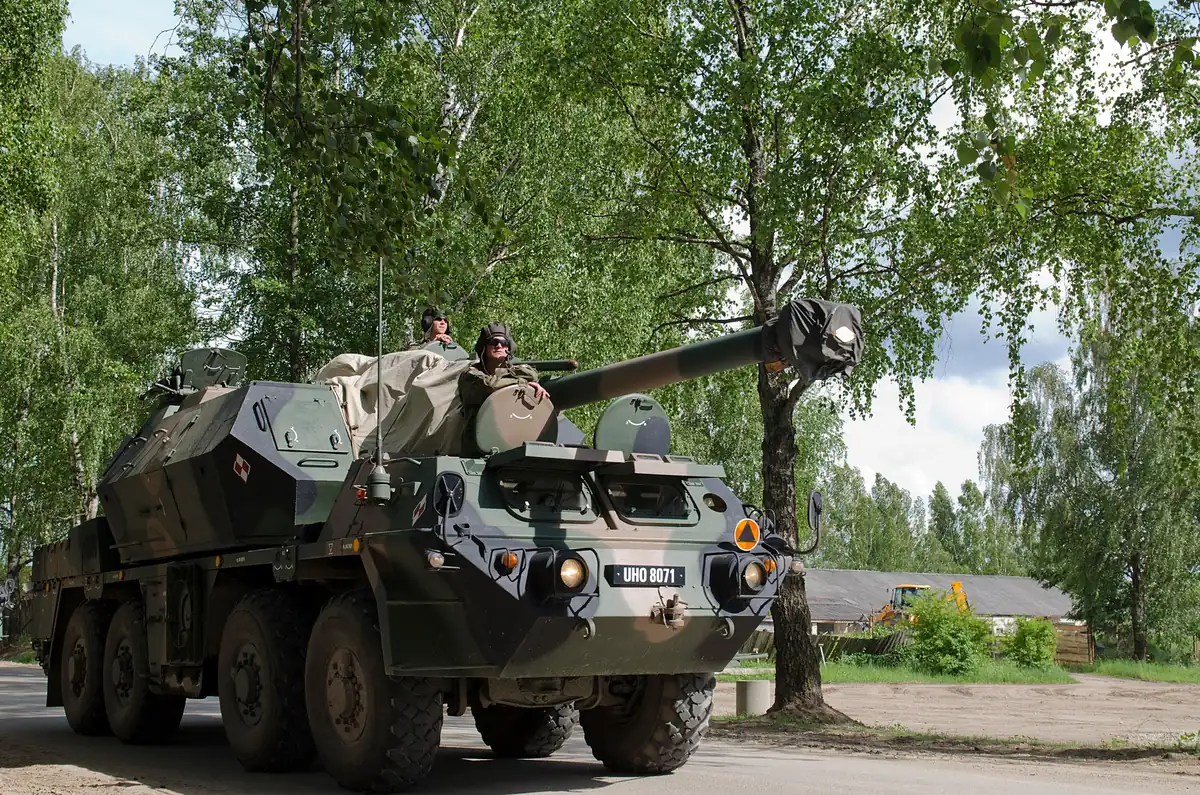
NATO’s answer since 2017 has been forward presence on both sides of the corridor: a US-led battlegroup in Poland and a German-led battlegroup in Lithuania, now framed as Forward Land Forces among nine eastern-flank battlegroups. Allies have also rehearsed Gap crossings in exercises such as Saber Strike. The Gap is therefore less a secret weak point than a known planning problem that shapes roads, stockpiles, air defence and political messaging.
Why the nuclear rhetoric now
In late September 2026 Russia accused NATO of preparing to isolate Kaliningrad. Putin, speaking at the Valdai forum, said that if there were a direct attack on the Russian Federation, “in this case we are talking about Kaliningrad but possibly some other territories,” then “all arms at the disposal of our country” would “inevitably and immediately be on the agenda” (BBC paraphrase of the remarks, 1 October 2026).
NATO’s public reply has been consistent: the alliance is defensive; its exercises are not aimed at Russia; nuclear threats are unhelpful. On 14 October, Cavo Dragone went further in an on-the-record interview: “NATO is not preparing any blockade of Kaliningrad. This is a threat built around a scenario that does not exist, designed to intimidate and divide.”
The timing sits beside other Baltic friction: airspace incidents near the exclave, hybrid pressure across Poland and the Baltics, undersea infrastructure worries, and NATO’s Steadfast Noon nuclear deterrence exercise beginning in Italy on 13 October. None of those prove a planned blockade. They do show why Kaliningrad is useful for signalling. Nuclear language raises the perceived cost of any Allied action near the exclave, including sanctions enforcement or naval activity Moscow chooses to portray as encirclement.
For Europe’s wider dependence on US military power in such scenarios, see Can Europe survive without the USA?. On the sensor and jamming fight that Baltic air and sea operations now assume, see The invisible battlefield: electronic warfare.
Strengths and limitations (for each side)
Russia’s strengths: geographic depth into the Baltic; long-range conventional (and potentially nuclear) strike options; ability to threaten NATO reinforcement routes; political value as a tripwire for nuclear rhetoric.
Russia’s limitations: no land bridge; garrison reduced by the Ukraine war; dependence on transit politics in peacetime; a Baltic Sea whose shoreline is now mostly Allied.
NATO’s strengths: Finland and Sweden in the alliance; forward battlegroups in Poland and Lithuania; Baltic Sentry and Eastern Sentry for infrastructure and airspace vigilance; a much larger combined economy and industrial base if political will holds.
NATO’s limitations: the Suwałki Gap remains a narrow land corridor; striking Kaliningrad in a war would mean striking Russian territory, with escalation risks both sides understand; hybrid attacks below the Article 5 threshold are hard to deter with battlegroups alone.
Neither side’s map fear is imaginary. Crisis Group’s May 2026 briefing is useful precisely because it shows mismatched threat perceptions: Moscow obsesses over blockade and seizure of the exclave; NATO obsesses over a Gap cut and a Baltic fait accompli. Those fears can reinforce each other even when neither capital wants a war.
Common questions
Is Kaliningrad part of Russia?
Yes. It is a Russian oblast. Its separation from the mainland is geographic, not legal. An attack on Kaliningrad would be an attack on Russian territory under Moscow’s framing, which is why Putin links it to “all arms.”
Does Russia keep nuclear weapons there?
Open sources say Iskander systems deployed in Kaliningrad are nuclear-capable, and some Western reporting has pointed to storage-site modernisation. ICG notes that Russia says it has no nuclear weapons deployed there. Public confirmation of warheads on site is lacking. Treat capability and deployment as separate questions.
Is NATO planning to blockade Kaliningrad?
NATO’s Military Committee Chair said on 14 October 2026 that no such blockade is being prepared, and that the scenario does not exist. Secretary General Mark Rutte has said Allied exercises and activities do not threaten Russia. Claims of an imminent NATO blockade should be treated as Russian political messaging unless primary Allied documents say otherwise.
Why do people mention the Suwałki Gap in the same breath?
Because Kaliningrad and Belarus sit on either side of the only land corridor to the Baltic states. The Gap is the logistics problem; Kaliningrad is the Russian territory that makes that problem sharp.
Could Europe reinforce the Baltics without the Gap?
By sea and air, yes, in principle. In practice, Kaliningrad-based missiles and air defences are designed to make those routes contested. That is why Allies invest in air defence, stockpiles and forward forces rather than assuming the Gap will always be open.
More NATO and Europe coverage sits in our Geopolitics and Conflict sections.
Sources
- International Crisis Group: Kaliningrad and the Suwalki Gap, 19 May 2026
- El País English: Kaliningrad, the Russian militarized exclave, 5 October 2026
- BBC: Putin warns West Russia is ready to use every weapon to protect Kaliningrad, 1 October 2026
- la Repubblica Europe: Giuseppe Cavo Dragone interview, 14 October 2026
- NATO: Strengthening NATO’s eastern flank (updated 29 September 2026)
- The GRYD: NATO’s “block, blunt, break” plan, 13 October 2026
- The GRYD: Can Europe survive without the USA?, 3 October 2026
- DVIDS: eFP Battle Group Poland, Bemowo Piskie, 24 November 2022 (public domain)
- DVIDS: eFP Battle Group Poland Suwałki Gap crossing, 18 June 2017 (public domain)
Last reviewed: 14 October 2026.