


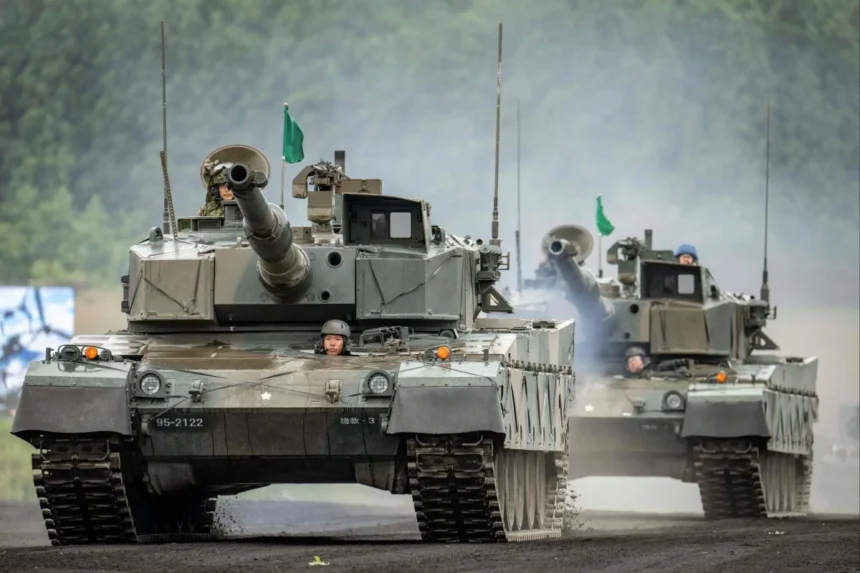
It possessed one of Asia’s most technologically advanced economies, a sophisticated industrial base and highly capable Self-Defense Forces, yet its military posture remained constrained by a political and constitutional framework centred on an exclusively defence-oriented policy.
- Japan’s missile architecture is changing
- Why China is central to the transformation
- The Southwest Islands are becoming a strategic military belt
- The China-Taiwan-Japan triangle
- The intelligence dimension may be even more important
- Japan is also preparing for the information war
- The electromagnetic battlefield
- GCAP: Fighter Programme
- Japan’s unmanned transformation
- Space is becoming part of the Japanese battlespace
- The US alliance remains the foundation
- Defence industry: the quiet transformation
- What should India watch?
- Japan is building a different kind of military
Japan is expanding what it considers necessary for self-defence: long-range stand-off weapons, counterstrike capabilities, integrated air and missile defence, unmanned systems, space and cyber capabilities, electronic warfare, stronger intelligence networks and a next-generation fighter through the Global Combat Air Programme (GCAP).
The scale of the transformation is visible in Japan’s FY2026 defence budget. Defence-related expenditure under the Defence Buildup Programme reached ¥8.8093 trillion on a spending basis, up 3.9% from the previous year. Including SACO and US-force realignment-related expenditure, the figure exceeds ¥9 trillion.
Japan’s 2022 National Security Strategy marked a major conceptual shift. Tokyo concluded that relying exclusively on ballistic-missile defence would become increasingly difficult as regional missile arsenals expanded in quantity, range and sophistication.
Japan defines these capabilities within its existing interpretation of self-defence: they are intended to be used only when an armed attack against Japan has occurred and the government’s stated conditions for the use of force are satisfied. Japan explicitly distinguishes this from a pre-emptive strike.
Japan’s missile architecture is changing
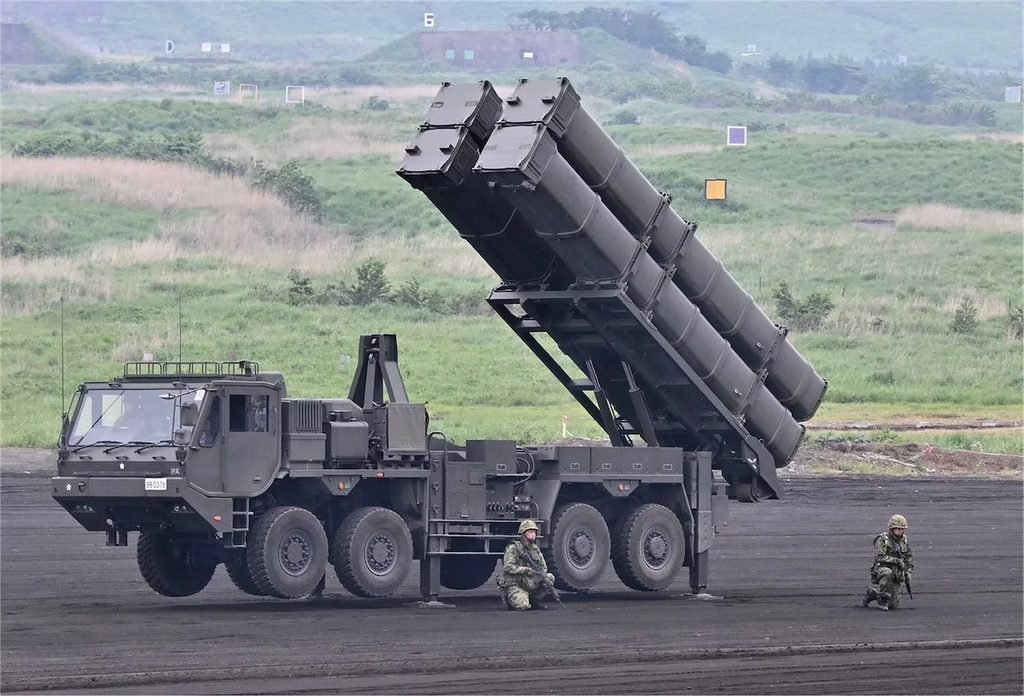
The FY2026 budget illustrates how far this transformation has progressed.
Japan has allocated approximately ¥973 billion for stand-off defence capabilities.
The programme includes:
- Upgraded Type-12 surface-to-surface missiles;
- Ship-launched Type-12 variants;
- Submarine-launched missiles;
- Hyper Velocity Gliding Projectiles (HVGP);
- Hypersonic missiles;
- Joint Strike Missile (JSM);
- JASSM;
- and Tomahawk-related ship-launch capability.
Land-based missiles provide geographically distributed capability. Aircraft-launched weapons extend the reach of the air force. Ship- and submarine-launched weapons introduce additional axes of approach. Hypersonic and boost-glide systems are intended to complicate interception.
In July 2026, the Japan Maritime Self-Defense Force conducted a live-fire test involving a Tomahawk missile from the destroyer JS Chokai, which Japan’s defence minister described as the first MSDF vessel to acquire this stand-off capability and successfully conduct a launch test.
Why China is central to the transformation
Japan’s military transformation cannot be understood without examining China’s expanding military capabilities.
Japan’s 2026 Defence White Paper describes China’s continued expansion of nuclear and missile forces, naval and air capabilities, and military activity around Japan. It specifically highlights activity around the Senkaku Islands, the East China Sea, the Western Pacific and the Japanese approaches.
Japan is an island nation stretched across a long arc from Hokkaido to Okinawa and the southwestern islands. The country’s security architecture therefore depends heavily on maritime surveillance, air superiority, missile defence and the ability to reinforce remote islands.
The Japanese defence establishment is particularly focused on China’s ability to operate beyond the first island chain.
The 2026 Defence White Paper notes increasing Chinese military activity beyond the first island chain and into areas extending towards the second island chain, while also highlighting increasing Chinese military pressure around Taiwan.
For Tokyo, Taiwan is therefore not an isolated geopolitical issue. A Taiwan contingency could directly affect Japan’s southwestern islands, sea lanes, US forces based in Japan and Japan’s ability to maintain air and maritime access.
This is one reason why Japan’s military transformation is increasingly oriented towards the Nansei island chain.
The Southwest Islands are becoming a strategic military belt
Japan has established or strengthened facilities on Yonaguni, Miyakojima, Ishigaki and Amami Oshima, including coastal surveillance, anti-ship missile and surface-to-air missile units.
Yonaguni is extremely close to Taiwan. Miyakojima sits along a major route between the East China Sea and Pacific. Ishigaki provides another position for surveillance and missile defence. Together, these islands can contribute to a distributed network of sensors and weapons.
The objective is not simply to place more troops on islands. It is to create a distributed sensing and engagement architecture.
The China-Taiwan-Japan triangle
The geopolitical consequence of Japan’s transformation extends beyond Japanese territory. The three-way strategic relationship between China, Taiwan and Japan is becoming increasingly important to Indo-Pacific security. Japan’s southwestern islands sit close to Taiwan. Chinese military activity around Taiwan is increasing. China’s naval and air forces are operating farther into the Western Pacific.
Japan is consequently preparing for a security environment in which a Taiwan contingency could have direct consequences for Japanese territory and alliance operations.
Japan’s 2026 Defence White Paper notes that Chinese aircraft entering Taiwan’s surrounding airspace increased substantially in recent years, while Chinese naval activity around Taiwan also expanded.
This does not mean that Japan has decided to fight in every Taiwan contingency. Rather, the strategic planning problem is that geography can make neutrality difficult even when political intentions are cautious. A conflict around Taiwan could affect Japanese airspace, maritime routes, US bases, Okinawa and the wider East China Sea. That is why Japan’s defence transformation is increasingly regional rather than purely territorial.
The intelligence dimension may be even more important
Weapons attract attention because they are visible. But Japan’s transformation is equally significant in the intelligence domain.
The 2026 Defence White Paper explicitly identifies intelligence collection and analysis as essential to timely national decision-making.
Japan is combining:
- Signals intelligence;
- Satellite imagery;
- Maritime and airborne surveillance;
- Open-source intelligence;
- Intelligence exchanges with partner countries;
- Defence attachés;
- Geospatial information;
- UAV-based ISR;
- and increasingly sophisticated space-based collection.
Counterstrike capabilities are valuable only if Japan can identify the target, understand its location and status, maintain sufficient tracking quality and generate an actionable targeting solution. Therefore, the missile is only the last component of a much larger kill chain.
Japan is also preparing for the information war
Tokyo increasingly recognises that modern competition begins before conventional combat.
Japan’s defence planning now explicitly addresses information warfare, including the use of disinformation and strategic information activities intended to influence public opinion and decision-making. This is particularly relevant in a potential Taiwan or East China Sea crisis. The battlefield would not be limited to ships and aircraft.
Japan’s ability to establish an accurate common operating picture — while protecting its own decision-making systems from cyberattack, deception and electronic interference — could become as important as the number of missiles it possesses.
The electromagnetic battlefield
The 2026 defence plan emphasises the need to operate despite enemy jamming while reducing the effectiveness of adversary communications and electronic systems.
Japan is strengthening:
- electronic attack;
- electronic protection;
- electronic support;
- spectrum management;
- electromagnetic intelligence;
- and electronic-warfare platforms.
The Air Self-Defense Force is expanding its RC-2 signals-intelligence aircraft capability, while Japan is also developing electronic-warfare aircraft. This is strategically significant because the future Indo-Pacific battlefield is likely to be highly contested in the electromagnetic spectrum.
A fighter that cannot communicate effectively, a missile that loses its navigation solution or a UAV that cannot maintain its control link can become operationally irrelevant. Japan therefore appears to be building a military architecture designed not merely to shoot, but to sense, connect, protect and disrupt.
GCAP: Fighter Programme
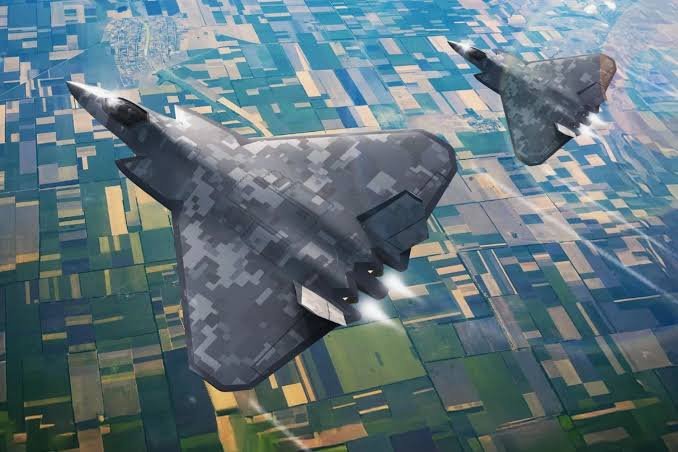
Perhaps the most ambitious element of Japan’s transformation is the Global Combat Air Programme.
Japan, the United Kingdom and Italy are jointly developing a next-generation fighter intended to enter service around the mid-2030s. GCAP is strategically important because it represents a change in Japan’s defence-industrial model.
Instead of developing the next fighter entirely as a national programme, Japan is sharing development with two major European aerospace powers. The three countries established the GCAP International Government Organisation (GIGO), while industry cooperation is being organised through the joint venture Edgewing.
In July 2026, GIGO and Edgewing signed a contract covering development work through the end of 2027, following earlier programme milestones. The three defence ministers subsequently confirmed that GCAP had entered a new phase.
For Japan, GCAP is about much more than replacing the F-2. It is an attempt to preserve sovereign access to advanced combat-aircraft technology while sharing development cost and risk.
Japan’s Defence White Paper specifically links the programme to maintaining and strengthening its domestic defence-production and technology base, including advanced digital design and the ability to upgrade the aircraft over its lifecycle.
Japan’s unmanned transformation
The 2026 Defence White Paper allocates approximately ¥277.3 billion to strengthening unmanned defence capabilities.
Japan’s stated concept is particularly interesting: inexpensive and numerous UAVs, unmanned surface vessels and unmanned underwater vehicles can be combined with manned platforms to create asymmetric and layered defence.
Japan is also working towards a SHIELD concept — Synchronized, Hybrid, Integrated and Enhanced Littoral Defense — using large numbers of unmanned systems for layered coastal defence.
Space is becoming part of the Japanese battlespace
The 2026 budget includes approximately ¥174 billion for space-related capabilities, including satellite communications, space-based information collection and Space Domain Awareness.
This matters because virtually every modern military function depends on space:
- communications;
- navigation;
- intelligence;
- surveillance;
- missile warning;
- targeting;
- timing;
- command and control.
The destruction or disruption of satellites could therefore degrade an entire military architecture without a single aircraft being shot down. Japan is consequently treating space not simply as an enabling domain but as an increasingly contested operational environment.
The US alliance remains the foundation
Japan’s transformation should not be interpreted as an attempt to replace the United States.
The US-Japan alliance remains the central pillar of Japanese security policy. Instead, Tokyo is increasing its own capabilities so that the alliance becomes more capable and resilient. In effect, Japan appears to be moving towards a model in which it is a more capable military partner rather than primarily an alliance-dependent security consumer.
Defence industry: the quiet transformation
There is another dimension that deserves attention — Japan’s defence-industrial transformation.
Companies such as Mitsubishi Heavy Industries, Kawasaki Heavy Industries and IHI have long possessed sophisticated aerospace and engineering capabilities. But Japan’s traditional defence market was relatively constrained. Tokyo is increasingly encouraging international defence cooperation and technology transfer.
As of April 2026, Japan had defence equipment and technology-transfer agreements with a growing group of countries, including the United States, UK, Australia, India, Philippines, France, Germany, Italy, Indonesia, Vietnam, Thailand, Sweden, Singapore and others.
North Korea adds another layer
China is not the only driver. North Korea’s missile arsenal creates a different but equally important challenge. Japan’s 2026 Defence White Paper estimates that North Korea possesses approximately 700–1,000 ballistic missiles, while also highlighting the broader regional growth in missile capabilities.
What should India watch?
For India, Japan’s transformation contains several lessons. The first is long-range deterrence cannot be separated from intelligence. The second is that unmanned systems are becoming central to maritime and island defence.
The most visible symbol of India’s expanding defence relationship with Japan came on 20 September 2026, when General Takehiro Morita, Chief of Staff of the Japan Air Self-Defense Force (JASDF), flew in a twin-seat Tejas alongside Indian Air Force Chief Air Chief Marshal A.P. Singh during Exercise Veer Guardian 2026 at Jodhpur.
Morita flew in the two-seat Tejas with Group Captain I. Samrat as the pilot, while Air Chief Marshal Singh led the formation in a single-seat Tejas. The formation conducted an airfield flypast and a peel-off manoeuvre before landing. Morita subsequently described the flight as a “truly invaluable experience” and linked it to the trust and confidence developed between the two air forces.
Japan is building a different kind of military
Japan is not simply buying more weapons. It is redesigning the architecture through which military power is generated.
The transformation runs from: islands to networks, fighters to combat ecosystems, missile defence to layered deterrence, manned platforms to manned-unmanned teaming, platform-centric operations to intelligence-driven warfare.
China’s military expansion, North Korea’s missile programme, the Taiwan contingency and the changing character of modern warfare are pushing Tokyo towards a more capable and more networked defence architecture. It is the emergence of Japan as a more consequential regional military and defence-industrial power. And the biggest question for the Indo-Pacific is no longer whether Japan is transforming its defence posture.
It is how far that transformation will go — and how China’s military strategy, the US alliance, Taiwan, South Korea, Australia, India and the wider regional defence ecosystem will respond.