

NATO began its annual nuclear deterrence exercise, Steadfast Noon, in Italy on 13 October 2026. Seventeen allies are taking part. No live nuclear weapons are used. The alliance says the long-planned drill is not linked to current events and is not directed against any country.
Key takeaways
- Steadfast Noon started on 13 October 2026 in Italy and is due to run for about ten days, to 23 October (NATO; Stars and Stripes).
- Seventeen nations are involved, up from 14 in 2025 and 13 in 2024, according to Il Sole 24 Ore. The scale, NATO says, is in line with previous years.
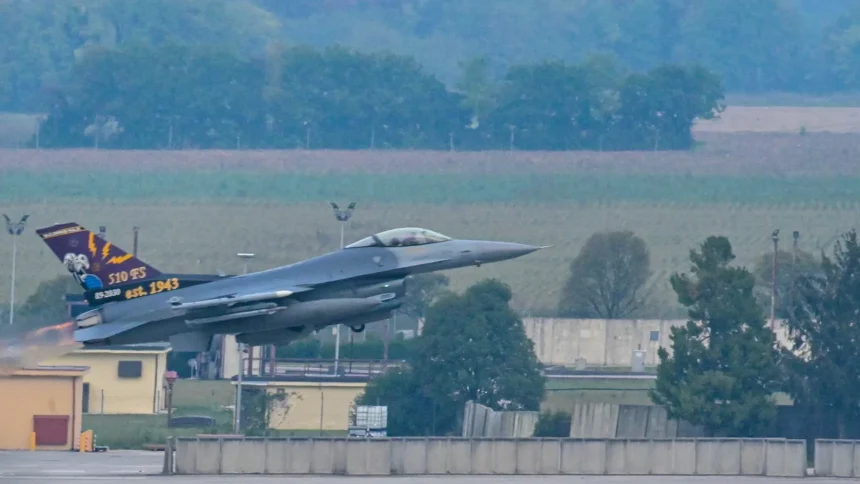
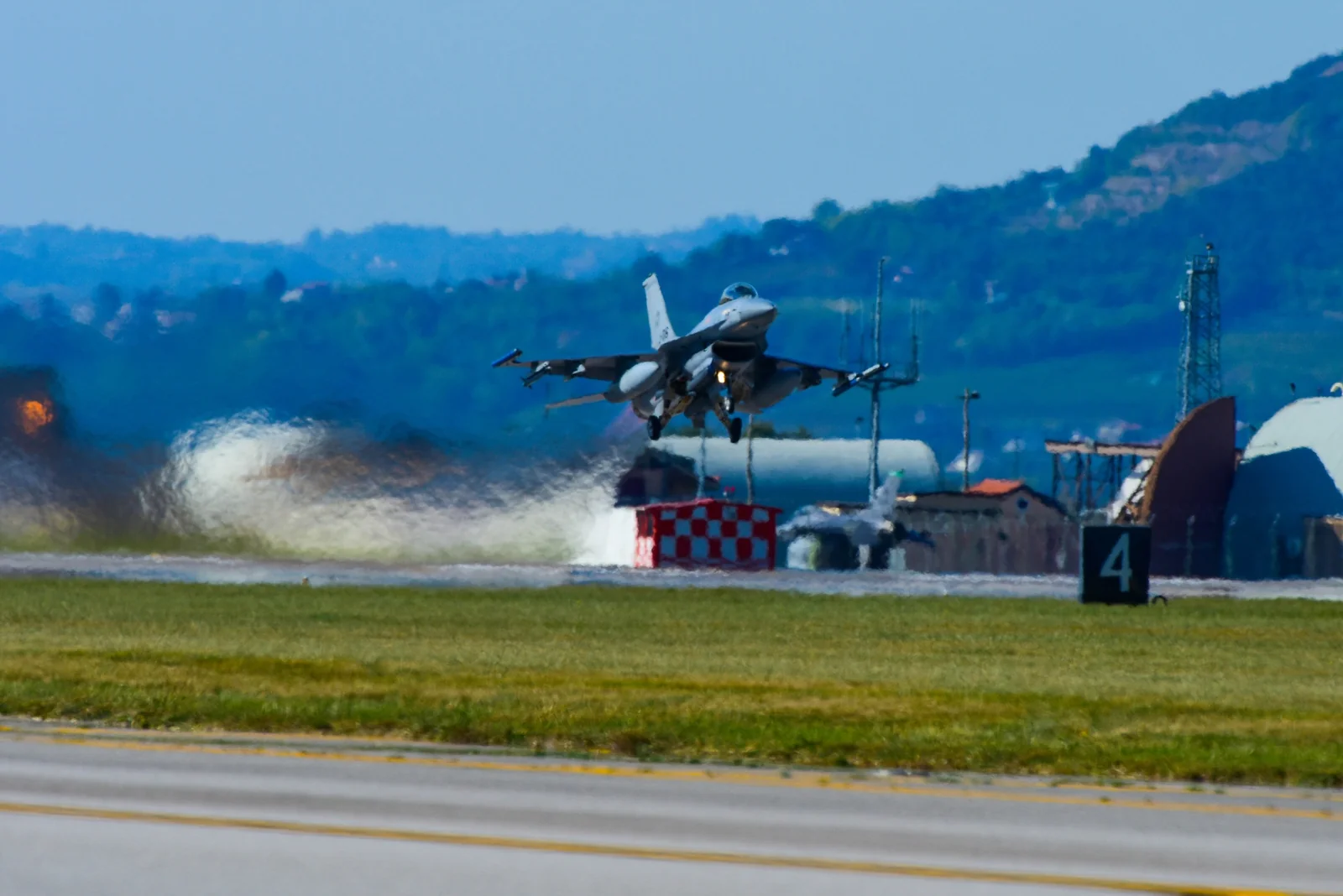
- Italian reporting places flying activity around Aviano and Ghedi, two air bases long linked in open sources to NATO nuclear-sharing arrangements.
- Secretary General Mark Rutte cast the exercise as a test of a “safe, secure, effective, and credible” deterrent and a message of “unity and resolve” (NATO release, 8 October).
- The drill lands days after Gen. Alexus Grynkewich set out NATO’s conventional “block, blunt, break” theory of victory in Warsaw, and after a RUSI paper argued Russia is prioritising qualitative nuclear modernisation over arsenal growth.
What we know
NATO announced the exercise on 8 October and confirmed it would begin on Tuesday 13 October. “NATO is a defensive Alliance. This exercise helps us ensure a safe, secure, effective, and credible capability to preserve peace, prevent coercion and deter aggression. It also sends a clear message of unity and resolve,” Secretary General Mark Rutte said in the alliance’s statement.
The same statement is clear on three points that often get lost in coverage of nuclear drills. First, no live weapons are used. Second, the activity is described as long-planned and routine. Third, NATO says it is “not linked to current world events and is not directed against any country.”
Stars and Stripes, reporting on 13 October, said this year’s edition runs from 13 to 23 October in Italy and typically rehearses nuclear employment procedures over roughly two weeks. Il Sole 24 Ore reported that Italian airspace would be used for around ten days, with activity centred on Aviano in the province of Pordenone and Ghedi near Brescia, plus other locations in the wider area of responsibility.
Nassima Barrows, NATO’s Head of Nuclear Policy, told Il Sole 24 Ore that “Steadfast Noon is a nuclear exercise in every sense of the word,” underlining that the absence of live warheads does not make the training non-nuclear. Procedures, security, command chains and dual-capable aircraft routines are what the alliance is practising.
Background
Steadfast Noon is NATO’s main annual nuclear deterrence exercise. Host nations rotate. The Netherlands led the 2025 edition. Italy has hosted before: Defence Minister Guido Crosetto, responding to a parliamentary challenge reported by Il Sole 24 Ore, listed previous Italian hostings in 2010, 2013, 2014, 2018, 2021 and 2023, and stressed that the activity does not use live ammunition.
The drill sits inside NATO’s nuclear-sharing arrangements. Under those arrangements, the United States maintains a stockpile of nuclear weapons in Europe while certain European allies provide dual-capable aircraft and crews trained to deliver them if political authority were ever given. Stars and Stripes notes that Washington and NATO do not comment on precise sites, though Germany, Italy, Belgium, the Netherlands and Turkey have for decades been named in open-source reporting.
France keeps an independent nuclear force and stays outside NATO’s Nuclear Planning Group. Il Sole 24 Ore reported that Paris is again sitting this exercise out for that reason, while NATO treats Macron’s separate European “advanced deterrence” outreach as complementary.
For the conventional side of the same readiness debate, see GRYD’s analysis of NATO’s “block, blunt, break” theory of victory, unveiled by Supreme Allied Commander Europe Gen. Alexus Grynkewich in Warsaw on 12 October. On Europe’s wider dependence on US military power, see Can Europe survive without the USA?.
Steadfast Noon 2026 at a glance
| Item | Detail | Source |
|---|---|---|
| Start | 13 October 2026 | NATO |
| Expected end | 23 October 2026 (about ten days) | Stars and Stripes; Il Sole 24 Ore |
| Host | Italy (Aviano and Ghedi named in Italian reporting) | NATO; Il Sole 24 Ore |
| Participating nations | 17 (vs 14 in 2025, 13 in 2024) | NATO; Il Sole 24 Ore |
| Live nuclear weapons | None | NATO |
| NATO’s stated purpose | Maintain a safe, secure, effective and credible deterrent; signal unity | Mark Rutte, NATO release |
| Directed at a country? | NATO says no; not linked to current events | NATO |
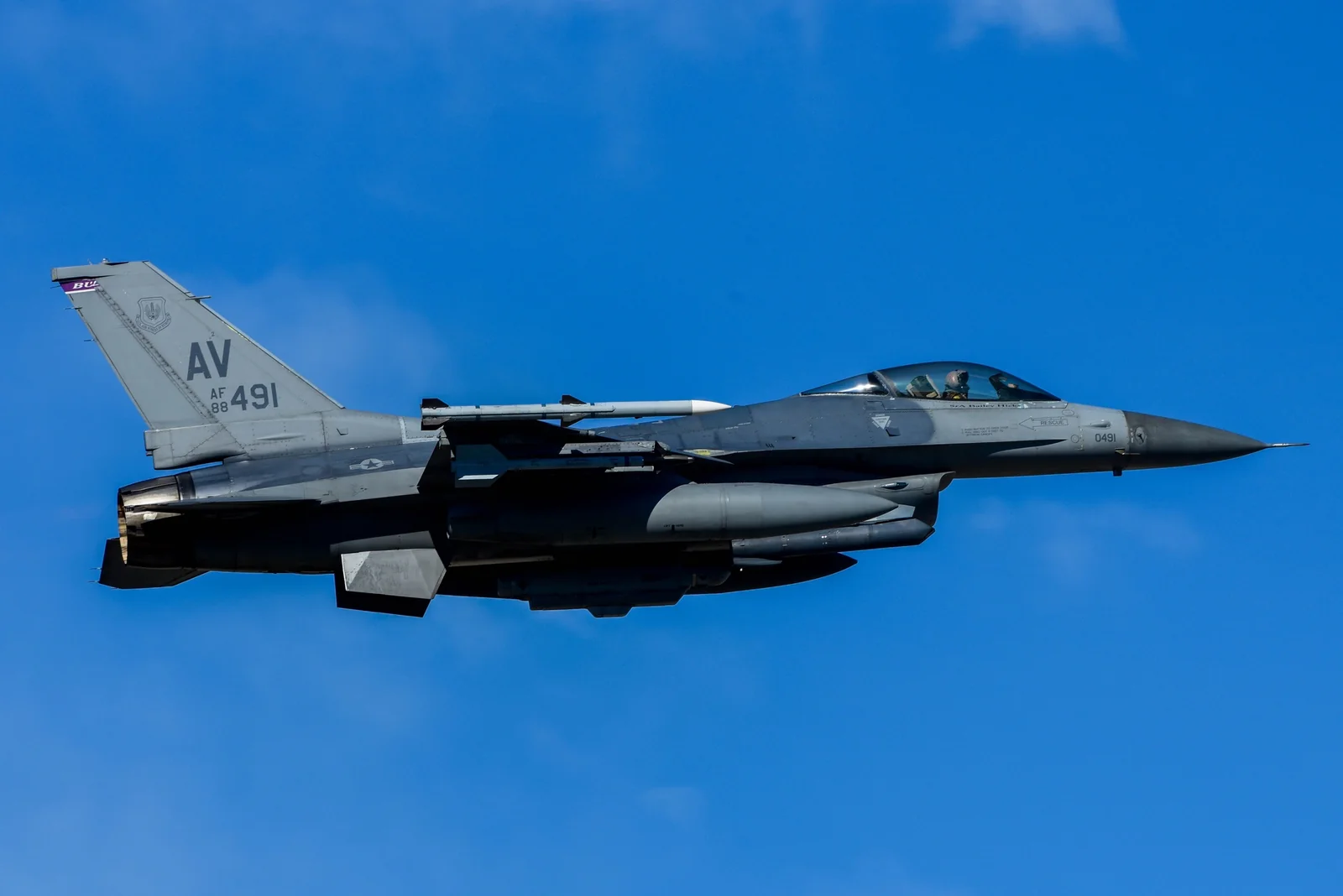
| Reported aircraft (trade press) | German Tornados, Dutch F-35s, Polish and Romanian F-16s, Swedish Gripens (conventional support), plus tankers and AEW | Aviacionline |
Compiled by GRYD on 14 October 2026. Aircraft rows are attributed to trade reporting, not to NATO’s short public release.
Why it matters
It is a readiness test, not a crisis response. NATO’s public line is deliberate. By calling the exercise routine, unlinked to current events and not aimed at any state, the alliance is separating deterrence signalling from escalation theatre. That matters because Russian officials and state media often describe any NATO nuclear activity as proof of hostile intent. The counter-message is that practising dual-capable aircraft procedures once a year is what a nuclear alliance does in peacetime, not a warning of imminent use.
It sits beside a conventional theory of victory. Grynkewich’s Warsaw speech on 12 October was about stopping a land attack with block, blunt and break. Steadfast Noon is about the nuclear layer that underwrites that posture. One is about denying territory with forward forces, sensors and massed affordable systems. The other keeps nuclear command, control and delivery skills credible so a conventional fight does not become a nuclear one by miscalculation. Together they answer troop-contributing capitals, and whoever might gamble that NATO would freeze under nuclear threat.
Participation is widening even as politics stay awkward. Seventeen allies is a higher headline number than in 2024 or 2025. Turkey’s reported participation and US crews and maintainers on the Italian bases keep the US nuclear umbrella wired into European air forces. France’s absence from the Nuclear Planning Group remains a structural fact. For readers in the UK, Canada and Australia, the drill is a reminder that nuclear sharing still rests on a small set of dual-capable wings and on US custody of the weapons.
The Russian modernisation backdrop is qualitative, not numerical. A RUSI paper by Dr Sidharth Kaushal, published on 8 October and cited in Stars and Stripes’ exercise coverage, argues that Russia is likely to favour accuracy, penetration, early-strike options and counterspace tools over growing the sheer size of its arsenal. If that reading is right, NATO’s problem is less arsenal size than harder-to-stop delivery and degraded warning. An annual dual-capable aircraft exercise does not fix satellite vulnerability or hypersonic defence. It does rehearse procedures that keep NATO’s own deterrent looking usable in a crisis.
Domestic politics still bite. Crosetto’s defence of the Italian hosting shows that even a routine NATO drill can become a parliamentary fight over consent for nuclear-sharing basing.
What’s uncertain
- NATO has not published a full public force list for 2026. Aircraft types named in trade reporting should be treated as attributed, not as an official order of battle.
- Exact numbers, storage arrangements and any changes to nuclear-sharing posture remain classified. Open-source base names are not the same as confirmation of present warhead locations.
- Whether this year’s larger nation count reflects a lasting trend or a one-off hosting pattern is not yet clear from public data.
- How Steadfast Noon interacts with French national deterrence diplomacy is a political question NATO’s short release does not answer.
What to watch next
Look for official imagery or SHAPE briefings as the flying phase continues through 23 October, any Russian Ministry of Defence commentary that tries to frame the drill as escalation, and whether allied F-35 nuclear certification milestones are mentioned alongside the exercise. For the electronic and sensor fight that conventional deterrence now depends on, see The invisible battlefield: electronic warfare. More NATO and Europe coverage sits in our Geopolitics and Airpower sections.
Sources
- NATO: NATO holds annual nuclear exercise Steadfast Noon, 8 October 2026
- Stars and Stripes: NATO begins annual nuclear exercise in Italy, 13 October 2026
- Il Sole 24 Ore: NATO nuclear exercise underway in Italian airspace, 13 October 2026
- Aviacionline: NATO kicks off Steadfast Noon in Italy with 17 countries, 13 October 2026
- RUSI: Russia’s Nuclear Deterrent and Its Weapons Procurement, Sidharth Kaushal, 8 October 2026
- The GRYD: NATO’s “block, blunt, break” plan, 13 October 2026
- DVIDS: Steadfast Noon 2023 imagery (public domain), 31st Fighter Wing