

China’s shipyards delivered 636,208 tonnes of naval vessels in 2024 and 2025, more than twice the 270,509 tonnes built in the United States, according to the World Defence Shipbuilding 2026 report released by Euronaval in Paris. The US still has the bigger fleet, but the gap is closing.
Key takeaways
- China built about 2.35 tonnes of naval shipping for every tonne the US built in 2024-25, a GRYD calculation from the report’s figures.
- Two years earlier the order was reversed: the US built 245,703 tonnes and China 202,520, according to the previous edition.
- China delivered nine nuclear attack submarines and ten destroyers; the US delivered three and four.
- The US fleet is still more than twice as heavy, at 3.11 million tonnes against China’s 1.44 million.
What we know
The figures come from World Defence Shipbuilding 2026, a study published ahead of the Euronaval naval defence show, which runs at Paris Nord Villepinte from 3 to 6 November 2026. The data were compiled by the reference book Flottes de Combat (Combat Fleets) with GICAN, the French maritime industry association. They count military, paramilitary and auxiliary vessels of more than 200 tonnes delivered between 1 January 2024 and 31 December 2025.
Global output jumped. The report puts the market for military and paramilitary shipbuilding at more than $122 billion over the two years, up about 50%, and production at roughly 1.5 million tonnes, against nearly 1 million in 2022-23. Its country table totals 1,470,579 tonnes worth $123.9 billion.
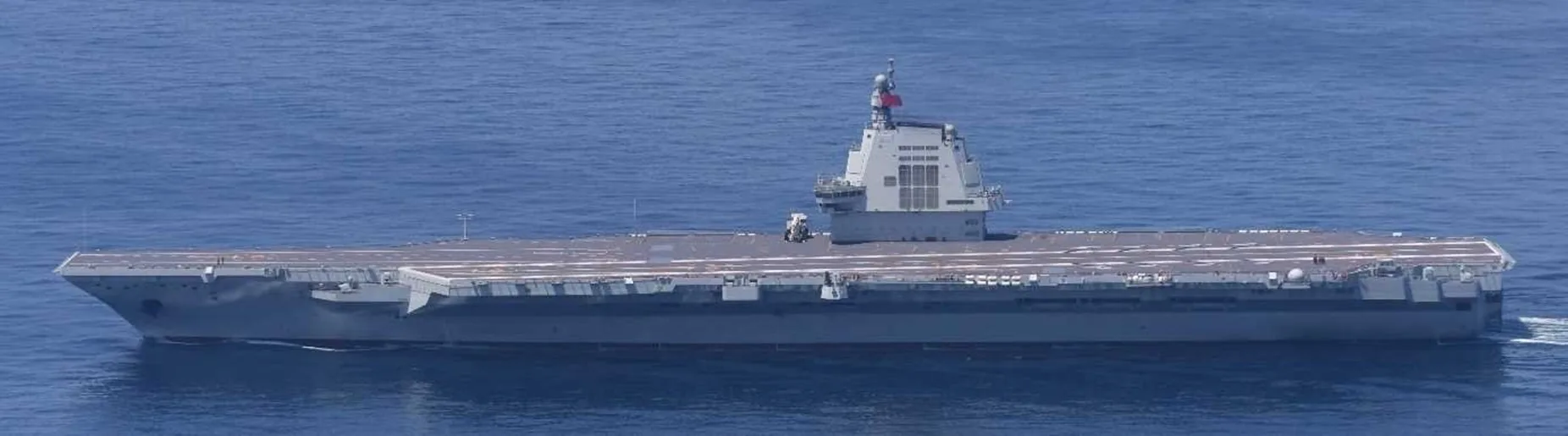
China’s share was the largest by far. Its yards delivered 636,208 tonnes, worth $46.0 billion, including the 80,000-tonne aircraft carrier Fujian, which has electromagnetic catapults, and two amphibious assault ships. The report says Chinese industry also delivered “nine nuclear-powered attack submarines (SSNs) versus three for the U.S., ten destroyers versus four, and six frigates versus five Littoral Combat Ships (LCS)”, noting the last pair is “hardly comparable”.
“We are seeing a fairly substantial expansion of naval forces, and consequently of shipbuilding,” Philippe Missoffe, general director of GICAN, told a press briefing in Paris, Defense News reported on 20 October.
Background
For years the question was whether China’s navy could match the US in quality as well as numbers. A Congressional Research Service report on China’s naval modernisation quotes the Pentagon describing the PLA Navy as “the largest navy in the world with a battle force of over 370 platforms” and expecting it to grow to 435 ships by 2030. The same report notes that US officials have raised concern about the capacity of China’s shipbuilding industry compared with America’s.
The Euronaval data now measure that capacity in tonnes, not hulls. That matters because tonnage tracks large, complex ships such as carriers, destroyers and submarines, the vessels that decide a high-end war at sea. China’s growing navy is also a key reason the US and Japan have been deploying anti-ship missiles to islands in the Keen Sword 27 exercise.
Naval shipbuilding at a glance, 2024-25
| Measure | China | United States | Source |
|---|---|---|---|
| Tonnage delivered, 2024-25 | 636,208 t | 270,509 t | Euronaval report, p. 25 |
| Value of output, 2024-25 | $46.0bn | $26.8bn | Euronaval report, p. 25 |
| Share of world tonnage | 43.3% | 18.4% | GRYD calculation from p. 25 |
| Tonnage delivered, 2022-23 | 202,520 t | 245,703 t | 2024 edition, via Defense News |
| Nuclear attack submarines delivered | 9 | 3 | Euronaval report, pp. 22-23 |
| Destroyers delivered | 10 | 4 | Euronaval report, pp. 22-23 |
| Combat fleet on 1 January 2026 | 418 ships, 1,438,728 t | 283 ships, 3,105,813 t | Euronaval report, pp. 8-9 |
Why it matters
The headline ratio hides a sharper trend. Our comparison of the two editions shows China’s naval output roughly tripled, up 214%, while US output rose about 10%. In two years China went from building less naval tonnage than America to building more than twice as much. If that pace holds, the fleet gap will keep shrinking even though the US starts far ahead. The report already shows US fleet tonnage slipping from 3.22 million to 3.11 million tonnes over two years as older ships retire, while China’s rose from 1.3 million to 1.44 million, according to Defense News.
Cost is the second story. Dividing value by tonnage, the US paid about $99,000 per tonne of new naval ship, against about $72,000 for China. That is a rough measure, because the two countries built different mixes of ships and the value of Chinese ships is estimated. Still, it suggests every US dollar buys less hull than a Chinese one, which makes it harder for Washington to close the gap simply by spending more.
Submarines are where the US is fighting back. The report says Washington plans to raise labour input at Electric Boat and Newport News from 13 million to 70 million man-hours, to build one Columbia-class ballistic missile submarine and two Virginia-class attack submarines a year. It frames this as a response to China doubling nuclear submarine capacity at its Huludao yard. Undersea forces remain the area where the US keeps a clear edge, with 54 attack submarines and 14 ballistic missile submarines in service.
For allies, the numbers point to a longer and more demanding US naval presence in the Pacific. Sustaining that presence already strains crews and ships, as the long deployment of USS Abraham Lincoln showed. It also explains why the US is leaning on land-based tools, such as the Marine Corps’ new NMESIS anti-ship missile battalion, and on partners such as Japan, which is rebuilding its military power.
What’s uncertain
- Tonnage is not capability. Sensors, weapons, crew training and submarine quietness do not show up in a tonnes table, and the report itself says frigate and LCS deliveries are hardly comparable.
- The figures depend on open-source tracking of Chinese yards. Flottes de Combat is a long-running reference, but independent checks on Chinese output are limited.
- Different tables give different totals. Defense News quotes China’s naval spending at $43.5 billion, which matches the report’s acquisitions table rather than its production table of $46.0 billion.
- Value comparisons rely on estimated costs for Chinese ships.
What to watch next
- New programme announcements and order books at Euronaval from 3 to 6 November in Paris.
- Whether US submarine yards actually reach two Virginia-class boats a year, a rate the industrial base has not managed since about 2019, according to the Congressional Research Service.
- Progress on China’s next carrier, which the report describes as a Type 004 nuclear-powered ship of about 110,000 tonnes due in 2030, building at Dalian.
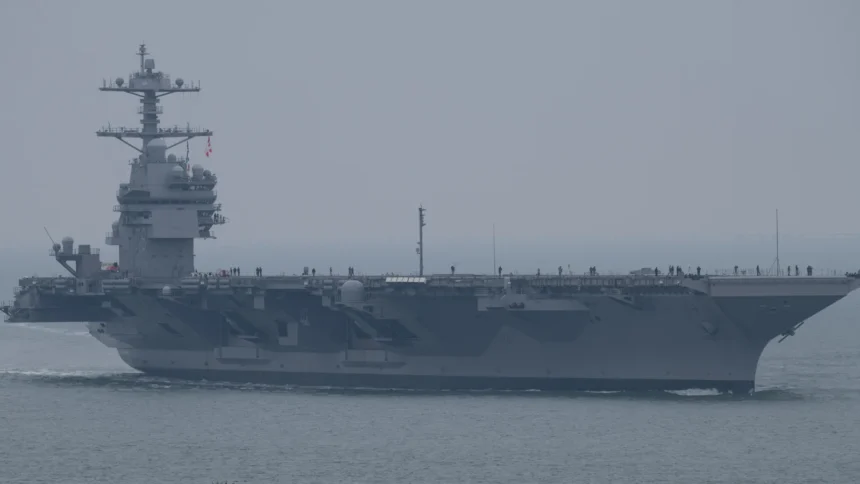
- Delivery of the US carrier John F. Kennedy, which completed builder’s sea trials in February 2026.
Sources and further reading
- Euronaval, World Defence Shipbuilding 2026 (PDF)
- Defense News, China built more than twice naval tonnage of US in 2024-25 (20 October 2026)
- Naval News, Euronaval 2026: Global Naval Shipbuilding Surges 50% (22 October 2026)
- Congressional Research Service, China Naval Modernization: Implications for U.S. Navy Capabilities
- Euronaval 2026 show information