

The Architecture of Economic Coercion: How America Weaponizes Trade
How the Global Economy Changed Forever
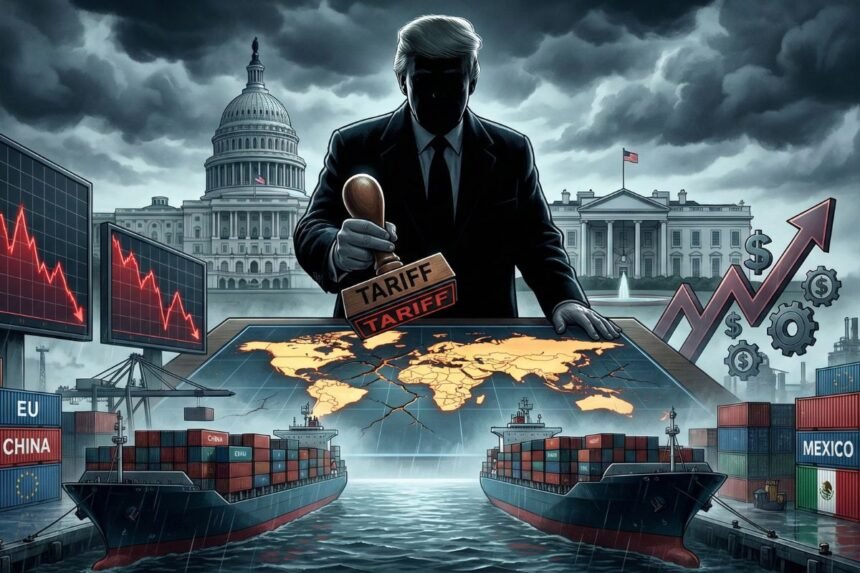
For approximately 70 years, the United States led and protected a free global trading system with open markets. However, facing factory closures, significant trade gaps, and rising rival powers, the U.S. fundamentally changed its approach. Now it uses global trade connections as an economic weapon to force other countries to follow its rules. The tariff—a tax as old as nations themselves—has become a powerful tool of economic power and geopolitical leverage.
- The Architecture of Economic Coercion: How America Weaponizes Trade
- How the Global Economy Changed Forever
- What is a Tariff? Understanding Trade Tax Mechanisms
- The New Use of Tariffs in American Foreign Policy
- The Laws Behind Presidential Trade Power
- 2. The Evil Strategy: America’s Aggressive Economic Strategy
- Why the U.S. is Seen as a “Villain” in Global Trade
- The “Reciprocity” Doctrine: Equal Trade or Economic Imperialism?
- Double Standards and Hypocrisy in U.S. Trade Policy
- Using Tariffs as a Political Threat Tool Beyond Trade
- 3. Timeline of Aggression: Complete History of the Tariff War (2018–2026)
- Major Events in the U.S. Tariff War: A Chronological Analysis
- What This Timeline Reveals About U.S. Trade Policy
- 4. The Powerless Guardian: Why the WTO No Longer Works
- The WTO’s Institutional Collapse
- How the WTO Lost Its Institutional Power
- The “National Security” Loophole: Exploiting Legal Ambiguity
- Result: An Ineffective International Organization
- 5. The Eastern Escape Route: How Russia and China Evade U.S. Tariffs
- How Russia and China Bypass American Economic Sanctions
- 5.1 The Ghost Ships: Russia’s Maritime Insurgency Strategy
- The Shadow Fleet: Russia’s Innovative Sanctions Evasion
- Operational Mechanisms: How Ghost Ships Avoid Detection
- Strategic Impact: Russia’s Sanctions Evasion Success
- 5.2 Barter Economy: Trading Without Money or Banking Systems
- Returning to Ancient Commerce Models
- Why Barter is Strategically Powerful
- 5.3 Trans shipment: The Origin-Laundering Loophole
- The Vietnam Transshipment Route
- The Mexico Backdoor: Using American Trade Treaties Against America
- 6. The Fighter State: India’s Strategic Resistance and Victory
- India’s Unique Position in Global Trade Conflict
- 6.1 The Challenge: Trump’s “Tariff King” Assault on India
- How the Conflict Began
- 6.2 The Escalation: The 50% Tariff and Diplomatic Humiliation Strategy
- The August 2025 Attack and Insult
- 6.3 India’s Warrior Response: “No Gun to My Head”
- Exposing the Fabricated “Phone Call” Narrative
- The Defiant Indian Counter-Narrative
- 6.4 The “Red Line”: Protecting India’s Vulnerable Farmer Population
- Why Indian Agriculture is Non-Negotiable
- Modi’s Firm Red Line on Agricultural Protection
- 6.5 The Palki Sharma Counter-Narrative: Exposing American Hypocrisy
- The Hypocrisy Expose
- The Powerful Counter-Question
- India’s Strategic Action: Turning Sanctions Into Profit
- 6.6 Defeating the Tariff: India’s Strategy of Smart Retaliation
- How India Achieved Strategic Victory
- Phase 1: The Precision Counter-Strike
- Phase 2: The “Harley-Davidson” Psychological Victory
- Phase 3: The “Mutually Agreed Solution” The Kill Shot
- 7. Conclusion: The New Rules of Global Economic Engagement
- The Changing Global Order and U.S. Hegemonic Decline
- The Limits of American Economic Coercion
- What This Means for the Future
- Key Data on the Tariff War
What is a Tariff? Understanding Trade Tax Mechanisms
A tariff is a tax that a government places on goods or services coming from other countries. People frequently misunderstand this mechanism and wrongly think the foreign country pays this tax. In reality, the importer (the local company buying foreign goods) pays it directly.
Example: When the U.S. puts a 25% tax on Indian steel, the American construction company buying that steel pays U.S. Customs and Border Protection. While this cost often passes to consumers through higher prices, the strategic real goal is to make foreign products too expensive, effectively cutting off the other country’s export income and market access.
The New Use of Tariffs in American Foreign Policy
Recent U.S. governments have used tariffs for much more than just protecting local industries. Now tariffs function as the main tool of American foreign policy, used strategically to force other countries to change rules on:
- Intellectual property rights
- Currency valuation
- Immigration control
- Geopolitical alignment
- Market access policies
This strategy works effectively because the U.S. has the world’s biggest consumer market. By threatening to close this lucrative market, Washington acts as a gate-keeper, demanding policy changes from trading partners. Many observers now see the U.S. as a “Villain” that abandoned the fair rules it created, choosing instead a “might makes right” approach to global commerce.
The Laws Behind Presidential Trade Power
The U.S. President has remarkably strong legal power to bypass Congress and impose tariffs:
Section 232 of the Trade Expansion Act of 1962: Lets the President put tariffs on imports seen as a threat to “national security”—a term controversially stretched to cover steel, cars, and much more.
Section 301 of the Trade Act of 1974: Allows retaliation against “unfair trade practices,” especially used strategically against China’s intellectual property policies.
International Emergency Economic Powers Act (IEEPA): Recently used to call trade gaps a “national emergency,” allowing broad tariffs on countries that refuse U.S. demands.
These laws have effectively made the U.S. Trade Representative into a command center where economic harm is planned and deployed to force compliance from target nations.
2. The Evil Strategy: America’s Aggressive Economic Strategy
Why the U.S. is Seen as a “Villain” in Global Trade
The U.S. is called a “Villain” in trade policy not just for rhetorical effect, but because its sudden and one-sided policy changes have caused genuine damage to developing economies. The Global South, especially India, sees Washington as a weakening empire striking out to maintain its power. This perception grows stronger because the U.S. administration hurts even its own allies with random policy shifts and inconsistent punishment.
The “Reciprocity” Doctrine: Equal Trade or Economic Imperialism?
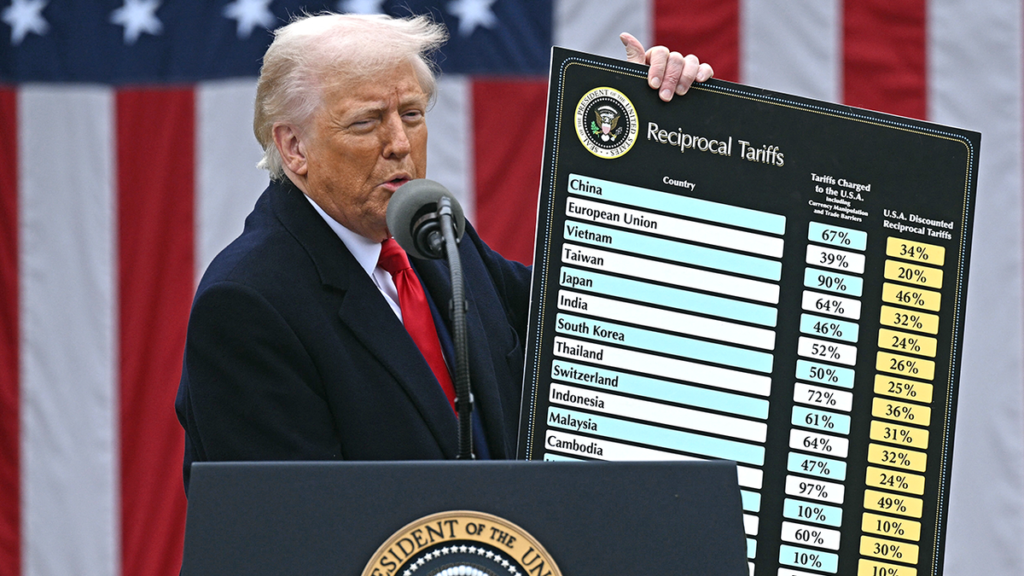
At the heart of this aggressive stance lies the idea of “Reciprocity” and the relentless pursuit of equal trade at any cost. Under the banner of “America First,” the U.S. treats trade gaps not as the result of savings rates or consumer buying patterns, but as evidence of theft and unfair competition.
The argument appears simple on the surface: if another country puts a 50% tax on American goods, the U.S. should put a 50% tax on theirs. While superficially equitable, this logic critically ignores developmental asymmetry between nations. Poor countries and developing economies like India use tariffs strategically to:
- Shield nascent industries from being destroyed
- Protect subsistence farmers from being overwhelmed
- Block heavily subsidized Western corporate agriculture
- Maintain economic sovereignty during development phases
By demanding absolute reciprocity, the U.S. effectively attempts to kick away the economic ladder that poor countries use to develop, enforcing a system where its mature industries can dominate open markets while punishing those seeking to nurture their own capabilities.
Double Standards and Hypocrisy in U.S. Trade Policy
This aggression becomes more pronounced because of obvious double standards frequently highlighted by geopolitical analysts. The United States routinely demands that other nations cease trading with its adversaries while carving out convenient exceptions for itself when profitable.
Prime Example: The Russia Sanctions Hypocrisy
Washington threatened India with secondary sanctions for purchasing Russian crude oil—essential for the energy security of 1.4 billion people. Meanwhile, American firms quietly continued purchasing strategic commodities from Moscow including:
- Uranium (critical for nuclear energy)
- Fertilizers (essential for agriculture)
- Other vital raw materials
This blatant hypocrisy undermines the moral authority of U.S. economic statecraft, reinforcing the image of a hegemon that sets rules for others only to break them when profitable. As analyst Palki Sharma of Firstpost notes, the pattern is unmistakable and deeply damaging to American credibility.
Using Tariffs as a Political Threat Tool Beyond Trade
The U.S. has utilized tariffs as a blunt instrument of coercion in non-trade disputes, demonstrating alarming precedent. Examples include:
- Threatening Mexico with tariffs over immigration control
- Threatening India with tariffs over geopolitical neutrality and Russian oil purchases
- Using trade threats to pressure countries on security policy alignment
This blurring of the lines between commerce and national security has introduced unprecedented volatility into the global system. Nations can no longer rely on long-standing treaties or historic alliances. They must navigate a landscape where the U.S. President can seemingly wake up and impose a 25% tax on entire export sectors based on perceived slights or domestic political calculations.
In this destabilized environment, the U.S. is perceived less as a reliable partner and more as an economic predator, seeking to extract value through intimidation rather than through fair competition or mutual benefit.
3. Timeline of Aggression: Complete History of the Tariff War (2018–2026)
Major Events in the U.S. Tariff War: A Chronological Analysis
The escalation of the U.S. Tariff War has not been a singular event but rather a relentless campaign of economic bombardment, progressively widening its scope from specific competitors to encompassing the entire global trading system.
| Date | Target Country/Region | Tariff Action Taken | Official Justification |
|---|---|---|---|
| January 2018 | Global (China/Korea focus) | 20-50% tax on washing machines; 30% tax on solar panels | Protect American manufacturers from sudden import surges |
| March 2018 | Global (includes U.S. allies) | Section 232: 25% on steel, 10% on aluminum | “National Security” risk from depending on foreign metals |
| July 2018 | China | Section 301: 25% on $34B of goods; escalated to $200B | Retaliation for stealing intellectual property and forced technology transfer |
| June 2019 | India | Removed preferential trade status (GSP), raising taxes on $5.6B exports | India not giving “fair and reasonable” market access |
| February 2025 | Mexico & Canada | Threatened 25% tariffs on all goods (temporarily suspended) | Failure to stop illegal border crossing and drug trafficking |
| April 2025 | Global | Reciprocal Tariff Order: Match other countries’ tax rates | “Fairness” in trade; fighting perceived foreign protectionism |
| August 2025 | India | Doubled duties from 25% to 50% on Indian exports | Punishment for purchasing Russian oil and maintaining agricultural barriers |
| October 2025 | Pakistan | Cut duties from 29% to 19% | Reward for diplomatic cooperation and alignment |
| January 2026 | Iran Trading Partners | Threatened extra 25% tariff on nations trading with Iran | Increasing economic pressure on the Iranian regime |
What This Timeline Reveals About U.S. Trade Policy
This comprehensive history reveals a distinct and troubling pattern: the weaponization of trade has become the default setting for U.S. foreign policy. The initial strikes in 2018 were justified as necessary to save American manufacturing, specifically steel and aluminum, from “unfair” competition. However, the indiscriminate application of Section 232—labeling imports from staunch allies like Canada and the European Union as security threats—exposed the underlying aggressive unilateralism driving policy.
By 2019, policy focus shifted distinctly to punishing developing nations like India for their domestic policies, specifically stripping away GSP benefits in a bid to force market opening on American terms.
The 2025 Escalation: The Most Dangerous Phase
The resurgence of aggression in 2025, marking the start of the “Reciprocal War,” represents the most dangerous phase of the conflict:
- August 2025: Doubling tariffs on India to 50% was a punitive measure designed to force geopolitical break with Russia, showcasing full convergence of trade and security policy
- October 2025: Reduction of tariffs on Pakistan highlights the transactional nature of U.S. approach—rewarding compliance while punishing independence
- Pattern: This erratic behavior swinging between punishment and reward based on immediate political needs characterizes the chaotic nature of the current Tariff War
4. The Powerless Guardian: Why the WTO No Longer Works
The WTO’s Institutional Collapse
As this economic assault continues globally, the international group designed to maintain trade order—the World Trade Organization (WTO)—has become powerless and ineffective. Characterizing it as a “powerless guardian” is essential to understanding how the U.S. has acted without international legal limits. The WTO’s decline was not accidental but represents a calculated strategy by Washington to remove legal barriers constraining its “Villain” role.
How the WTO Lost Its Institutional Power
The WTO’s historical strength derived from its Dispute Settlement body, particularly the Appellate Body, which functioned as the supreme court of global trade. When one member nation violated established trade rules, the harmed country could sue, and the WTO’s ruling had binding force on all members.
However, beginning in the late 2010s and accelerating through the 2020s, the U.S. systematically blocked the appointment of new judges to the Appellate Body. By refusing to allow vacant positions to be filled, the U.S. ensured the court eventually lacked the minimum quorum required to hear cases.
The Strategic Trap: If India or China wins a dispute against the U.S. at the lower level, the U.S. simply appeals the decision. Since no judges exist to hear the appeal, the case remains in permanent legal limbo, and the challenged tariffs remain firmly in place regardless of their legality.
This represents a profound institutional breakdown of international trade law.
The “National Security” Loophole: Exploiting Legal Ambiguity
This institutional collapse was further accelerated by how the U.S. exploits the “National Security” exception in Article XXI of GATT. Historically, nations demonstrated restraint in invoking national security to justify protectionism, understanding that doing so would open a dangerous Pandora’s box of competitive invocation.
The U.S. shattered this informal but powerful norm by claiming that:
- Imports of Canadian aluminum threatened national security
- German cars posed national security risks
- Other routine commercial goods represented security threats
WTO panels, fearful that ruling against the U.S. on security matters would prompt Washington to withdraw from the organization entirely, have been consistently hesitant to challenge this expansive interpretation.
Result: An Ineffective International Organization
The WTO has devolved into a forum merely for airing grievances rather than effectively resolving them. As geopolitical analyst Major Gaurav Arya notes, the organization has become “feckless”—reminiscent of the League of Nations in the 1930s. It represents a “romantic idea” about international cooperation that crumbled completely when confronted with raw power politics deployed by a major hegemon.
In this institutional vacuum created by the collapse of international law, the Tariff War is fought not in courtrooms or arbitration proceedings, but through raw leverage and economic power. This leaves nations to fend for themselves using whatever economic weaponry they can independently muster, effectively returning global trade to a pre-rules era.
5. The Eastern Escape Route: How Russia and China Evade U.S. Tariffs
How Russia and China Bypass American Economic Sanctions
While the West attempts to construct an economic iron curtain around its adversaries, the “Eastern Bloc” of Russia and China has not capitulated to U.S. pressure. Instead, they have engineered a parallel, shadow global economy specifically designed to evade U.S. tariffs and comprehensive sanctions regimes. These sophisticated countermeasures operate in the “grey zone” of international trade—legally ambiguous, extremely difficult to track and enforce, and largely immune to the leverage of the U.S. dollar.
5.1 The Ghost Ships: Russia’s Maritime Insurgency Strategy
The Shadow Fleet: Russia’s Innovative Sanctions Evasion
The centerpiece of Russia’s strategic resistance to U.S. energy sanctions and the internationally enforced oil price cap is the creation and deployment of the “Shadow Fleet.” Denied access to critical Western insurance and shipping services, Moscow has quietly amassed a massive armada comprising over 600 aging tanker vessels.
Fleet Composition:
- Aging tankers nearing the end of operational lives
- Purchased through shell companies registered in permissive jurisdictions
- Beneficial ownership deliberately obscured
- Flags of convenience from jurisdictions including Gabon, Panama, and UAE
Operational Mechanisms: How Ghost Ships Avoid Detection
These “phantom ships” employ sophisticated deception strategies designed specifically to baffle and confound Western regulators:
AIS Spoofing Technology:
- Manipulating Automatic Identification System transponders
- Broadcasting false location data
- Creating appearance of being in one location while physically positioned elsewhere
- Making real-time tracking effectively impossible
Ship-to-Ship (STS) Transfers:
- Transferring cargo between vessels on international waters
- Effectively “laundering” the oil’s origin
- Disguising crude provenance through multiple transfers
- By the time crude reaches refineries in India or China, origin is completely obscured
Strategic Impact: Russia’s Sanctions Evasion Success
This innovative maritime insurgency has allowed Russia to maintain oil export volumes at near pre-war levels, generating approximately $100 billion in annual revenue. The strategy has effectively rendered the U.S. sanctions regime largely ineffective despite international coordination efforts.
5.2 Barter Economy: Trading Without Money or Banking Systems
Returning to Ancient Commerce Models
In a remarkable move harking back to pre-modern economic systems, Russia and China have deliberately revived barter trade to completely bypass the U.S. financial system. With Russian banks systematically disconnected from SWIFT (the international banking messaging system) and Chinese banks wary of secondary sanctions, the two economic powers have turned to swapping goods directly.
Documented Barter Transactions (2024-2025):
- Russian agricultural produce exchanged for Chinese industrial goods
- Wheat traded for automobiles
- Flax seeds exchanged for building materials
- Complex multi-commodity transactions
Why Barter is Strategically Powerful
The strategic brilliance of direct barter lies in its economic invisibility and resistance to Western financial surveillance:
No Digital Trail: A barter transaction creates zero paper trail in the global banking system
No Dollar Messages: No dollar-clearing messages for the U.S. Treasury to intercept or sanction
Opacity by Design: Operates as an opaque, ledger-based system existing entirely outside Western financial oversight
Regulatory Evasion: Impossible to track through traditional financial intelligence mechanisms
Official Institutional Support:
Russia’s Ministry of Economy has formalized this strategy by issuing a comprehensive “Guide to Foreign Barter Transactions,” actively encouraging businesses to utilize this method for maintaining the critical flow of essential imports.
This resurgence of barter represents a direct symptom of accelerating “de-dollarization.” It proves that while the U.S. can weaponize its currency, it cannot stop the physical exchange of value between economically determined states committed to independence.
5.3 Trans shipment: The Origin-Laundering Loophole
The Vietnam Transshipment Route
China’s primary strategic tactic for systematically dodging U.S. tariffs is transshipment—strategically routing goods through third countries to disguise their actual origin. This strategy exploits complex rules of origin in global trade law to “clean” Chinese products of their tariff liability.
How the Vietnam Strategy Works:
As U.S. tariffs on Chinese solar panels and electronics escalated dramatically, Chinese manufacturers deliberately shifted final assembly operations to Vietnam. Components manufactured in China are transported to Vietnamese factories where they undergo minimal processing or assembly and are then exported to the United States with “Made in Vietnam” labels.
This strategically simple maneuver allows Chinese goods to enter the U.S. market while completely bypassing prohibitive Section 301 duties. Despite U.S. efforts to impose transshipment tariffs and close this loophole, the sheer volume of trade flows makes effective enforcement a logistical nightmare for American customs authorities.
The Mexico Backdoor: Using American Trade Treaties Against America
Perhaps the most audacious evasion tactic involves exploitation of the United States-Mexico-Canada Agreement (USMCA). Chinese companies have aggressively invested billions in Mexican manufacturing facilities, particularly in automotive and industrial sectors.
The Strategy:
- Chinese capital flows into Mexico
- Goods produced in Mexico can export to U.S. duty-free under USMCA
- U.S. tariffs on Chinese goods completely evaded
- Chinese producers maintain market share through America’s own trade treaty
This “Mexico-washing” of Chinese capital effectively nullifies the tariff wall the U.S. attempted to construct, allowing China to maintain its commanding market share in the U.S. market through the strategic backdoor of America’s own trade agreement with Mexico.
6. The Fighter State: India’s Strategic Resistance and Victory
India’s Unique Position in Global Trade Conflict
While Europe capitulated and Russia and China employed covert evasion tactics, India took a fundamentally different path. India positioned itself not as a victim deserving pity nor as a rogue nation worthy of punishment, but as a Fighter State—a rising power that looks the “Villain” directly in the eye and refuses to capitulate.
India’s sophisticated response to the U.S. Tariff War stands as a masterclass in “Strategic Independence,” utilizing a carefully balanced blend of diplomatic stubbornness, market leverage, and aggressive counter-measures to neutralize American pressure and protect national interests.
6.1 The Challenge: Trump’s “Tariff King” Assault on India
How the Conflict Began
The conflict’s origins lie in the U.S. administration’s intense focus on India’s protective trade policies and import duties. President Trump has repeatedly and publicly labeled India the “Tariff King,” citing high duties on symbolic American goods including:
- Harley-Davidson motorcycles (100% tariff)
- Kentucky Bourbon (150% tariff)
- Other American agricultural products
However, the true strategic target of U.S. aggression is India’s agricultural sector and dairy industry. Washington has relentlessly pressured New Delhi to dismantle tariffs on dairy products and agricultural goods, seeking to flood the massive Indian market with American GMO crops and industrial dairy products.
The Geopolitical Ultimatum:
This economic demand was explicitly coupled with a geopolitical threat: cease purchasing Russian oil immediately or face economic devastation through escalating tariffs and market access restrictions.
6.2 The Escalation: The 50% Tariff and Diplomatic Humiliation Strategy
The August 2025 Attack and Insult
In August 2025, the U.S. dramatically escalated its offensive by doubling tariffs on Indian exports to 50%—a crushing rate effectively designed to devastate Indian export-dependent sectors. This economic assault was deliberately accompanied by a calculated diplomatic insult designed to undermine Indian leadership credibility.
The “Phone Call” Humiliation:
U.S. Commerce Secretary Howard Lutnick publicly and repeatedly claimed that a major trade deal had collapsed because “Prime Minister Modi wouldn’t pick up the phone to call President Trump.” This deliberate narrative was designed to paint India as arrogant, unreliable, and dismissive of American concerns.
Strategic Intent:
The narrative was explicitly crafted to humiliate Indian leadership on the global stage, suggesting India’s Prime Minister was too proud or negligent to engage with the American President—a calculated insult to national dignity.
6.3 India’s Warrior Response: “No Gun to My Head”
Exposing the Fabricated “Phone Call” Narrative
India’s response was swift, meticulously factual, and strategically powerful. Key Indian voices, particularly Major Gaurav Arya of The Chanakya Dialogues (a prominent geopolitical analyst), systematically dismantled the U.S. fabrication with compelling evidence.
Arya’s Exposé:
Major Gaurav Arya definitively proved the “phone call” claim was completely false and misleading. He provided documented evidence demonstrating that Prime Minister Modi and President Trump had actually spoken at minimum eight separate times during the exact period the U.S. claimed Modi had refused to call.
The Defiant Indian Counter-Narrative
Arya framed the U.S. position not as a genuine negotiation among sovereign equals but as a feudal demand for unconditional submission. He argued that the U.S. administration, clearly driven by an “Emperor” mindset, sought a public display of national fealty and deference rather than a mutually beneficial trade agreement.
Arya’s Key Statement:
“India does not negotiate with a gun to its head.” This powerful phrase, attributed to Commerce Minister Piyush Goyal, captured India’s defiant stance perfectly.
The Strategic Silence:
The refusal to place the demanded call was reframed not as diplomatic negligence but as deliberate strategic silence—a powerful refusal by the leader of 1.4 billion people to play the role of petitioner begging for relief from superpower pressure.
Domestic Impact: This principled stance galvanized powerful domestic support, successfully reframing the trade war not as an economic technicality but as a fundamental battle for national dignity, sovereignty, and independence from superpower coercion.
6.4 The “Red Line”: Protecting India’s Vulnerable Farmer Population
Why Indian Agriculture is Non-Negotiable
The absolute crux of India’s resistance lies in its firm refusal to compromise on agricultural market access. The U.S. demand for liberalized market access in dairy and farming directly clashes with India’s socio-economic reality and primary obligation to its massive rural population.
Critical Structural Difference:
Unlike the United States, where agriculture is dominated by large-scale corporate operations with advanced mechanization, Indian agriculture sustains the livelihoods of over 600 million people, predominantly smallholder farmers and agricultural workers.
The Humanitarian Stakes:
Opening the dairy sector to subsidized American agricultural imports would not merely represent an economic loss. It would constitute a social catastrophe, effectively destroying the economic livelihoods of millions of rural women who depend on small-scale dairy and cattle rearing for family income.
Modi’s Firm Red Line on Agricultural Protection
Prime Minister Modi drew a definitive, non-negotiable “Red Line” on this critical issue. He publicly and repeatedly stated that the vital interests of India’s farmers, fishermen, and dairy producers were fundamentally non-negotiable—fixed and beyond compromise regardless of trade pressure.
India’s Sovereign Choice:
Unlike other nations such as South Korea, which ultimately opened their rice markets under similar intense U.S. pressure, India made the principled choice to prioritize protection of its most vulnerable citizens over maintenance of friendly trade relations with the United States.
The Warrior Message:
This “Fighter State” stance sent an unmistakable signal to the world: India is strategically willing to absorb significant tariff-related economic pain rather than sacrifice its most at-risk population segments to American corporate agricultural interests.
6.5 The Palki Sharma Counter-Narrative: Exposing American Hypocrisy

The Hypocrisy Expose
The Indian counter-narrative was further sharpened and strengthened by prominent commentators like Palki Sharma of Firstpost, who aggressively highlighted the glaring hypocrisy of U.S. sanctions policy.
The Core Hypocrisy Argument:
When Washington threatened India explicitly for purchasing Russian crude oil, Palki Sharma and Indian officials posed powerful questions:
- Why does the United States continue purchasing Russian uranium essential for its nuclear energy program?
- Why does the U.S. continue buying Russian fertilizers essential for American agricultural production?
- Why does Europe continue buying Russian natural gas while demanding India abandon Russian energy?
The Powerful Counter-Question
The Indian counter-argument posed a deceptively simple yet profoundly powerful question:
“Why should Indian consumers and workers pay for a war they didn’t start and can’t control?”
India’s Strategic Action: Turning Sanctions Into Profit
India didn’t merely use rhetorical arguments; the nation took decisive action. Deliberately defying U.S. warnings and threats, India systematically increased its imports of Russian crude oil. Indian refineries processed this crude, and Indian traders sold refined petroleum products to Western markets.
The Ultimate Irony:
In a supreme twist of strategic irony, American and European consumers ultimately drove their automobiles and powered their economies using gasoline made from Russian oil that had been refined in Indian facilities. Meanwhile, their governments attempted to enforce a G7 oil price cap designed to constrain Russia.
The Strategic Victory:
India effectively transformed what was intended to be a U.S. sanctions regime into a direct source of national profit, energy security, and strategic independence. This action powerfully demonstrated India’s commitment to asserting its right to “Strategic Independence” in the face of superpower pressure and threats.
6.6 Defeating the Tariff: India’s Strategy of Smart Retaliation
How India Achieved Strategic Victory
India’s complete victory in the Tariff War was not achieved through pure stubbornness or national defiance alone. Victory came from implementing a sophisticated, two-pronged strategic approach: Smart Retaliation combined with Symbolic Concessions.
This carefully balanced strategy allowed India to effectively “kill” the U.S. tariff threat without crossing India’s own critical red lines on agricultural and dairy protection.
Phase 1: The Precision Counter-Strike
When the U.S. first imposed steel tariffs, India did not hesitate or delay—it immediately struck back with surgical precision. India identified exactly 28 specific U.S. products for Indian retaliatory tariffs.
The Crucial Strategic Element: These targets were chosen with extraordinary political precision and deep understanding of American electoral politics:
- Apples from Washington State (critical to Washington’s economy and politics)
- Almonds and Walnuts from California (crucial agricultural products)
- Chickpeas (major legume export)
The Political Strategy:
These agricultural products are grown predominantly in states that are politically vital to U.S. presidential and congressional elections. By strategically imposing tariffs on these specific goods, India inflicted direct economic pain on the American voting base and agricultural interests.
The Result:
This created a powerful domestic political lobby within the United States actively pressuring the White House to resolve the trade dispute quickly and favorably. The message was unmistakably clear to American policymakers: “If you hurt Indian steel, India will hurt American farmers who vote and donate to campaigns.”
Phase 2: The “Harley-Davidson” Psychological Victory
The “Fighter State” also demonstrated sophisticated understanding of when to execute strategic retreats and symbolic concessions. India recognized and exploited President Trump’s personal, almost obsessive fixation on the 100% tariff rate on Harley-Davidson motorcycles.
Trump’s Obsession:
Trump mentioned this specific motorcycle tariff in nearly every public speech discussing trade policy, treating it as a personal symbol of American weakness and foreign unfairness.
India’s Strategic Maneuver:
The Indian government strategically reduced the import duty on high-end motorcycles from 100% to 50%—a 50 percentage-point reduction that appeared substantial on the surface.
The Psychological Brilliance:
This represented a purely symbolic concession:
- Harley-Davidson sells negligible numbers of motorcycles in India
- The tariff cut had virtually zero impact on the Indian economy
- Domestic Indian motorcycle manufacturers faced essentially no competitive threat
- Yet it provided President Trump with a “public victory” he could trumpet triumphantly
The Distraction Strategy:
By feeding the “Villain’s” ego with a meaningful-appearing but economically insignificant token victory, India strategically redirected American attention and pressure away from its far more dangerous core demands regarding agricultural market access and data localization requirements.
Phase 3: The “Mutually Agreed Solution” The Kill Shot
The strategic culmination arrived in late 2024 and early 2025. The U.S. administration, facing mounting pain from India’s precisely targeted retaliatory tariffs on politically important agricultural products, came to a critical realization: New Delhi would absolutely not budge on core issues of agricultural protection and Russian energy independence.
The Negotiated Settlement:
The two nations formally announced a “Mutually Agreed Solution” (MAS) designed to terminate six outstanding WTO disputes between the countries.
Terms of India’s Victory:
- India agreed to remove its retaliatory tariffs on American apples, almonds, and walnuts—effectively restoring market access for desperate American farmers
- In exchange, the U.S. restored full market access for Indian steel and aluminum exports
- Critically, the U.S. explicitly backed down from its aggressive Section 301 threats and potential escalations
The Strategic Masterclass:
By maneuvering the U.S. into a position of desperation—where American agricultural interests and the broader economy desperately needed to end the very trade war the U.S. had initiated—India successfully “killed” the tariff threat entirely.
The Result: India achieved a settlement that preserved its sovereignty, protected its economic core in agriculture and dairy, and forced the American superpower to negotiate as an equal rather than as a hegemon imposing terms.
7. Conclusion: The New Rules of Global Economic Engagement
The Changing Global Order and U.S. Hegemonic Decline
The “Tariff War of USA” stands as a defining historical chapter in the progressive unraveling of the post-Cold War unipolar world order. The conflict has starkly exposed the United States as a declining hegemon in structural relative terms, willing to act as a “Villain” by weaponizing the interconnected global economy to preserve its fading primacy and dominance.
The systematic dismantling of the WTO dispute settlement mechanism and the indiscriminate use of “national security” tariffs have completely shattered the decades-old illusion of a rules-based international trading system. These actions have left nations to navigate an increasingly chaotic landscape governed by raw power politics rather than established law.
The Limits of American Economic Coercion
Yet the conflict has also revealed the fundamental limits of American coercive power. The “Eastern Bloc” of Russia and China has successfully constructed a parallel shadow economy, utilizing ghost fleets, direct barter trade, and sophisticated transshipment schemes to render U.S. tariffs porous, ineffective, and easily evaded.
However, it is the powerful example of India that offers the most potent strategic lesson for the entire Global South and emerging nations. By deliberately adopting the stance of a “Warrior State”—steadfastly refusing to bow to intimidation, drawing immovable red lines around its population’s welfare, and deploying smart, politically-targeted retaliation—India demonstrated conclusively that superpower coercion can be effectively resisted.
What This Means for the Future
The “phone call” that never happened and the “Red Line” on agriculture that was never crossed together symbolize a fundamental shift in the emerging global balance of power.
The New Reality:
Washington can no longer dictate unilateral terms to resistant nations; it must negotiate as an equal partner. The Tariff War, originally intended to reassert American dominance, has instead served to validate and accelerate the rise of a multipolar world order where strategic autonomy, economic independence, and sovereign dignity emerge as the ultimate currencies of power.
Key Data on the Tariff War
| Target Country | U.S. Economic Weapon | Counter-Measure Strategy Deployed | Ultimate Outcome |
|---|---|---|---|
| China | Section 301 Tariffs (25%-100% range) | Transshipment via Vietnam/Mexico; Barter direct goods exchange; USMCA exploitation | Tariffs largely evaded through supply chain restructuring; U.S. trade deficit remains structurally high |
| Russia | Comprehensive Sanctions & Oil Price Cap Enforcement | Shadow Fleet (600+ Ghost Ships); AIS Spoofing; Ship-to-Ship transfers; Barter economy | Oil export revenue sustained near pre-war levels; Western price cap rendered largely ineffective |
| India | 50% Escalatory Tariffs & “Tariff King” political rhetoric | Smart Retaliation: Targeted tariffs on politically vital U.S. agricultural products (Apples/Almonds); Symbolic Concessions: Harley-Davidson duty reduction (ego appeasement) | U.S. forced to settle six outstanding WTO disputes; India retained comprehensive protection for agricultural sector and dairy industry |
| European Union | Section 232 Steel/Aluminum Tariffs | Retaliation: Tariffs on American Bourbon and Denim products | Truce reached via Tariff-Rate Quotas (represents partial submission/managed trade arrangement) |