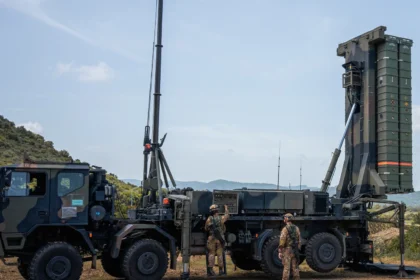


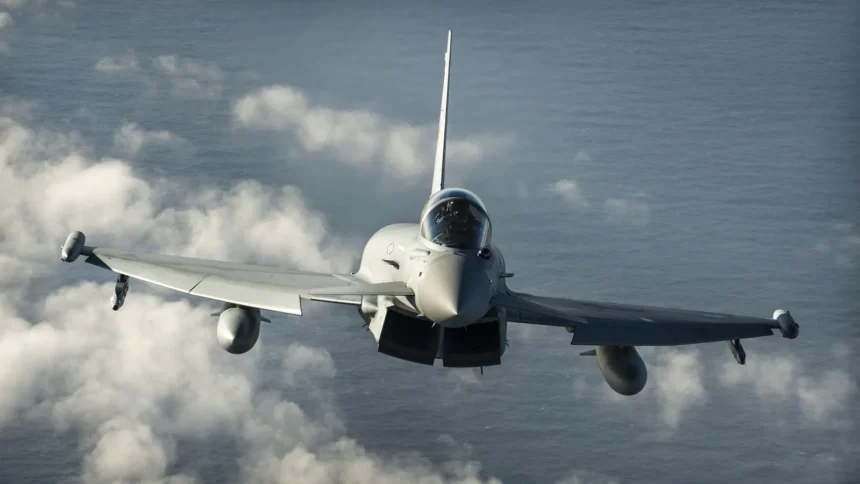
This GRYD Weekly Briefing covers 17 to 23 October 2026, a week dominated by air defence. Britain sent RAF Typhoons to help protect Saudi Arabia from Houthi attacks, the Pentagon agreed a 10-year F-35 framework, and Russia said it shot down 1,015 Ukrainian drones in one night.
- Key takeaways
- 1. Britain sends Typhoons as Houthi strikes on Saudi Arabia escalate
- 2. Pentagon and Lockheed agree a 10-year F-35 framework
- 3. Ukraine’s 1,000-drone night and missiles on Kyiv
- 4. France orders four more SAMP/T NG air defence systems
- 5. China says its newest nuclear submarines fired a strategic missile
- 6. Türkiye moves to ratify a defence pact with Saudi Arabia and Pakistan
- 7. AUKUS shows off payloads for its undersea drones
- The thread: air defence is the week’s scarcest resource
- What to watch next week
- Sources
Key takeaways
- Saudi air defence is becoming a coalition effort, with UK Typhoons flying defensive missions.
- The F-35 framework sets a floor of 850 US jets over 10 years, but Congress must still fund it.
- Türkiye is moving to ratify a mutual defence pact with Saudi Arabia and Pakistan.
1. Britain sends Typhoons as Houthi strikes on Saudi Arabia escalate
The UK Ministry of Defence said on 20 October that RAF Typhoons will protect Saudi cities and critical infrastructure in a defensive role, with no offensive strikes on the Houthis. “RAF Typhoons will fly defensive air missions to help protect Saudi airspace from drones and missiles”, Defence Secretary Wes Streeting said, according to the UK government. The jets will be based in Qatar, Forces News reports. On 21 October an attack on King Fahd International Airport in Dammam killed two people and wounded eight, Al Jazeera reports.
GRYD takeaway: Saudi Arabia’s shield now includes European fighters, and civilian airports are in the firing line.
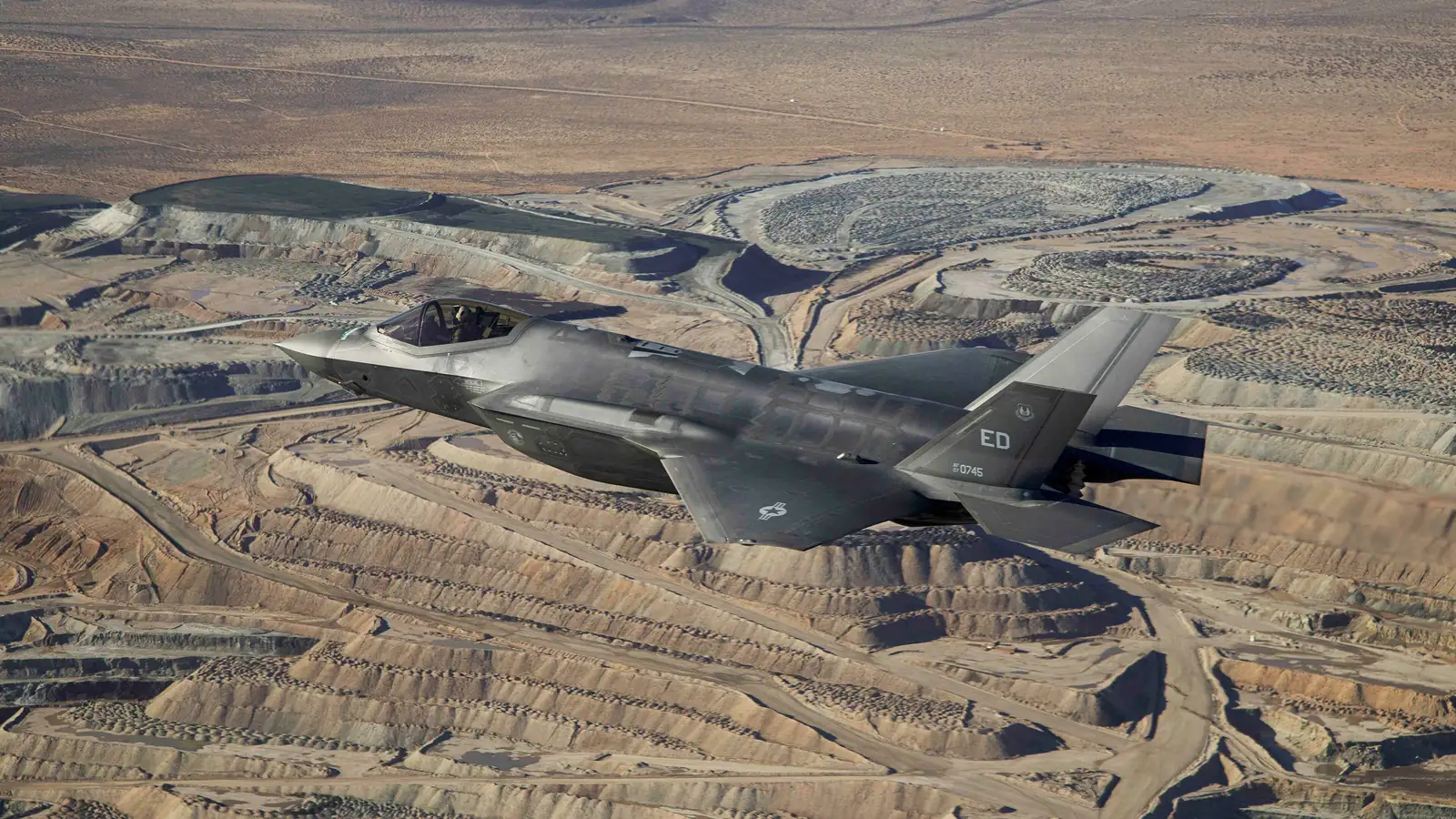
2. Pentagon and Lockheed agree a 10-year F-35 framework
The US Department of War and Lockheed Martin announced on 22 October a 10-year framework with a minimum floor of 850 US F-35s. Lockheed Martin says production holds at 156 aircraft a year, including international orders. The Pentagon says Lockheed will self-fund at least $7 billion of F-35 initiatives, and that execution “remains subject to Congressional authorization and appropriations”. Neither release gives a total value. More in our Airpower section.
GRYD takeaway: Allies and suppliers get a decade of production certainty, but the money is not yet voted.
3. Ukraine’s 1,000-drone night and missiles on Kyiv
Russia’s Defence Ministry said it downed 1,015 Ukrainian drones in one night, Al Jazeera reports. In St Petersburg, 850 km from Ukraine, fires hit the city’s oil terminal and one person was killed, the Kyiv Independent reports. On 21 October Vladimir Putin agreed “in principle” to resume three-way talks with Ukraine and the US, with no date set. That night Russia fired 21 ballistic missiles at Kyiv, and at least four people were killed across Ukraine, the Associated Press reports via the Taipei Times.
GRYD takeaway: Both sides are striking energy and infrastructure far behind the front, while diplomacy has no calendar.
4. France orders four more SAMP/T NG air defence systems
France’s procurement agency, the DGA, ordered four more SAMP/T NG sections from Eurosam (MBDA and Thales) on 21 October, taking the fleet to 12, ten of them by the end of 2030, Mer et Marine reports. See our SAMP/T NG vs Patriot head-to-head.
GRYD takeaway: Europe is putting real money into its own long-range air defence.
5. China says its newest nuclear submarines fired a strategic missile
Chinese state media said on 17 October that third-generation Changzheng nuclear submarines had test-fired a submarine-launched strategic missile. Bloomberg, via the Japan Times, says it is the first time Beijing has said its latest boats were used. Analysts at CSIS tracked a 6 July test that flew roughly 7,300 km, China’s first submarine-launched ballistic missile into open international waters.
GRYD takeaway: Beijing wants its sea-based nuclear deterrent to be seen.
6. Türkiye moves to ratify a defence pact with Saudi Arabia and Pakistan
President Recep Tayyip Erdoğan has sent the Mecca Joint Defence Agreement to parliament for ratification, Al Jazeera reports. Signed on 7 August, the 16-article pact treats an armed attack on one member as an attack on all, similar to NATO’s Article 5, and lasts 10 years, Al-Monitor and Al Jazeera report. Türkiye, Qatar, Indonesia and Pakistan also signed the “Badr” defence cooperation memorandum, Anadolu Agency reports.
GRYD takeaway: A NATO member is building a second web of security promises across the Gulf and South Asia.
7. AUKUS shows off payloads for its undersea drones
Australia unveiled payloads for its Ghost Shark and Speartooth uncrewed underwater vehicles and the BlueBottle on 19 October, from supply caches to sea mines and aerial drones, Australia’s defence ministers said. Some will feature in Maritime Big Play Pacific, an AUKUS demonstration off Southern California running to 26 October, the Pentagon says. More in Seapower.
GRYD takeaway: One drone hull with swappable payloads can lay mines, deliver supplies or launch aircraft.
The thread: air defence is the week’s scarcest resource
Three of this week’s seven stories turn on the same problem: stopping things that fly. Saudi Arabia needs foreign fighters to guard its cities. Russia faced more than 1,000 drones in a night, by its own count, and Kyiv 21 ballistic missiles. France is ordering more SAMP/T NG, while Ukraine’s president says Patriot interceptors that European allies paid for are being held up in Washington, a claim a US official denies, as we reported this week.
Demand for air defence is rising on several fronts, and fighters and interceptors take years to build. That is why long production deals such as the F-35 framework and orders such as SAMP/T NG matter as much as any single strike. The second pattern is political: Türkiye, Saudi Arabia, Pakistan and Qatar are writing security agreements with each other, and Britain will help defend the Gulf, but only defensively. Expect more coalition-style air defence while the Houthi campaign continues.
What to watch next week
- Any outcome from Friday’s Istanbul meeting of British, French and German ministers with Türkiye, Saudi Arabia, Pakistan and Egypt on Yemen and the Strait of Hormuz, Al Jazeera reports.
- Whether Congress funds the F-35 framework.
- The Turkish parliament’s vote on the Mecca pact.
- A date for three-way talks between Russia, Ukraine and the US.
More editions: GRYD Briefings.
Sources
- UK Government: Operational update 20 October, UK military support to the Kingdom of Saudi Arabia
- Forces News: RAF Typhoons to fly defensive missions to protect Saudi Arabia from Houthi air attack
- Al Jazeera: Attack on Saudi Arabia’s King Fahd airport kills two people
- US Department of War: Department of War and Lockheed Martin finalise 10-year F-35 deal
- Lockheed Martin: New framework agreement for multiyear F-35 production and sustainment
- Al Jazeera: Ukraine launches over 1,000 drones at Russia
- Kyiv Independent: St Petersburg slammed by drones in mass Ukrainian attack
- Taipei Times (Associated Press): Russian missiles pound Kyiv a day after US talks
- Mer et Marine: La DGA commande quatre systèmes supplémentaires de défense sol-air SAMP/T NG
- Japan Times (Bloomberg): China reveals nuclear sub test-fire
- CSIS: China’s SLBM test underscores the importance of a ballistic missile launch notification agreement
- Al Jazeera: Türkiye moves to ratify Mecca defence pact with Pakistan, Saudi Arabia
- Al-Monitor: Turkey submits Saudi-Pakistan defence pact to parliament for ratification
- Anadolu Agency: Morning Briefing, 22 October 2026
- Australian Defence Ministers: Australia advances undersea warfare capabilities
- US Department of War: US, Australia, UK launch maritime demonstration to enhance interoperability
- Al Jazeera live: European, Mideast ministers meet in Istanbul for talks