


GRYD Explained
- Key takeaways
- In this explainer
- What is the PAC-3 MSE?
- How it works
- PAC-3 MSE specifications
- Why Europe needs a PAC-3 repair hub
- Timeline
- Who operates it and how the hub compares
- Strengths and limitations
- Common questions
- Will Poland build PAC-3 missiles?
- When will the PAC-3 hub open, and where?
- Why did Poland win?
- Is the PAC-3 MSE the same as PAC-2?
- Sources
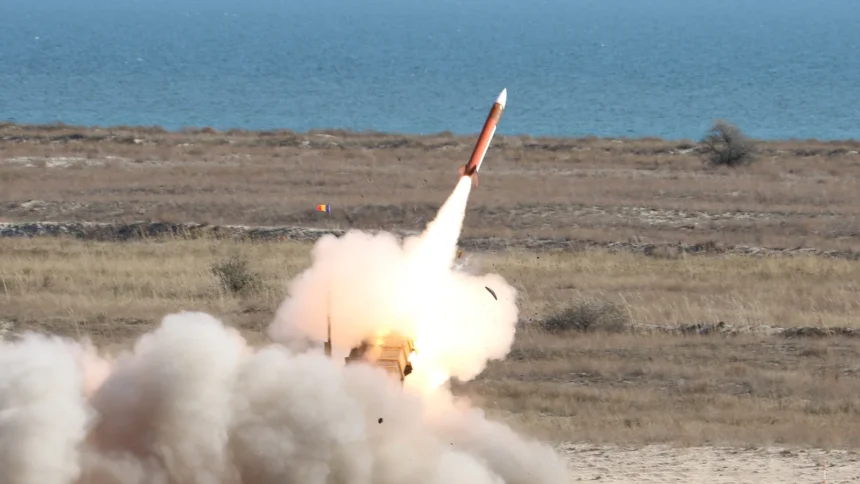
The PAC-3 MSE is Lockheed Martin’s hit-to-kill interceptor for the Patriot air defence system, built to destroy ballistic missiles, cruise missiles and aircraft by striking them directly. On 27 October 2026 the US chose Poland to host Europe’s first PAC-3 maintenance facility, so allies should no longer need to ship rounds to America for servicing once it opens.
Key takeaways
- The US Department of War named Poland host of the European PAC-3 Missile Maintenance Facility on 27 October, with Germany, the Netherlands and Sweden leading supply chain integration.
- Lockheed Martin says the site will carry out repair, refurbishment, lifecycle support and recertification of PAC-3 interceptors.
- Poland’s defence ministry says rounds needing certification currently go to the United States, a round trip that takes more than ten months.
- Poland puts the project at about PLN 1 billion (roughly US$250 million) and expects it to be running in about a year, Polish Radio reports.
- It is a sustainment centre, not a factory. PAC-3 MSE production stays in Camden, Arkansas.
What is the PAC-3 MSE?
PAC-3 stands for Patriot Advanced Capability-3, and MSE for Missile Segment Enhancement. It is the newest interceptor in the Patriot family, the US-designed ground-based system that many NATO members use as the top layer of their air and missile defence.
Lockheed Martin describes the PAC-3 family as “combat-proven Hit-to-Kill interceptors” that defend against tactical ballistic missiles, cruise missiles, advanced threats and aircraft. The MSE builds on the older PAC-3 Cost Reduction Initiative (CRI) round, adding a bigger motor and a more agile airframe to reach higher and further.
Demand is the reason it is in the news so often. The company says it produced more than 500 PAC-3 MSEs in 2024, a record year, and more than 2,500 in total. Lockheed Martin also says the US government awarded it $58.62 billion this year to keep accelerating production.
How it works
Most older air defence missiles explode near their target and rely on a spray of fragments. The PAC-3 family instead uses “direct body-to-body contact”, which Lockheed Martin says delivers far more kinetic energy on the target than a blast-fragmentation warhead. Against a ballistic missile warhead, hitting it squarely matters because a near miss may not destroy it.
To get that close, the MSE uses what Lockheed Martin calls a “two-pulse solid rocket motor”. The first pulse drives the missile out towards the threat, and the second can be fired later in flight, giving extra energy for the final manoeuvres. Larger fins, upgraded actuators and thermal batteries add agility and extend its reach, according to the company’s product card.
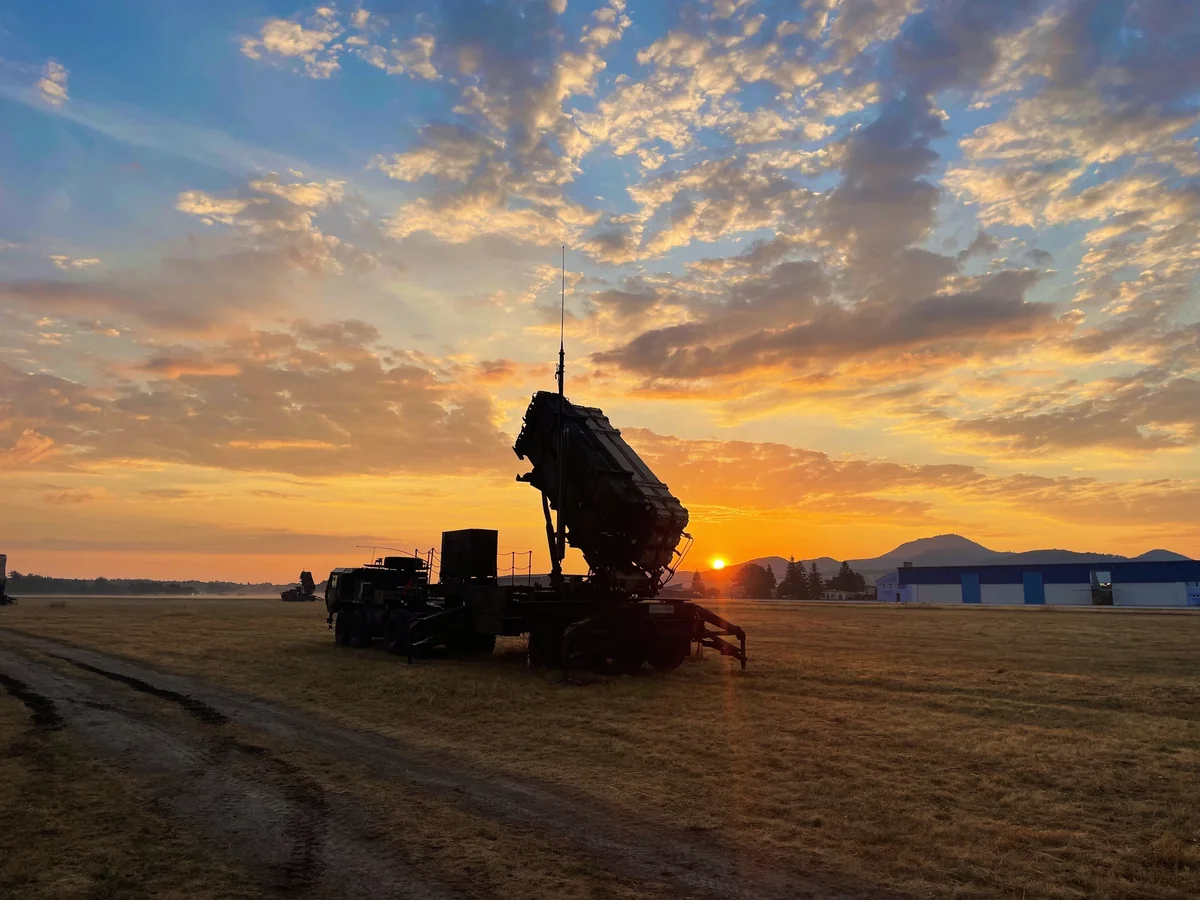
Publicly available specifications, summarised by Defense WarRoom, describe a Ka-band active radar seeker that guides the missile in the final seconds, and small attitude control motors near the nose for last-moment corrections. Each round lives in its own sealed canister, which Lockheed Martin says gives “logistical flexibility with minimal launcher modifications”.
PAC-3 MSE specifications
| Item | Detail | Source |
|---|---|---|
| Maker | Lockheed Martin, built in Camden, Arkansas | Lockheed Martin |
| Role | Hit-to-kill interceptor against tactical ballistic missiles, cruise missiles and aircraft | Lockheed Martin product card |
| Propulsion | Two-pulse solid rocket motor | Lockheed Martin product card |
| Guidance | Ka-band active radar seeker | Defense WarRoom, from public specifications |
| Launcher load | Up to 12 MSE, or 6 MSE plus 8 CRI, per launching station | Lockheed Martin product card |
| Countries that chose PAC-3 | 17 | Lockheed Martin fact sheet |
| Rounds produced | More than 2,500 MSEs | Lockheed Martin fact sheet |
| Production rate | More than 500 in 2024; capacity contract for 650 a year, expected by 2027 | Lockheed Martin |
| Networks it has joined | F-35, IBCS, THAAD and Aegis integration demonstrated | Lockheed Martin fact sheet |
Neither of the Lockheed Martin fact sheets used here gives a range or altitude figure, so GRYD does not quote one.
Why Europe needs a PAC-3 repair hub
Interceptors are not fire-and-forget stock. They sit in canisters for years and need checks, repairs and periodic recertification before they can be trusted in battle. Until now, European users have had to send PAC-3 rounds back across the Atlantic for that work. Deputy Defence Minister Magdalena Sobkowiak-Czarnecka said the shipping, work and return take “kilkanaście miesięcy”, a Polish phrase meaning more than ten months and under two years.
That is a long time for a missile to be missing from a magazine. Every round away for servicing is a round that cannot defend a city or an air base. The US release says the facility will “dramatically shorten turnaround times” and frames it as “keeping launchers loaded, sustaining critical operations, and ensuring NATO Allies are prepared to fight tonight”.
“By investing national resources to establish this critical sustainment capability on NATO’s Eastern Front, Allies are sending a clear message: the Alliance is united, serious about deterrence, and ready to back our words with action,” said Michael P. Duffey, Under Secretary of War for Acquisition and Sustainment.
The pressure on stocks is real. Polish Radio notes that air defence stocks have been strained by the wars in Ukraine and the Middle East. GRYD has reported how Kyiv accused Washington of holding up Patriot interceptors that Europe had paid for, a reminder that a single supply line is a weak point.
GRYD analysis: the hub does not add a single new missile, but it can raise the share of existing missiles that are ready to fire. For an alliance facing long waits for new production, keeping current rounds serviceable is the fastest lever available. How much it helps depends on throughput, which nobody has published yet. Placing it in Poland also puts the work close to NATO’s eastern flank, the front line in the alliance’s block, blunt and break approach to defence.
Timeline
- September 2023: Poland signs phase two of its Wisła Patriot programme, worth PLN 47.6 billion, Defense WarRoom reports.
- November 2023: Romania holds its first Patriot live-fire exercise at Capu Midia, according to DVIDS, the US military media service.
- Late 2024: construction begins on a plant in southern Germany to build more than 1,000 PAC-2 interceptors, Breaking Defense reports.
- 2024: Lockheed Martin produces more than 500 PAC-3 MSEs, a record year.
- 7 July 2026: the US, Germany, the Netherlands, Poland and Sweden sign an agreement in Ankara to explore a European PAC-3 sustainment site, Defense WarRoom reports.
- 9 October 2026: Lockheed Martin debuts PAC-3 Edge, a new interceptor based on MSE technology, for the US Army.
- 27 October 2026: Poland is selected to host the European PAC-3 Missile Maintenance Facility.
- Around late 2027: the facility could be operational, if Poland’s estimate of about a year holds.
Who operates it and how the hub compares
Poland is building one of Europe’s largest Patriot forces. Polish Radio reports that under Wisła it has received two batteries and ordered around 200 PAC-3 MSE interceptors in its first phase, with six more batteries and roughly 600 further interceptors in phase two. Defense WarRoom puts the end state at eight batteries.
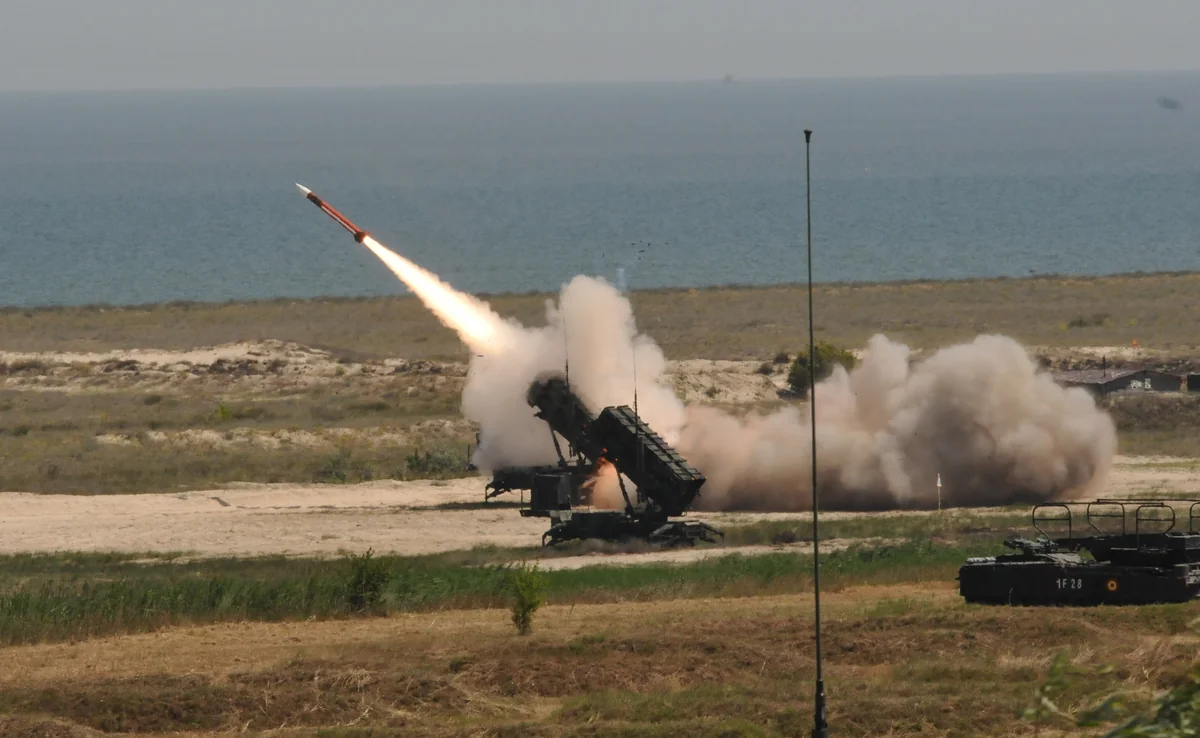
Germany, the Netherlands and Sweden, the three countries leading the hub’s supply chain, all operate Patriot already. Romania fields the system on the Black Sea coast, where GRYD recently covered Romanian F-16s shooting down Russian-made drones.
The Polish site is different from Europe’s other big Patriot project. Breaking Defense notes that the German plant is for producing PAC-2 interceptors, while Poland’s facility is for maintenance. Polish Radio says officials in Warsaw are interested in building Patriot interceptors at home one day, but this announcement does not cover production.
Europe also has a home-grown alternative in the Franco-Italian SAMP/T NG and its Aster missiles. For how the two systems stack up, see GRYD’s comparison of SAMP/T NG vs Patriot.
Strengths and limitations
Strengths
- Proven in combat. Lockheed Martin calls the PAC-3 family combat-proven, and Polish Radio notes Patriot’s key role in defending Ukraine against Russian ballistic missiles.
- Dense magazines. Up to 12 MSEs fit on one launching station, according to Lockheed Martin.
- Networked. The company says it has demonstrated integration with F-35, IBCS, THAAD and Aegis.
Limitations
- Supply. Demand runs ahead of output, which is why the US and Lockheed Martin keep expanding production.
- Cost exchange. Using a high-end interceptor against cheap drones is poor value, a problem many allies are trying to solve with lower-cost weapons.
- Sustainment distance. Until the Polish hub opens, servicing still means a long trip to the United States.
Common questions
Will Poland build PAC-3 missiles?
Not under this deal. The facility will repair, refurbish and recertify interceptors. Polish officials have said they are interested in future domestic production, but nothing has been agreed.
When will the PAC-3 hub open, and where?
Sobkowiak-Czarnecka said it should take about a year to become operational. Officials have not said where in Poland it will be built. Deputy Defence Minister Paweł Zalewski said the state-owned Polish Armaments Group (PGZ) would be involved.
Why did Poland win?
Poland beat bids from Germany, the Netherlands and Norway, according to its defence ministry, which said the Polish offer was rated highest. US Ambassador Tom Rose said Poland earned the opportunity through “its strong proposal, eagerness to expand its defense industrial capabilities, and willingness to invest in its own defense”.
Is the PAC-3 MSE the same as PAC-2?
No. The PAC-3 family, including MSE, destroys targets by direct hit, which Lockheed Martin contrasts with blast-fragmentation designs. The new German plant will build PAC-2 interceptors, a separate missile. A single launching station can still mix PAC-3 types, such as six MSE and eight CRI rounds.
Sources
- U.S. Department of War, Poland selected to host historic PAC-3 Missile Maintenance Facility (27 October 2026)
- Lockheed Martin, Lockheed Martin welcomes dedicated PAC-3 Missile Maintenance Facility in Poland (27 October 2026)
- Polish Ministry of National Defence, W Polsce powstanie centrum obsługi pocisków rakietowych PAC-3 (27 October 2026, in Polish)
- Lockheed Martin, PAC-3 MSE product card (2024)
- Lockheed Martin, PAC-3 fast facts (2026)
- Lockheed Martin, PAC-3 MSE achieves record production year (2025)
- Polish Radio, Poland selected to host European Patriot missile maintenance hub (27 October 2026)
- Breaking Defense, Defense Department selects Poland for new PAC-3 maintenance facility (27 October 2026)
- Defense WarRoom, Poland wins PAC-3 missile maintenance facility (27 October 2026)
- DVIDS, Romania holds PATRIOT live-fire exercise (2023)
More GRYD coverage: Missiles and air defence.
Last reviewed: 28 October 2026