
Finland wants about one million anti-personnel mines because it left the Ottawa Convention, the treaty that bans them, on 10 January 2026 and says it needs its own stock against a long-term Russian threat. The Finnish Defence Forces (FDF) aim to start domestic production in 2028, in a project of about €100 million. No contracts are signed yet.
- Key takeaways
- Contents
- What is an anti-personnel mine?
- How the Ottawa ban works, and how a country leaves
- Finland’s mine plan at a glance
- Timeline: from the ban to new production
- Who else has left, and who never joined
- Why Finland says it needs them
- Strengths and limitations
- What we don’t know yet
- Common questions
- Is Finland breaking international law?
- Will Finland lay mines along its border now?
- Why one million?
- Are anti-tank mines banned too?
- Sources
Key takeaways
- Finland’s withdrawal from the Ottawa Convention took effect on 10 January 2026, six months after it notified the United Nations (UN Treaty Collection).
- The Finnish Defence Forces want about one million new anti-personnel mines from domestic makers, with production starting in 2028, Colonel Riku Mikkonen, the Army’s Inspector of Engineers, told the Defence Forces’ magazine Ruotuväki (reported by Yle, 19 October 2026).
- Two types are sought: a modern tube mine set off by tripwire and a pressure-activated mine, at about €200 and well under €100 each respectively (Iltalehti, citing Ruotuväki).
- An FDF request for information (RFI) says Finland is looking for mines that are “affordable and do not include any intelligence features” (Finnish Defence Forces Logistics Command).
- Estonia, Latvia, Lithuania and Poland have also left the treaty. Russia, the United States and China never joined it (UN Treaty Collection).
What is an anti-personnel mine?
The Ottawa Convention defines an anti-personnel mine as “a mine designed to be exploded by the presence, proximity or contact of a person and that will incapacitate, injure or kill one or more persons” (Article 2). The key word is the victim: the person who steps on it or walks into it sets it off. Anti-vehicle mines are a different category and are not banned by the treaty.
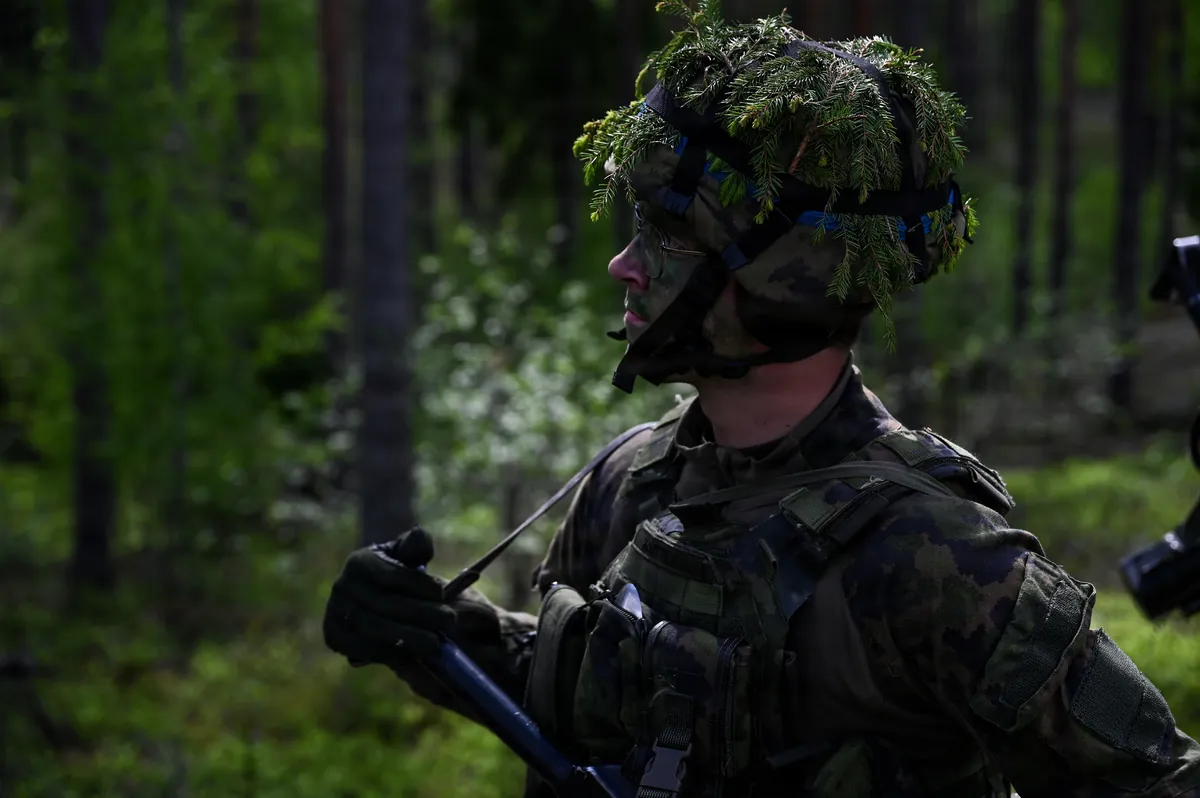
That definition explains a detail in Finland’s training. Since early 2026, the Finnish Defence Forces have trained conscripts with the viuhkapanos, a fan-shaped charge placed above ground that sprays metal pellets. Fired by a soldier who sees the enemy, it is a command-detonated weapon. Rigged to a tripwire, as instructors are now teaching, it works as a mine, Ruotuväki reported in February (Ruotuväki, in Finnish). On the treaty’s wording, the second use is the one the ban covered.
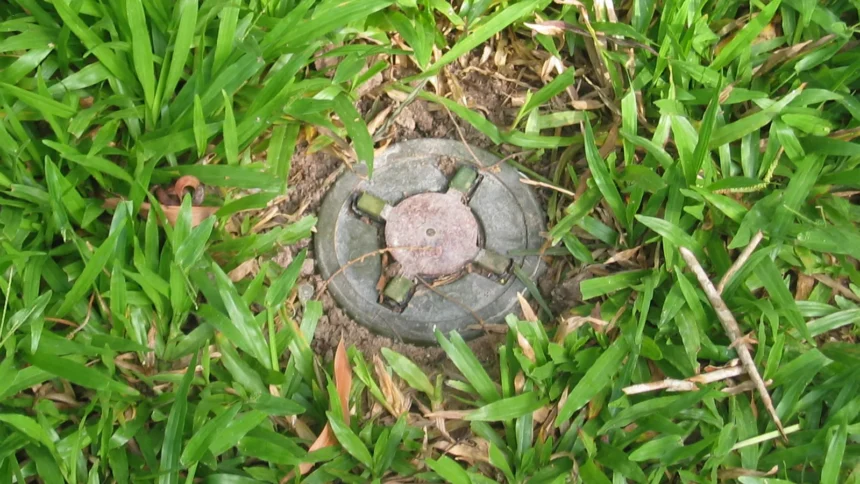
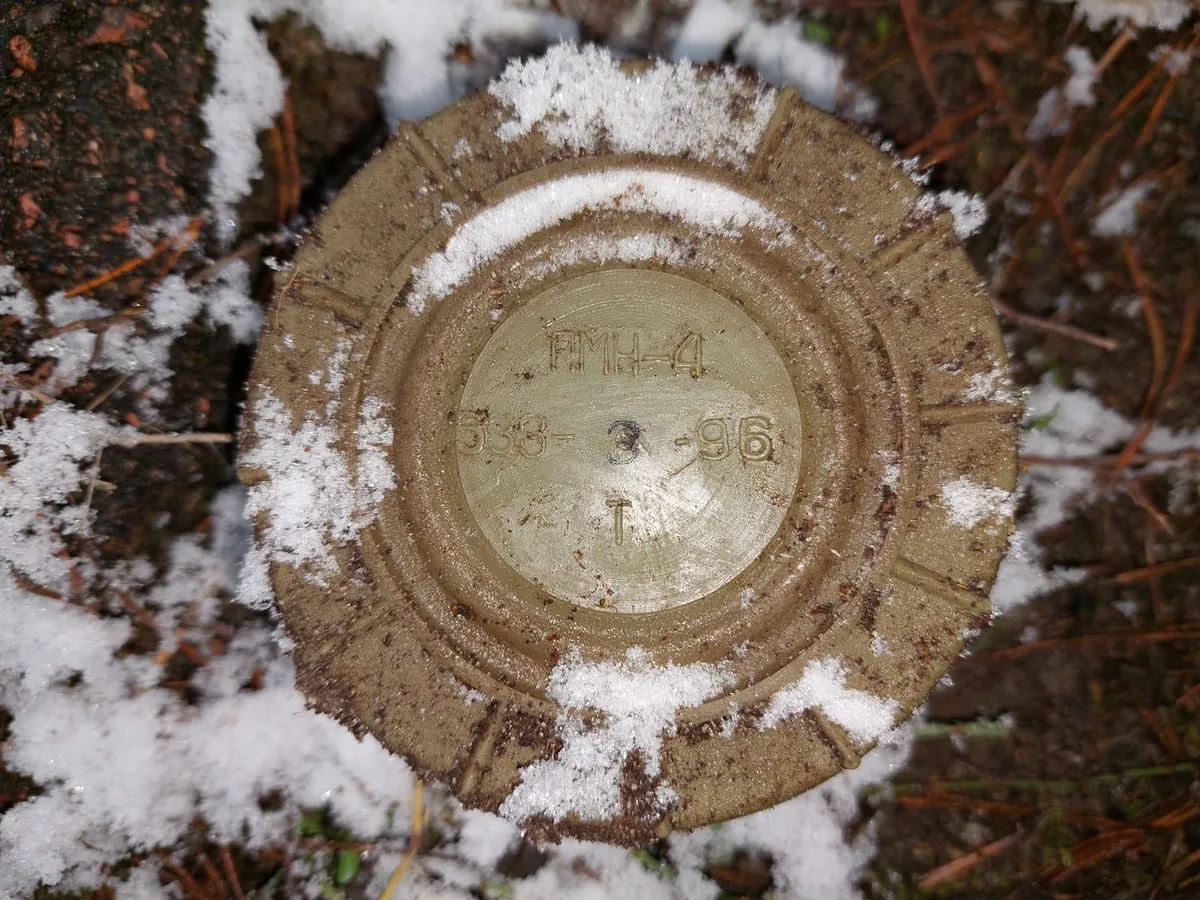
The two designs Finland now wants follow the same split. A tube mine is set above ground and triggered by a tripwire. A pressure mine, often called a step mine in English coverage, sits on or in the ground and goes off when stepped on. The photo at the top of this page shows a Soviet-made PMN-2, a widely used pressure mine. Finland has not published images or specifications of its new designs.
How the Ottawa ban works, and how a country leaves
Under Article 1, each state party undertakes “never under any circumstances” to use, develop, produce, stockpile or transfer anti-personnel mines, and to destroy the ones it has. A small number may be kept for training in mine detection and clearance (Article 3). The treaty entered into force on 1 March 1999 and now has 162 parties, according to the UN depositary.
Leaving is allowed. Article 20 gives each state the right to withdraw, with a written explanation sent to the other parties, the UN and the Security Council. The exit only takes effect six months after the UN receives it. If the country is in an armed conflict when those six months end, the withdrawal waits until the conflict is over. That clause matters for Ukraine (see below).
Finland is still bound by other rules. Its Ministry of Defence says the Defence Forces will plan and use the capability “with particular reference to” the Convention on Certain Conventional Weapons and its Amended Protocol II on mines, which Finland observed before joining Ottawa (Finnish Government, 16 January 2026).
Finland’s mine plan at a glance
| Item | What is known | Source |
|---|---|---|
| Status | Planning and market research. Requests for tenders to follow; no contracts signed | Uutissuomalainen, citing Ruotuväki |
| Quantity | About 1 million mines, roughly the stock Finland held before joining Ottawa in 2012 | Uutissuomalainen; Iltalehti |
| Budget | About €100 million (Col. Mikkonen’s estimate) | Yle; Iltalehti |
| Types sought | Modern tube mine (tripwire) and pressure-activated mine | Iltalehti; Uutissuomalainen |
| Unit price (approx.) | Tube mine about €200; pressure mine well under €100 | Iltalehti |
| Suppliers | Domestic preferred; around half a dozen Finnish firms able to make mines. A parallel request for information is open to international suppliers | Yle; FDF RFI 34878/2026 |
| Technology | RFI seeks mines that are “affordable and do not include any intelligence features” | FDF RFI |
| RFI deadline | Responses due 26 October 2026 | FDF RFI |
| Schedule | First new mines and training kit aimed for 2027; Finnish production from 2028; deliveries into the 2030s | Ruotuväki (February 2026); Uutissuomalainen |
| Peacetime use | Not laid in normal conditions; stockpiled except training mines | Finnish Government |
Compiled by GRYD on 21 October 2026. Prices and budget are Col. Mikkonen’s estimates as reported in Finnish media, not contract values. Some English-language reports convert the budget to about US$110 million (Defense War Room).
GRYD’s reading of the numbers. At the reported prices, one million tube mines alone would cost about €200 million, twice the stated budget. For roughly €100 million to cover about one million mines, most of the volume would have to be the cheaper pressure mine, or prices would have to fall at scale. This is our calculation from the reported figures; the Defence Forces have not published the split between the two types.
Timeline: from the ban to new production
- 3 December 1997: The convention opens for signature in Ottawa (UN Treaty Collection).
- 1 March 1999: The treaty enters into force.
- 9 January 2012: Finland accedes. It later destroys most of its old anti-personnel mines, Col. Mikkonen told Ruotuväki.
- 18 March 2025: The defence ministers of Poland, Latvia, Lithuania and Estonia recommend leaving the treaty. Finland announces preparations to withdraw about two weeks later (Library of Parliament, Canada).
- 10 July 2025: Finland deposits its notice of withdrawal with the UN.
- 27 December 2025: Withdrawal takes effect for Estonia, Latvia and Lithuania.
- 10 January 2026: Withdrawal takes effect for Finland.
- February 2026: Anti-personnel mine training begins with fan charges, starting at the Kainuu Brigade (Ruotuväki).
- 20 February 2026: Withdrawal takes effect for Poland.
- 29 September 2026: The Defence Forces Logistics Command publishes its request for information on fragmentation and blast mines.
- October 2026: Col. Mikkonen sets out the one-million-mine, €100 million plan in Ruotuväki.
- 2027 to 2028 (planned): First mines and training equipment, then Finnish production.
Who else has left, and who never joined
| Country | Notice deposited | Withdrawal effective | Production plans |
|---|---|---|---|
| Estonia | 27 June 2025 | 27 December 2025 | Not stated in our sources |
| Latvia | 27 June 2025 | 27 December 2025 | Not stated in our sources |
| Lithuania | 27 June 2025 | 27 December 2025 | Has indicated it will produce |
| Finland | 10 July 2025 | 10 January 2026 | Planned from 2028 |
| Poland | 20 August 2025 | 20 February 2026 | Has indicated it will produce |
| Ukraine | No notice deposited | Not withdrawn | Announced it had “suspended” the treaty in July 2025 |
Dates: UN Treaty Collection. Production plans: Library of Parliament, Canada. Ukraine: Library of Parliament; Arms Control Association.
All five leavers are members of the North Atlantic Treaty Organization (NATO) on the alliance’s north-eastern flank, the area covered in our Kaliningrad explainer. They left together, a step the International Campaign to Ban Landmines (ICBL) called “highly unusual” for a disarmament treaty (ICBL).
Ukraine is a different case. It said in July 2025 that it had suspended the treaty, but it cannot withdraw while it is at war, under Article 20. The treaty’s states parties said in December 2025 that the convention “does not allow the suspension of its operation” (Arms Control Association).
Russia, the United States and China are not parties and never were. Russia has used anti-personnel mines widely in Ukraine. Available evidence shows at least 13 types, including hand-laid pressure and tripwire mines and newer scatterable mines, and the UN Mine Action Service estimates that more than 20% of Ukraine’s land is contaminated by mines or unexploded ordnance (Library of Parliament, Canada).
Why Finland says it needs them
Helsinki’s case rests on the war in Ukraine and on supply. Defence Minister Antti Häkkänen said in January: “It is important for Finland’s military security of supply that we have a sovereign capability in anti-personnel mines in all security situations.” Ahead of the decision to leave the treaty, Prime Minister Petteri Orpo called Russia a long-term threat to Finnish and European security (Yle).
In Finnish doctrine, anti-personnel mines are one part of counter-mobility: slowing, channelling and stopping an attacker with anti-tank mines, ditches, felled trees and demolitions, alongside fire from defending troops (Ruotuväki). That fits the wider NATO approach to the eastern flank set out in our piece on the alliance’s “block, blunt, break” plan, where slowing an attacker near the border buys time for reinforcements.
Domestic production is part of the logic. Col. Mikkonen told Ruotuväki that there are still very few foreign mine makers, and that making mines in Finland gives more certainty that more can be produced if needed. The same supply worry runs through Europe’s air defence debate, as our report on Patriot interceptors waiting on Washington shows.
The ministry also says how the mines would be held: “The Finnish Defence Forces does not deploy mines under normal conditions, and all the anti-personnel mines Finland procures will be stockpiled with the exception of mines used in training and exercises.”
Strengths and limitations
Why militaries value them
- Cheap at scale. Reported unit prices are about €200 or less, and the RFI asks specifically for affordable designs.
- Time. Obstacles slow an attacker and force them into areas covered by defensive fire, which is the role Finnish doctrine gives them.
- Sovereign supply. Home production reduces reliance on the few foreign makers left.
The case against
- Civilian harm. The ICBL, citing Landmine Monitor 2025, says “9 out of 10 people killed or injured by landmines are civilians, and nearly half are children.”
- They outlast wars. In Ukraine, the UN Mine Action Service estimates that more than 20% of the land is contaminated by mines or unexploded ordnance, all of which must eventually be cleared.
- Diplomatic cost. States parties expressed “regret” over the withdrawals at their December 2025 meeting, and campaigners have urged the leavers not to produce or use mines (Arms Control Association; ICBL).
Finland’s answer to the civilian-harm argument is planning and records: its doctrine says mines “must be diligently planned, deployed and documented”, and the Defence Forces say training covers marking and monitoring minefields so that civilians and their own troops are not harmed (Finnish Government; Ruotuväki). Humanitarian groups are not persuaded. The Mines Advisory Group (MAG) said the harm landmines cause to civilians “during and long after conflict means that their use is never acceptable” (MAG, 27 December 2025).
What we don’t know yet
- Which Finnish companies will bid, and whether any foreign firm takes part.
- The technical details of either mine, including any self-destruct or self-deactivation features.
- How the one million mines splits between the two types, and the final contract value.
- Whether Finland later buys more advanced types. Uutissuomalainen reports that scatterable mines, which Russia uses in Ukraine, could come later. Minister Häkkänen has also spoken of “next-generation smart mines”, while the current RFI asks for mines without “intelligence features”.
Common questions
Is Finland breaking international law?
No. Article 20 lets any party withdraw, and Finland’s exit took effect on 10 January 2026 after the six-month notice period, according to the UN depositary. Finland says it still follows the law of armed conflict and the mine rules of the Convention on Certain Conventional Weapons.
Will Finland lay mines along its border now?
The government says no mines are laid in normal conditions, and new mines will be stockpiled apart from those used in training. Col. Mikkonen told Ruotuväki they would be used only in emergency conditions, in combat areas, under unit plans.
Why one million?
The figure is about the size of the stock Finland held before it joined the treaty in 2012, according to Ruotuväki as reported by Uutissuomalainen and Iltalehti.
Are anti-tank mines banned too?
No. The Ottawa Convention covers mines set off by a person. Mines designed to be set off by a vehicle are outside its definition, even when fitted with anti-handling devices.
More land warfare coverage sits in our Landpower section, and NATO’s eastern flank at sea is covered in our report on Black Sea drones and NATO.
Sources
- UN Treaty Collection: Convention on the Prohibition of Anti-Personnel Mines, status and withdrawal notes
- Anti-Personnel Mine Ban Convention: convention text
- Finnish Defence Forces Logistics Command: RFI 34878/2026, fragmentation and blast mines, 29 September 2026
- Finnish Government: Minister of Defence Antti Häkkänen on reintroducing anti-personnel mines, 16 January 2026
- Ruotuväki: anti-personnel mine training begins with fan charges, 13 February 2026 (Finnish)
- Yle News: Finland buying a million landmines, 19 October 2026
- Iltalehti: Ruotuväki, Finland’s €100 million mine project advances, 9 October 2026 (Finnish)
- Uutissuomalainen (Savon Sanomat): Defence Forces plan to order a million anti-personnel mines (Finnish)
- Library of Parliament, Canada: The Future of the Ottawa Treaty
- Arms Control Association: Countries Leave Mine Ban Treaty, January 2026
- ICBL-CMC: Poland’s withdrawal from the Mine Ban Treaty takes legal effect, 20 February 2026
- MAG: statement on the official withdrawal of the Baltic States from the Ottawa Treaty, 27 December 2025
- Defense War Room: Finland to restart anti-personnel mine production in 2028, 20 October 2026
Last reviewed: 21 October 2026.