

The Urumqi riots of July 5, 2009 weren’t a random “ethnic clash” – they were the turning point that gave Beijing the perfect excuse to turn Xinjiang into today’s full‑scale surveillance and internment lab.
From toy factory rumors to burning streets
The story that ended in blood on the streets of Urumqi actually began 4,000 km away in a toy factory in Shaoguan, Guangdong.
Hundreds of Uyghur workers had been shipped there under a controversial “labour transfer” programme meant to move poor western minorities into coastal factories alongside thousands of Han workers.
In late June 2009, an anonymous online post falsely accused Uyghur men of raping Han women at the Xuri Toy Factory, triggering a mob attack in which at least two Uyghurs were beaten to death.
Footage of the killings spread on Chinese social media, and anger travelled back to Xinjiang faster than any official investigation ever did.
On July 5, Uyghur students and residents in Urumqi gathered for what they said was a peaceful protest demanding justice for the murdered workers and protection from racist violence.
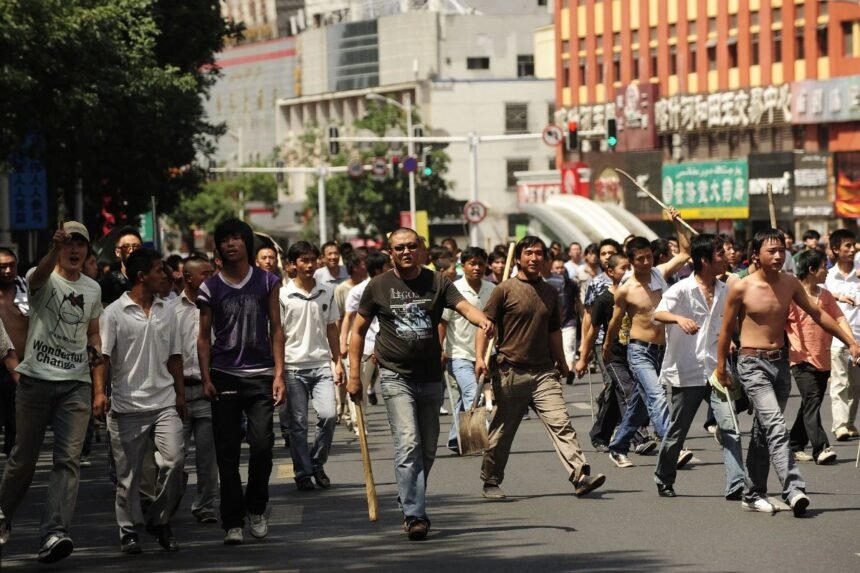
Multiple accounts describe police firing tear gas and live rounds into the crowd, after which the demonstration spiralled into one of the worst episodes of street violence in China since Tiananmen, with 190–197 people officially reported dead and around 1,700 injured.
Beijing’s “foreign plot” story vs what witnesses saw
Within hours, Beijing’s official narrative framed the unrest as a “premeditated, organized violent crime” masterminded abroad by exiled activist Rebiya Kadeer and the World Uyghur Congress.
State media emphasised Uyghur mobs attacking Han civilians, burning buses and shops, and accused “separatists overseas” of using the Shaoguan incident as a pretext to wreck social stability.
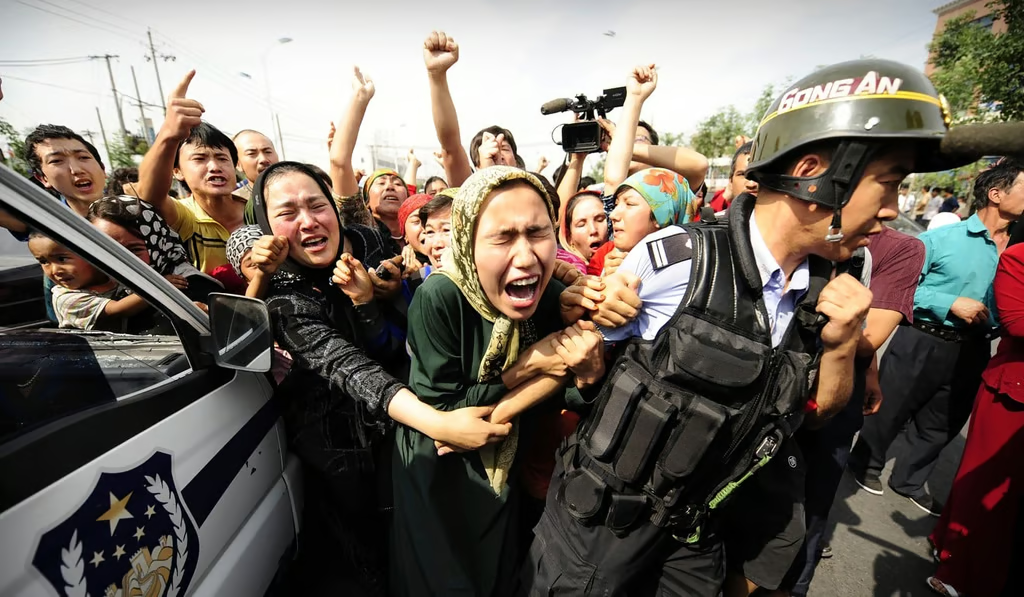
Exiled Uyghur groups and rights organisations, however, documented a very different sequence: a protest against the factory killings and discrimination, heavy‑handed policing, then chaos as security forces shot directly into crowds.
Amnesty International collected testimonies of protesters and bystanders describing unnecessary or excessive force, beatings, and live fire that turned an already tense rally into a massacre.
As usual in China’s playbook, blaming an outside conspiracy neatly avoided any discussion of systemic racism, economic dispossession, and long‑standing resentment at mass Han migration into a region where Uyghurs are the native population.
It also allowed authorities to package July 5 as a “terror incident” instead of a domestic rights crisis – a framing that would become crucial in the years to come.
Collective punishment and people who simply vanished
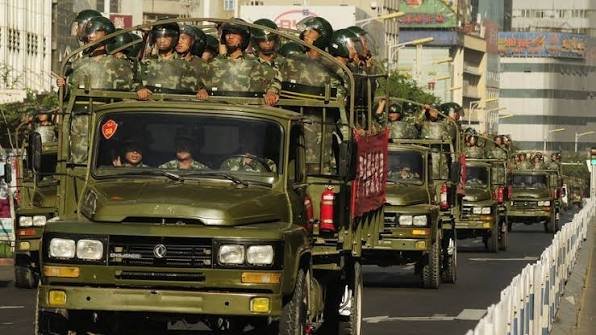
In the days after the riots, security forces launched city‑wide sweeps, grabbing hundreds of Uyghur men and boys from streets, shops and homes, often without warrants, explanations or access to lawyers.
One New York Times report described bakery workers, drivers and market vendors simply being snatched off the street or out of their buildings – families later had no idea which prison or camp they had been taken to, or whether they were even alive.
Human Rights Watch documented at least 43 enforced disappearances in Urumqi alone, mostly young Uyghur men detained in the immediate aftermath of the protests and never seen again.
Witnesses recounted buses filled with detainees being driven away after neighbourhood raids, with residents “too afraid to even look for them” because any question could make you the next suspect.
The crackdown didn’t stop at Xinjiang’s borders: 20 Uyghurs who had fled to Cambodia were forcibly returned to China in late 2009, with at least five later given life sentences and eight more receiving 16–20‑year terms linked to July 5.
Families who tried to speak publicly about missing relatives faced intimidation, surveillance and threats, creating a second layer of silence on top of the disappearances themselves.
From “riot response” to full‑scale surveillance state
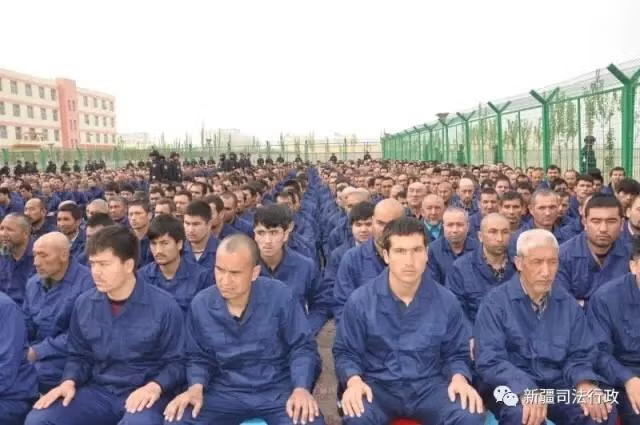
Ten years on, rights reporting and investigative journalism are clear on one point: July 5 didn’t just trigger a temporary security clampdown, it helped justify building an entirely new kind of police state in Xinjiang.
Analysts describe the region today as a “surveillance state,” with dense networks of checkpoints, cameras, predictive policing systems and party committees embedded in neighbourhoods – all sold to the world as lessons learned from the 2009 “terror riot.”
Reports estimate that more than a million Uyghur and other Muslim minorities have been detained in “re‑education” camps since 2017, a mass internment system officially justified as a necessary measure against “extremism” and “separatism.”
Legal and policy papers on ethnic governance in Xinjiang make clear that episodes like July 5 were used to argue for harsher security laws, broader definitions of “terror,” and sweeping powers for police and party organs over everyday life.
Put bluntly, Beijing took a protest against racist killings and turned it into the foundational myth for a high‑tech colonial project: “We were attacked once, therefore anything we do in the name of security is allowed.”
When you control the narrative, even enforced disappearances, mass trials and internment camps can be branded as “stability maintenance” and “poverty alleviation.”
Why the Urumqi anniversary still matters
Every July 5, official China remembers Urumqi as the day “violent mobs” tried to tear the country apart but Uyghur families remember it as the day relatives went out to protest and never came home.
For anyone watching China today, the anniversary is less about one night of street battles and more about the system that followed: a laboratory of total control later echoed in Xinjiang’s camps, and in the hardening of tactics in Tibet and Hong Kong.
So when Beijing talks about “lessons from July 5,” the lesson it really took was simple: never waste a crisis – weaponise it, legalise it, and turn it into a permanent justification for breaking your own laws.
Remembering the commencement of the Urumqi riots today means refusing that official amnesia, and insisting that the victims are not just numbers in a forgotten “incident,” but the first wave of a much larger project of engineered silence.