

GRYD Indo-Pacific Watch
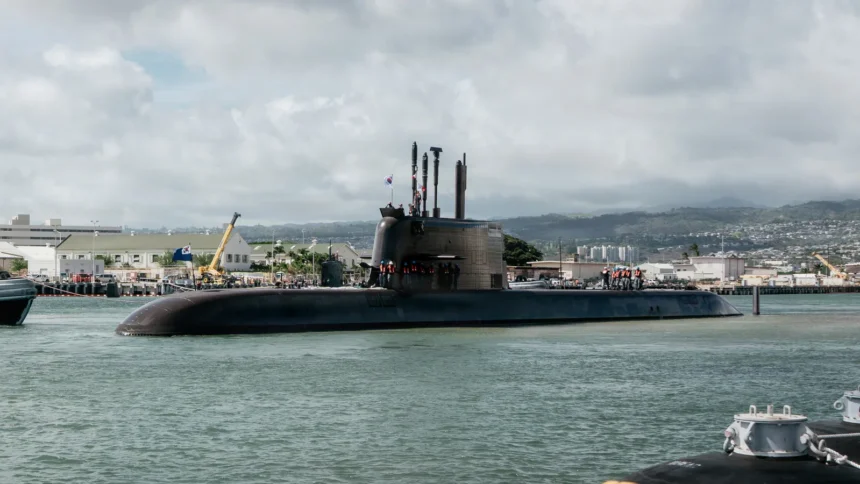
South Korea’s nuclear submarine programme will formally start in 2027 after Seoul approved its plan and waived a feasibility study, the arms agency said on 6 November. In the same week, Chinese state media said the DF-61 intercontinental missile had entered service, and Ukraine said Russia fired North Korean KN-23 missiles at a key energy site.
Key takeaways
- South Korea’s Defense Acquisition Program Administration (DAPA) approved the basic plan for the Jang Bogo N nuclear-powered submarine on 6 November, with the first boat due to launch in the mid-2030s, according to Yonhap.
- Seoul has still not secured the US nuclear fuel arrangement the project needs, The Korea Times reports.
- Chinese state broadcaster CCTV said on 5 November that the DF-61 intercontinental ballistic missile (ICBM) is now in routine training with the People’s Liberation Army (PLA) Rocket Force. The claim has not been independently verified.
- President Volodymyr Zelensky said preliminary findings show Russia used North Korean KN-23 missiles against a Ukrainian energy facility.
What we know
South Korea: nuclear submarine plan approved, feasibility study skipped
The 179th meeting of South Korea’s Defense Project Promotion Committee approved the basic acquisition strategy for the Jang Bogo N project, also known as KSS-III Batch-III, on Friday 6 November, Yonhap reported, citing a DAPA release. The project will formally begin in 2027. The plan is to launch the first submarine in the mid-2030s and deploy it in the late 2030s.
The programme was exempted from the preliminary feasibility study that major arms projects normally need, a step that usually takes one to two years, The Hankyoreh reported. Procurement rules allow the exemption for highly classified projects, and a DAPA official told reporters it was granted in August.
Domestic shipbuilders will bid for the contract to design and build the hull and integrate the boat’s systems. The government will procure the small modular reactor (SMR) that drives the submarine, and some key missiles, itself and supply them to the winner. The Hankyoreh says DAPA plans to choose a contractor in the second half of 2027 and sign by the end of that year.
DAPA did not publish a total cost. Media reports cited by Yonhap suggest Seoul wants at least three 8,000-tonne boats in a programme worth about 28.9 trillion won (US$21.3 billion at Yonhap’s conversion). Yonhap also reports that Seoul has US consent to power the submarines with uranium enriched to below 20 percent.
China: state media says the DF-61 is in service
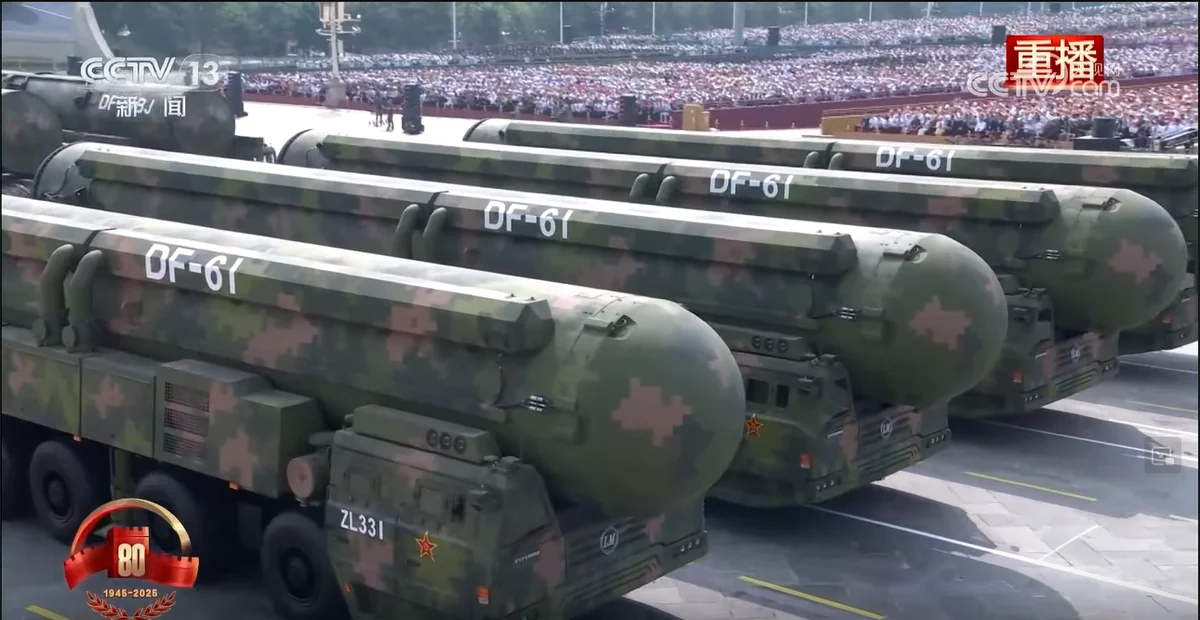
CCTV reported on Thursday 5 November that the DF-61 had been inducted into the PLA Rocket Force and was taking part in routine training, according to the state-run Global Times. Taiwan Defence and the South China Morning Post carried the report, but no one has independently confirmed it.
The road-mobile missile was first shown at the Beijing military parade on 3 September 2025. Military commentator Shao Yongling told CCTV that the quick move from parade to training showed the missile was mature. In the Global Times’ English version, she said: “Firstly, this shows that it had already completed development, finalization, trial deployment and reliability verification before its appearance, indicating a high level of technological maturity”.
According to Shao, routine training covers field mobility, changes of launch position and launch procedures. State media did not give the missile’s range, how many warheads it carries, how many have been delivered or where they are based, Taiwan Defence reported, citing the Liberty Times and Lianhe Zaobao.
Ukraine: North Korean KN-23s blamed for an energy strike
In a post on X on 7 November, Zelensky said Russia had launched 36 missiles on a ballistic trajectory overnight and that “Only four missiles were taken down.” He added: “According to preliminary findings, at one of the key energy facilities that was damaged, the Russians used KN-23 missiles manufactured and supplied by North Korea.”
The KN-23 is a North Korean short-range ballistic missile. NK News notes that Zelensky has accused Russia of firing North Korean ballistic missiles before, but did not name the model in those earlier statements. In the same post he said Ukraine faces “a significant shortage of interceptors for Patriot systems”.
Background
North Korea has been drawing closer to both Beijing and Moscow, as we reported when Kim Jong Un made a surprise trip to China in October. Allied forces have been answering China’s build-up with long-range weapons of their own, such as the anti-ship missiles Japan and the US placed on islands near Taiwan during Keen Sword 27.
On China’s nuclear force, the Pentagon’s 2025 report to Congress says China’s warhead stockpile “remained in the low 600s through 2024” but that the PLA “remains on track to have over 1,000 warheads by 2030”, as summarised by the Federation of American Scientists. Ukraine’s interceptor problem is not new either: in October Zelensky said the US was holding up Patriot interceptors that Europe had paid for. More regional coverage is collected on our Indo-Pacific security page.
This week at a glance
Status as of 9 November 2026.
| Development | Status | Key detail | Source |
|---|---|---|---|
| Jang Bogo N nuclear-powered submarine (South Korea) | Basic plan approved 6 November; formal start 2027 | First boat launch mid-2030s, deployment late 2030s; total cost not disclosed | Yonhap, citing DAPA |
| Submarine fuel from the US | Not secured | Seoul seeks a separate military arrangement under Section 91 of the US Atomic Energy Act | The Korea Times |
| DF-61 ICBM (China) | Inducted and in routine training, says state media; not independently verified | Range, warheads, numbers and bases not publicly confirmed | CCTV via Global Times; Taiwan Defence |
| China’s nuclear warheads | US assessment | Low 600s through 2024; on track for over 1,000 by 2030 | Pentagon 2025 report, via FAS |
| KN-23 use in Ukraine | Preliminary findings, per Kyiv | 36 ballistic-trajectory missiles in the attack, four intercepted | Zelensky on X, 7 November |
Why it matters
These are three separate stories, but they share one theme: ballistic missiles, and the platforms built to survive or hunt them. DAPA’s own case for the submarine, as Yonhap reports it, is deterrence against North Korea’s nuclear and missile threats and a stronger underwater role for the “Kill Chain”, South Korea’s plan to strike North Korean missiles before they launch. A nuclear-powered boat does not have to surface to recharge batteries, so it can stay submerged for far longer than a diesel-electric one, as Aju Press notes.
China’s message is about speed. If the CCTV account is accurate, the DF-61 went from parade float to routine drills in about 14 months. That is the claim Shao makes, and it also serves as a reply to doubts about the Rocket Force. Taiwan Defence, citing the Liberty Times’ reading of the Pentagon’s 2025 report, notes that China replaced the Rocket Force’s commander and political commissar in 2023. It is our reading that Beijing wants to show its nuclear force is unaffected. That is an inference, and the state media report offers no evidence anyone outside China can check.
The KN-23 claim links the two. Every missile Russia fires gives North Korea real combat use that no test range provides. That is our inference, not something Kyiv or Pyongyang has stated. It also explains why Seoul’s planners talk about catching missiles before launch rather than relying on interceptors alone. Zelensky’s own figure, four intercepted out of 36, shows how hard ballistic missiles are to stop once they are in flight.
What’s uncertain
- Fuel and Congress. According to The Korea Times, the two countries have held only one vice-ministerial consultation on fuel. Leif Eric Easley of Ewha Womans University told the paper that “implementation involves complicated technical, legal and nonproliferation requirements that will face congressional scrutiny”.
- Cost. DAPA has not published a budget. The 28.9 trillion won figure comes from earlier ministerial remarks and media reports, not from this week’s decision.
- The DF-61 itself. No official range, payload or production figures exist. Unofficial range estimates have circulated in Taiwanese media, but there is no confirmed data.
- The KN-23 finding. Zelensky called it preliminary and said technical assessments at the sites are continuing.
What to watch next
- DAPA’s basic system development plan, due in the first half of 2027, and the tender that follows, according to the JoongAng Daily and Yonhap.
- South Korea’s budget talks on the submarine’s cost, expected early in 2027, The Korea Times reports.
- Any US move on a Section 91 fuel arrangement, and how the new Congress handles it.
- The Pentagon’s next annual China report, for any official US view on whether the DF-61 is deployed.
- The G7 meetings that Zelensky says are being prepared, and new European contributions to the PURL scheme (the Prioritized Ukraine Requirements List) for US-made air defence.
Sources
- Yonhap: Arms review committee approves plan for nuclear-powered submarine project, 6 November 2026
- The Hankyoreh: South Korea moves up launch of nuclear submarine construction project to 2027, 9 November 2026
- The Korea Times: Korea’s nuclear submarine project faces hurdles despite key approval, 8 November 2026
- Korea JoongAng Daily: South Korea to launch nuclear-powered submarine program in 2027
- Global Times (Chinese state media): ICBM DF-61 enters routine training with PLA Rocket Force, 5 November 2026
- Taiwan Defence: China says its new DF-61 intercontinental missile has entered Rocket Force service, 5 November 2026
- South China Morning Post: Is China getting faster at integrating new nuclear missiles into its forces?
- Volodymyr Zelensky on X, 7 November 2026
- NK News: Russia used North Korean KN-23 missiles in Ukraine energy site strike: Zelensky, 9 November 2026
- Aju Press: South Korea waives feasibility review for nuclear submarine project, 6 November 2026
- Federation of American Scientists: The Pentagon’s (slimmed down) 2025 China Military Power Report
- US Department of Defense: Military and Security Developments Involving the People’s Republic of China 2025 (report to Congress)