


Introduction:
This strategic assessment examines how targeted eliminations in Pakistan, widely described in Indian commentary as ‘Unknown Gunman’ operations, evolved between 2020 and April 2026 and reshaped the security equation in South Asia.
Open-source reporting confirms a pattern of Pakistan-based terrorists linked to anti-India groups being shot dead by unidentified assailants in cities such as Lahore, Karachi and Rawalpindi during this period. The report argues that these targeted eliminations, combined with overt precision strikes attributed here to Operation Sindoor in May 2025, have severely disrupted the leadership, recruitment and logistics of Lashkar-e-Taiba (LeT), Jaish-e-Mohammed (JeM), Hizbul Mujahideen (HM) and Khalistan-linked outfits.
It frames this campaign as part of a wider doctrinal shift from reactive defence on Indian soil to active deterrence through pre-emptive threat removal inside Pakistan’s own territory.
- Introduction:
- Regional context and methodology
- Pattern of ‘Unknown Gunman’ operations
- Phase I (2020–2022): Silent beginning and erosion of safe havens
- Phase II (2023): Surge and removal of the ‘old guard’
- Phase III (2024): Justice-driven and mid-level disruption
- Phase IV (2025): From covert eliminations to overt strikes (Operation Sindoor)
- Trigger event and political will
- Technical profile of Operation Sindoor
- Strategic meaning of the overt strikes
- Phase V (2026): Organisational fragmentation and ‘organisation falling ‘
- Profiles of key neutralised figures
- Harmeet Singh (‘Happy PhD’) – Khalistan Liberation Force
- Paramjit Singh Panjwar – Khalistan Commando Force
- Syed Khalid Raza – Al-Badr
- Bashir Ahmad Peer (Imtiaz Alam) – Hizbul Mujahideen
- Other JeM and LeT figures
- Strategic shifts:
- From reactive defence to active deterrence
- Exposing ISI vulnerabilities and degrading ecosystems
- Emergence of hybrid and ‘white-collar’ threats
- Key accomplishments and ongoing risks (2020–2026)
- The active deterrence model
- Conclusion:
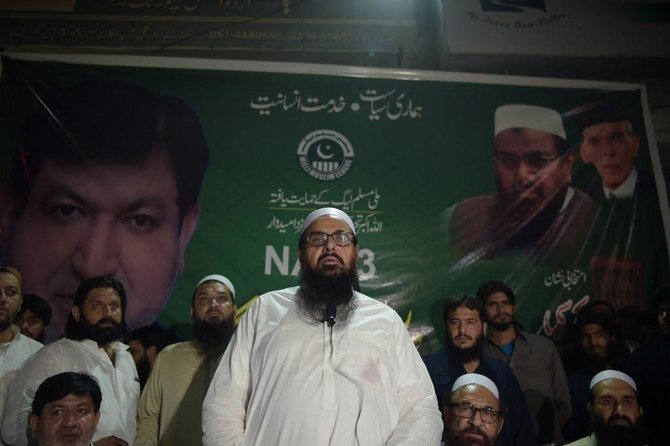
Chronologically, the assessment identifies five overlapping phases: an initial silent phase (2020–2022) targeting legacy figures and Khalistani networks; a 2023 surge that removed key ‘old guard’ commanders; a 2024 phase of justice-focused eliminations; the escalation to overt cross-border strikes in 2025; and a 2026 phase in which terror organisations experience visible organisational fragmentation.
Across these phases, the ‘Unknown Gunman’ becomes both a tactical method and a psychological instrument that undermines trust within Pakistan’s state-supported militant ecosystem.
Regional context and methodology
Pakistan has hosted a range of anti-India terrorists organisations for decades, including LeT, JeM, HM, Al-Badr and multiple Khalistan-oriented outfits.
Many of their senior leaders have resided for years in Pakistani cities such as Lahore, Karachi, Bahawalpur and Rawalpindi, often enjoying varying degrees of protection or tolerance from elements of the state’s security apparatus.
The analysis in this report draws on three strands:
- Open-source media and monitoring databases documenting specific killings of wanted terrorists by unidentified gunmen in Pakistan and Pakistan-occupied territories.
- Indian strategic commentary, including platforms which interpret these killings as components of a deliberate counter-terrorism campaign aimed at degrading Inter-Services Intelligence (ISI) assets.
- The provided structured timeline (2020–2026), which consolidates multiple events into a phased framework and extends the narrative through April 2026.
Wherever possible, specific eliminations are checked against open-source reporting; claims not yet reflected in publicly available sources are treated as assessments and are clearly presented as such rather than as independently verified facts.
Pattern of ‘Unknown Gunman’ operations
Emergence of a recurring modus operandi
Since early 2020, several high-value terrorists based in Pakistan have been killed in shootings carried out by unidentified assailants, often on motorcycles and in or near urban environments.
Khalistan Liberation Force (KLF) chief Harmeet Singh, for example, was killed near Dera Chahal Gurdwara on the outskirts of Lahore on 27 January 2020, in a case that Pakistani authorities did not fully clarify and that Indian coverage linked to broader militant rivalries and external targeting.
Similarly, Khalistan Commando Force (KCF) chief Paramjit Singh Panjwar, a designated terrorist under India’s Unlawful Activities (Prevention) Act, was shot dead by two unidentified gunmen in Johar Town, Lahore, on 6 May 2023 during his morning walk.
In February 2023, former Al-Badr commander Syed Khalid Raza was shot in the head outside his residence in Karachi by assailants on a motorcycle in what police described as a targeted attack, just days after a senior Hizbul Mujahideen commander, Bashir Ahmad Peer (Imtiaz Alam), was killed by unknown assailants in Rawalpindi.
Indian media and strategic commentators have increasingly described this pattern as the work of mystery ‘death squads’ or ‘Unknown Gunmen’ focusing on Pakistan-based anti-India terrorists rather than random criminal violence.
This narrative emphasises the cumulative strategic effect: over time, Pakistan-based terrorist, including those long believed to be under state protection, are forced to assume that they can be reached anywhere, at any time.
Consolidated master timeline (2020–2026)
Based on the supplied chronology, supported where possible by open sources, the following are key waypoints in the evolving campaign:
| Date | Target | Organisation | Location | Strategic context |
|---|---|---|---|---|
| January 2020 | Harmeet Singh | KLF | Lahore | Early signal to Khalistan networks; protected figure eliminated near a high-security gurdwara complex. |
| January 2022 | Saleem Rehmani | LeT | Pakistan (undisclosed) | Removal of a field-level Lashkar operative; message that mid-tier operatives are not immune. |
| March 2022 | Zahoor Ibrahim | JeM | Karachi | IC814 hijacker living under an alias; end of a long-standing legacy figure. |
| September 2022 | Lal Mohammed | FICN syndicate | Kathmandu, Nepal | Disruption of fake Indian currency networks supporting cross-border terror financing. |
| February 2023 | Syed Khalid Raza | Al-Badr | Karachi | Former commander shot outside home; undermines jihadist networks in Pakistan’s largest city. |
| February 2023 | Bashir Ahmed Peer | HM | Rawalpindi | Senior HM launcher killed near Pakistan Army HQ city; raises questions over internal security. |
| May 2023 | Paramjit Singh Panjwar | KCF | Lahore | KCF chief and key Khalistan figure shot during a morning walk; blow to ISI-linked Khalistan infrastructure. |
| September 2023 | Muhammad Riaz | LeT | Pakistan-occupied Kashmir | PoK-based Lashkar commander reportedly killed at or near a mosque; signals reach into PoK. |
| October 2023 | Shahid Latif | JeM | Sialkot | Pathankot attack handler eliminated in a mosque; high symbolic value. |
| November 2023 | Akram Khan (Ghazi) | LeT | Bajaur | LeT recruitment cell head neutralised in tribal borderlands. |
| March 2024 | Abu Qatal | LeT | Pakistan (undisclosed) | Mid-level Lashkar operative removed; further decimation of operational cadres. |
| April 2024 | Amit Sarfaraz | Local asset | Lahore | Individual linked to the custodial killing of Indian national Sarabjit Singh targeted in Lahore. |
| May 7, 2025 | Mohd Yusuf Azhar + others | JeM | Bahawalpur & PoK | Leadership decapitation attributed here to Operation Sindoor air and missile strikes. |
| April 1, 2026 | LeT HQ commander | LeT | Muridke HQ | Reported Eid-day shooting inside Markaz Taiba complex; suggests continuing penetration of core Lashkar infrastructure. |
Events beyond early 2024, including Operation Sindoor and the April 2026 Muridke attack, are primarily derived from the provided analytical framework rather than from publicly verifiable reporting at the time of writing and are therefore treated as scenario-based assessments.
Phase I (2020–2022): Silent beginning and erosion of safe havens
Opening shots against Khalistan and legacy figures
Phase I begins with the killing of Harmeet Singh (‘Happy PhD’), the self-styled chief of the Khalistan Liberation Force and a key node in ISI-backed Khalistan networks operating out of Pakistan.
He was wanted in India for multiple targeted killings and for involvement in weapons and drug smuggling, and had developed extensive ties with other Pakistan-based Khalistani leaders and criminal networks.
His killing near Lahore in January 2020, amid conflicting local explanations about motives and perpetrators, signalled that senior Khalistan figures previously considered relatively secure in Pakistan were now vulnerable to targeted violence.
The event also created uncertainty among Khalistan factions and their Pakistani handlers, feeding speculation that foreign intelligence or intra-factional rivalries could have been involved.
By March 2022, attention had shifted to legacy figures of the IC814 hijacking era, notably Zahoor Ibrahim, who had reportedly lived in Karachi under an assumed identity for years.
According to the provided assessment, his elimination indicated that even terrorist tied to historic operations of the late 1990s were within reach, undermining the long-standing belief that time and geography could confer safety on such individuals.
Phase II (2023): Surge and removal of the ‘old guard’
Concentrated strikes on senior commanders
In 2023, the tempo and seniority level of targeted eliminations increased, with multiple high-profile killings clustered within months.
Open sources confirm that former Al-Badr commander Syed Khalid Raza was shot dead outside his Karachi residence on 26 February 2023, days after senior Hizbul Mujahideen commander Bashir Ahmad Peer (also known as Imtiaz Alam) was killed by unidentified assailants in Rawalpindi.
Both men had long-standing roles in jihadist campaigns in Jammu and Kashmir: Khalid Raza as an Al-Badr commander in the 1990s, and Peer as a ‘launching commander’ responsible for dispatching recruits and coordinating infiltration routes into the Kashmir Valley.
Their near-simultaneous eliminations in Pakistan’s core urban and military-administrative centres highlighted vulnerabilities in the very spaces that had historically enabled cross-border militancy.
The pattern continued in May 2023 when KCF chief Paramjit Singh Panjwar was shot dead by two unidentified gunmen during his morning walk in a housing society in Lahore.
Panjwar, long based in Pakistan, was deeply involved in weapons smuggling, funding structures and ideological mobilisation for Khalistan-linked militancy.
Operational and psychological impacts in 2023
The 2023 eliminations had distinct operational and psychological effects across multiple organisations:
- Al-Badr and HM: The removal of Khalid Raza and Bashir Peer degraded recruitment and infiltration pipelines connecting Karachi and Rawalpindi to the Kashmir theatre, reducing the flow of trained cadres and logistical support.
- Khalistan networks: Panjwar’s death further fractured the ISI-linked Khalistan ecosystem, removing one of the last high-profile commanders from the 1990s era and signalling that Pakistan-based patronage no longer guaranteed security.
- LeT and JeM: According to the provided timeline, subsequent hits on JeM handler Shahid Latif in Sialkot and LeT recruiter Akram Ghazi in Bajaur targeted the brains behind infiltration planning and recruitment, rather than only low-level operatives.
Indian strategic analysts have interpreted this phase as the systematic removal of the ‘old guard’ – commanders with deep institutional memory of Indo-Pakistani conflict who had survived previous cycles of pressure.
By eliminating these figures, the campaign sought to sever organisational continuity and create leadership vacuums that mid-level cadres would struggle to fill.
Phase III (2024): Justice-driven and mid-level disruption
Symbolic justice and message discipline
In 2024, the campaign as described in this assessment takes on a visible justice-oriented framing.
The reported killing in Lahore of Amit Sarfaraz (Sarfaraz Labba), linked to the custodial death of Indian national Sarabjit Singh in a Pakistani prison, is portrayed in Indian discourse as delayed but inevitable justice for attacks on Indian citizens and prisoners.
This type of target selection reinforces a message that involvement in anti-India violence, whether as a frontline militant or as a local enabler, carries enduring personal consequences.
From a psychological perspective, it expands the zone of perceived vulnerability to include individuals who previously saw themselves as insulated facilitators rather than frontline combatants.
Targeting mid-level but highly effective operators
The elimination of a mid-level but operationally important LeT operative, such as the Abu Qatal case cited in the timeline, highlights a complementary strand: systematic attrition of mid-tier field operators who translate leadership intent into executable plots.
These individuals often possess local networks, know-how and tactical initiative that can be difficult to replace quickly.
Indian commentary has characterised the cumulative effect as a ‘chain reaction’, in which fear of infiltration by informants and fear of being the next target pushes terrorist to suspect one another, sometimes leading to internal purges and breakdowns in discipline.
Such dynamics further impair command-and-control and may accelerate the fragmentation of previously cohesive cells into smaller, less capable units.
Phase IV (2025): From covert eliminations to overt strikes (Operation Sindoor)
Trigger event and political will
The assessment identifies the April 22, 2025 massacre in the Baisaran Valley near Pahalgam, Jammu and Kashmir, attributed to The Resistance Front (TRF), as the proximate trigger for a shift from purely covert action to overt cross-border strikes.
In this framework, the attack – which targeted Hindu tourists – crossed a political threshold that led New Delhi to authorise a broader kinetic response.
Whereas earlier phases largely maintained plausible deniability through anonymous gunmen, Operation Sindoor, as described here, represented a declared exercise of state power using air and missile assets against terrorist infrastructure deep inside Pakistan.
This marked a recalibration of India’s deterrence signalling, from whispers in the shadows to visible, attributable force.
Technical profile of Operation Sindoor
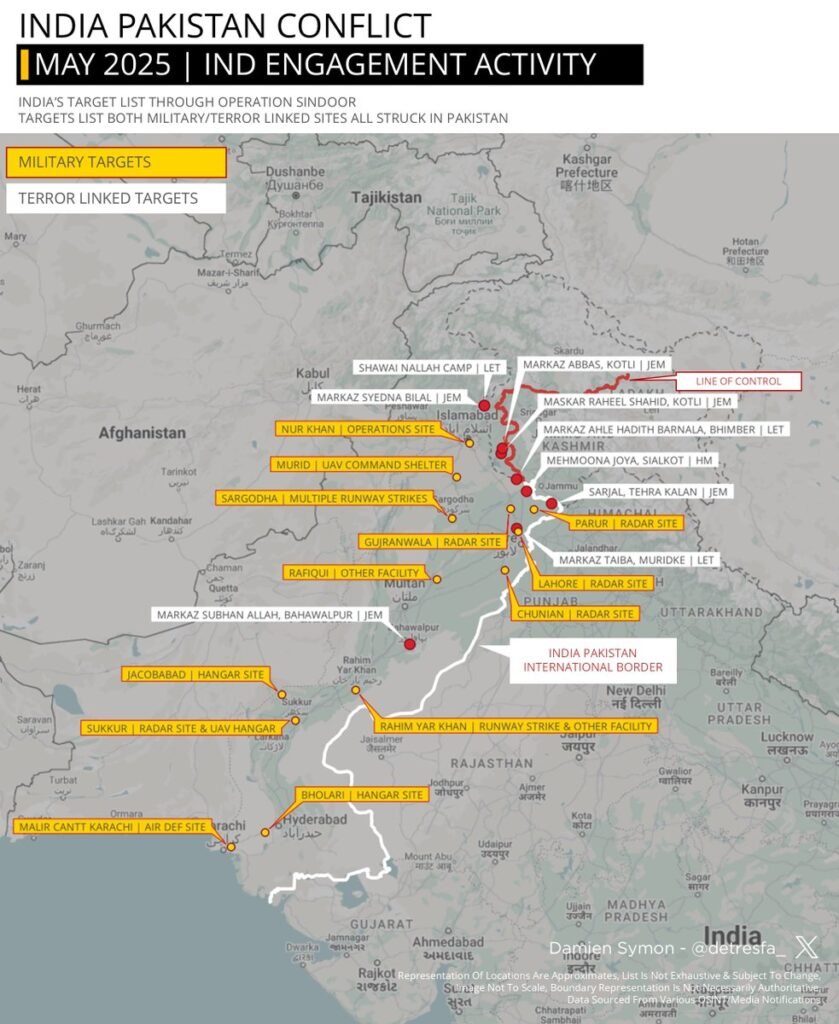
According to the provided scenario, Operation Sindoor unfolded in a tightly compressed window between 01:04 and 01:30 hours on 7 May 2025, combining Indian Air Force platforms such as Rafale, Mirage 2000 and Su-30MKI.
Standoff munitions including SCALP cruise missiles and HAMMER precision-guided bombs were reportedly used to strike a total of nine targets – four in mainland Pakistan and five in Pakistan-occupied Kashmir.
The most strategically significant strike in this construct was on Markaz Subhan Allah in Bahawalpur, viewed as Jaish-e-Mohammed’s headquarters complex.
Intelligence in this narrative assessed that key commander Mohd Yusuf Azhar, a principal organiser of the IC814 hijacking and head of JeM training infrastructure around Bahawalpur and Balakot, was killed alongside other members of Masood Azhar’s inner circle and family.
Strategic meaning of the overt strikes
Operation Sindoor, as framed in this assessment, serves several strategic functions beyond immediate retaliation:
- Reach: Demonstrates the ability to hit high-value terrorist infrastructure well beyond the Line of Control, signalling that geography offers no sanctuary.
- Precision: Emphasises the use of accurate standoff weapons to limit collateral damage while maximising impact on leadership and command nodes.
- Will: Communicates political readiness to escalate from covert pressure to overt military action when terror attacks cross certain thresholds.
Combined with ongoing ‘Unknown Gunman’ eliminations, the operation amplifies the message that both covert and overt instruments will be used in concert to impose costs on Pakistan-based militant ecosystems and their enablers.
Phase V (2026): Organisational fragmentation and ‘organisation falling ‘
Reported penetration of core Lashkar infrastructure
By early 2026, Indian commentators cited in the provided framework describe a situation in which Pakistan-based terrorists are ‘dying very quickly’, and ISI-linked outfits such as LeT are struggling to maintain coherent leadership structures.
The reported shooting of a senior LeT commander inside the Markaz Taiba complex at Muridke during an Eid gathering on 1 April 2026 is presented as emblematic of this new reality.
If correct, such an incident would suggest that the ‘Unknown Gunman’ phenomenon has extended into the heart of Lashkar’s most heavily guarded headquarters, indicating substantial intelligence penetration and possibly internal betrayal.
Even as an assessment, it fits a broader pattern in which previously sacrosanct spaces – mosques, headquarters compounds and urban safe houses – have become venues for targeted violence against terrorist.
Chain reaction and intra-group distrust
The cumulative effect of leadership decapitation, mid-level attrition and visible penetrations into supposedly secure compounds is described here as an ‘organisation falling apart’ phase.
The removal of charismatic or operationally experienced commanders creates vacuums that mid-tier figures may struggle to fill, especially when they simultaneously fear infiltration and betrayal.
In this environment, militant groups reportedly experience a ‘chain reaction’ effect: commanders become suspicious of one another, factions compete for shrinking resources and safe spaces, and operational planning cycles slow as leaders prioritise personal security over aggressive plotting.
The rise of smaller front outfits such as TRF and PAFF is interpreted as part of this adaptation, allowing elements of the old ecosystem to claim distance from direct state sponsorship while continuing lower-intensity activity through deniable brands.
Profiles of key neutralised figures
Harmeet Singh (‘Happy PhD’) – Khalistan Liberation Force

Harmeet Singh, known as ‘Happy PhD’, was the self-styled chief of the Khalistan Liberation Force and a central figure in Pakistan-based Khalistan militancy.
He was wanted in India for a series of targeted killings of political and religious figures, as well as for facilitating grenade attacks and maintaining links with drug smuggling networks in Punjab.
He was reportedly killed on 27 January 2020 near Dera Chahal Gurdwara on the outskirts of Lahore; open sources cite local accounts linking the killing to criminal or personal disputes, but Indian security discourse also treats it as part of a broader erosion of sanctuary for Khalistani terrorist in Pakistan.
His death removed a significant node connecting Khalistan factions, Pakistani handlers and criminal syndicates and contributed to a gradual weakening of ISI-backed separatist activity in Indian Punjab.
Paramjit Singh Panjwar – Khalistan Commando Force
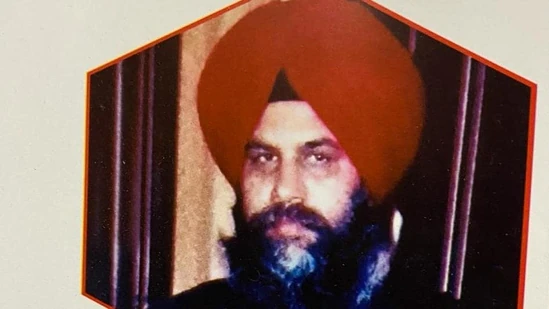
Paramjit Singh Panjwar, chief of the Khalistan Commando Force, had been based in Lahore for years and was designated a terrorist by India under the Unlawful Activities (Prevention) Act.
He played a key role in weapons smuggling and radicalisation among border-district youth and was considered one of the last remaining senior architects of ISI-supported Khalistan militancy from the 1990s generation.
On 6 May 2023, he was shot dead by two unidentified gunmen during his morning walk near his residence in Johar Town, Lahore; his bodyguard was also fatally wounded in the attack.
Panjwar’s killing further weakened the Khalistan infrastructure hosted in Pakistan and delivered a powerful psychological message to separatist networks abroad that Pakistani territory no longer equated to long-term safety.
Syed Khalid Raza – Al-Badr
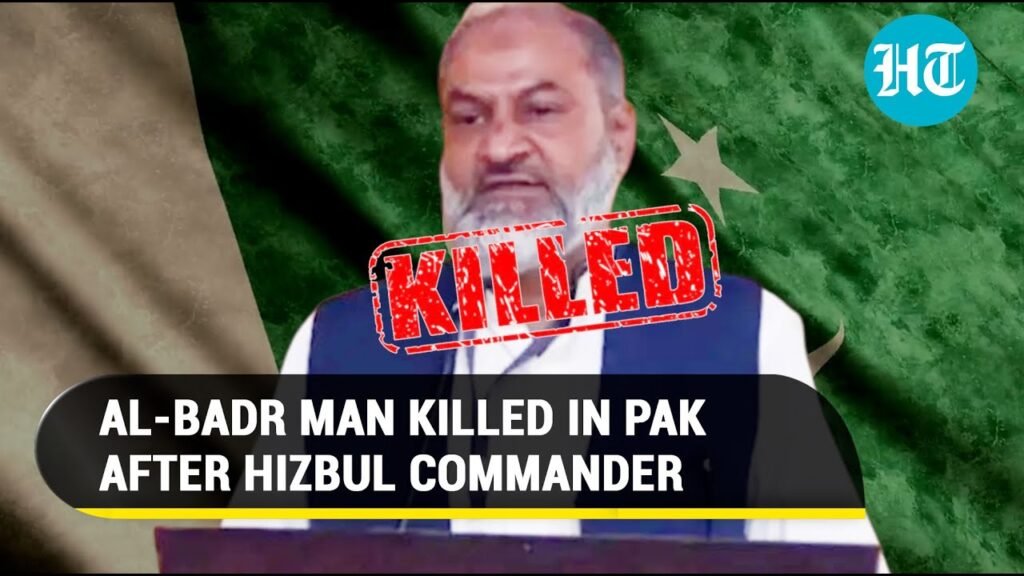
Syed Khalid Raza was a former commander of the Pakistan-based terror outfit Al-Badr, which has historically operated in Jammu and Kashmir, including through suicide-style attacks.
He also had links to the Jamaat-e-Islami student wing and played a role in Al-Badr’s recruitment and ideological apparatus.
On 26 February 2023, he was shot in the head outside his residence in the Gulistan-e-Johar area of Karachi by attackers on a motorcycle in what police termed a targeted attack.
His killing, coming soon after the elimination of HM launcher Bashir Ahmad Peer in Rawalpindi, represented a ‘big blow’ to Pakistan-based anti-India jihadist networks and signalled that both senior and former commanders could be reached in major urban centers.
Bashir Ahmad Peer (Imtiaz Alam) – Hizbul Mujahideen
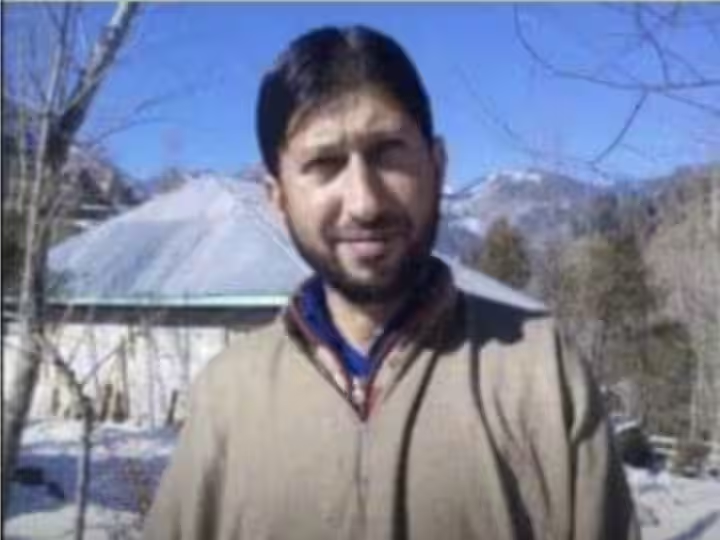
Bashir Ahmad Peer, also known as Imtiaz Alam, was a founding member and senior commander of Hizbul Mujahideen and served as a ‘launching commander’ responsible for sending fresh recruits into Jammu and Kashmir via carefully curated infiltration routes.
He operated from Pakistan, providing logistics and coordination support for terrorist attempting to cross the Line of Control.
Open sources report that he was shot dead by two unidentified assailants in Rawalpindi on 20 February 2023, in front of a shop.
His elimination removed a key architect of the cross-border supply chain, likely contributing to subsequent decreases in successful infiltration attempts and complicating HM’s ability to regenerate its militant footprint in the Valley.
Other JeM and LeT figures
The provided assessment also emphasises the importance of JeM figures such as Shahid Latif, associated with the 2016 Pathankot airbase attack, and Mohd Yusuf Azhar, a core planner of the IC814 hijacking and head of JeM training infrastructure.
Similarly, LeT recruiter Akram Ghazi is portrayed as central to mobilising large numbers of youth in Khyber Pakhtunkhwa and feeding them into the ‘Kashmir cause’.
While detailed open-source confirmation varies by individual, the broader pattern of targeted eliminations of JeM and LeT cadres in Pakistani territory is consistent with media reporting on ‘unknown gunmen’ attacks and with the observed reduction in high-impact, Pakistan-origin terrorist attacks in India in recent years.
Within this framework, removing these mid- and senior-level figures has forced groups to rely more on ageing cadres and ad-hoc local recruits rather than on well-trained transnational operatives.
Strategic shifts:
From reactive defence to active deterrence
The trajectory outlined in this report reflects a broader normative and operational shift in Indian counter-terrorism doctrine.
Instead of relying primarily on diplomatic evidence dossiers and defensive measures on its own soil, India is increasingly portrayed as favouring proactive, kinetic measures aimed at neutralising threats before they materialise as attacks.
In this construct, ‘Unknown Gunman’ operations serve as a low-signature, deniable instrument for systematically attriting Pakistan-based terrorist, while overt strikes like Operation Sindoor signal red lines and deliver visible punishment for mass-casualty attacks.
Together, they express a doctrine of active deterrence: the credible promise that planners, facilitators and commanders of terror attacks will be hunted down wherever they reside.
Exposing ISI vulnerabilities and degrading ecosystems
One of the most consequential by-products of the targeted eliminations campaign is the exposure of weaknesses in ISI’s internal security and protection apparatus.
The fact that terrorist linked to LeT, JeM, HM and Khalistan outfits have been killed in cities such as Lahore, Karachi and Rawalpindi – and, in some cases, reportedly within or near highly sensitive areas – suggests either serious penetration by hostile intelligence or growing internal fissures.
This perception undermines militant confidence in their patrons and fuels suspicion about potential informants within their own ranks.
As a result, command structures become more insular and paranoid, recruitment pipelines dry up or become riskier, and the broader terror ecosystem loses coherence, making it harder to mount complex, coordinated operations.
Emergence of hybrid and ‘white-collar’ threats
The narrative also points to the emergence of ‘hybrid’ threats and ‘white-collar’ terrorism, where educated professionals and locally radicalised individuals play greater roles in plotting attacks inside India.
This shift reflects both adaptation and desperation: with Pakistan-based training and leadership increasingly targeted, militant strategists lean more heavily on decentralised, lower-signature cells to sustain activity.
Such cells may be harder to detect in the short term, but they often lack the operational experience and support networks of earlier generations, limiting their ability to execute large-scale, high-impact operations.
In this sense, the very adaptation to pressure is also evidence of the underlying success of leadership decapitation and infrastructure denial.
Key accomplishments and ongoing risks (2020–2026)
Within the framework set out in this assessment, the combined impact of ‘Unknown Gunman’ operations and overt strikes between 2020 and 2026 can be summarised as follows:
- Leadership attrition: Dozens of high- and mid-ranking terrorist across LeT, JeM, HM, Al-Badr and Khalistan outfits have been killed in Pakistan and Pakistan-occupied territories, including several long-protected veterans.
- Sanctuary erosion: Urban centres and traditional safe havens such as Lahore, Karachi and Rawalpindi no longer offer reliable sanctuary, forcing terrorist into more precarious patterns of movement and concealment.
- Operational disruption: Recruitment pipelines, training infrastructures and cross-border supply chains have been degraded, contributing to reduced infiltration and fewer large-scale attacks.
- Psychological deterrence: Persistent uncertainty about when and where the next elimination may occur has created a climate of fear among militant cadres and eroded trust in ISI protection.
At the same time, several risks and uncertainties remain:
- Adaptation through front groups: Outfits such as TRF and PAFF illustrate how existing ecosystems can rebrand and experiment with new tactics, including low-cost, locally executed attacks.
- Information gaps: Not all alleged eliminations or operations described in strategic commentary have been independently verified in open sources, underscoring the need for cautious interpretation.
- Escalation dynamics: The interplay between covert attrition and overt strikes carries escalation risks that could, in some scenarios, widen into broader military confrontation.
Overall, however, the trend line suggests a marked shift in the balance of initiative: Pakistan-based militant groups that once operated with relative impunity now face sustained, multi-layered pressure that reaches from border infiltration routes to inner-circle leadership compounds.
The active deterrence model
The doctrine emerging from this campaign can be distilled into five mutually reinforcing pillars:
- Intelligence dominance: Continuous, multi-source tracking of militant leadership, facilitators and infrastructure in Pakistan and Pakistan-occupied territories.
- Targeted eliminations: Covert, low-signature neutralisation of key commanders and enablers through deniable methods that maximise psychological impact while minimising overt escalation.
- Overt precision strikes: Use of air and missile power against high-value terrorist targets when covert means are insufficient or when political signalling requires visible punishment.
- Psychological operations: Deliberate cultivation of fear, uncertainty and mistrust within militant ranks, amplifying the deterrent effect of each elimination.
- Strategic messaging: Clear communication, domestically and internationally, that terrorism directed at Indian citizens will invite decisive, potentially cross-border consequences.
Conclusion:
As of April 2026, this model anchored in targeted eliminations in Pakistan and complemented by overt precision strikes has fundamentally altered the incentives and risk calculations of Pakistan-based terror networks.
For terrorist leaders and their enablers, the core message is simple: neither distance, nor time, nor traditional notions of state can guarantee safety once they choose a path of violence against India.
Please note this article only covers evidence based information. Thank You!