


Introduction
Next-generation military technologies are changing global defense strategies between 2025 and 2030. This complete guide examines nine critical technology areas that define modern warfare.
- Introduction
- What This Article Covers
- Global Military Powers Compared
- Strategic Differences Among Nations
- 1. Directed Energy Weapons (DEW): The Light-Speed Revolution
- Understanding Directed Energy Weapons
- 1.1 United States: Research to Integration
- Current Development Status
- Funding and Programs
- Technical Challenges
- 1.2 India: Homegrown Innovation and Project DURGA
- India’s DEW Development Path
- Project DURGA II
- KALI System
- 1.3 China and Russia: Area Denial Strategy
- China’s HPM Dominance
- Russia’s Secret Programs
- 1.4 Israel and France: Precision Defense
- Israel’s Iron Beam
- France’s Dragon Fire
- Comparative Analysis: Global Directed Energy Programs
- 2. Hypersonic Electromagnetic Railguns: The Kinetic Revolution
- What Are Electromagnetic Railguns?
- 2.1 India: The High-Altitude Advantage
- India’s Railgun Development
- Strategic Application in Himalayas
- Future Deployment Plans
- 2.2 China: Maritime Supremacy
- Naval Railgun Testing
- 2.3 United States: The “Golden Dome” Revival
- Program Restart
- 2.4 Japan and Europe: Regional Defense
- Japan’s Defense Strategy
- France’s PILUM Project
- 3. Invisibility and Adaptive Camouflage: Mastering the Spectrum
- Understanding Stealth Technology
- 3.1 India: The Anālakṣhya Project
- Breakthrough Technology
- Applications and Impact
- 3.2 China: Drone Cloaking
- 3.3 Israel: Thermal Invisibility for Infantry
- Kit 300 System
- Military Deployment
- 3.4 Russia and France: Active Camouflage
- Russia’s Sotnik Program
- France’s Cameleon Project
- 4. Autonomous Robotic Systems: The Rise of Combat Robots
- Legged vs. Wheeled Platforms
- 4.1 India: The MULES Program
- Program Overview
- Deployment Scale
- 4.2 Global Deployments: USA, China, and Russia
- United States
- China
- Russia
- 5. Smart Munitions and Guided Small Arms
- Precision Guidance Revolution
- 5.1 USA: EXACTO Program
- 5.2 India: Artillery and Rocket Precision
- Smart Artillery Development
- Guided Pinaka System
- 5.3 Israel: The Spike Firefly
- 6. Swarm Drones and Loitering Munitions
- The Future of Air Warfare
- 6.1 India: The Nagastra-1 and ALFA-S
- Nagastra-1 System
- ALFA-S Project
- 6.2 Global Swarm Dynamics
- Israel’s Combat Use
- USA’s Drone Dominance Programme
- China’s Naval Swarms
- 7. EMP Missiles and Electronic Warfare
- Non-Kinetic Warfare
- 7.1 Russia: The Alabuga Program
- System Overview
- 7.2 China: HPM Dominance
- 7.3 USA and Israel: Precise Electronic Warfare
- USA’s CHAMP System
- Israel’s Scorpius System
- 8. Active Denial Systems: The “Heat Ray”
- Non-Lethal Directed Energy
- How It Works
- Deployment Status
- Global Development
- 9. Conclusion: The New Balance of Military Power
- Shifting Global Dynamics
- India’s Technological Rise
- Strategic Differences by Nation
- USA: Technology Leadership
- China: Scale and Denial
- Russia: Asymmetric Threats
- Israel: Tactical Survival
- Future of Warfare (2025-2030)
- Comparative Technology Table (2025)
The global security landscape is going through major changes. Specifically, we’re moving from industrial-age warfare to an era defined by directed energy weapons, hyper-velocity kinetics, and autonomous military systems.
What This Article Covers
This article gives a complete study of nine critical technology areas:
- Directed Energy Weapons (Laser and Microwave Systems)
- Invisibility and Cloaking technologies
- Smart Munitions and Guided Arms
- Robotic Quadrupeds for Combat
- Active Denial Systems (Heat Rays)
- Hypersonic Railguns
- Swarm Drones and AI Systems
- Electromagnetic Pulse (EMP) Missiles
- Self-Guiding Loitering Munitions
Global Military Powers Compared
Furthermore, this study compares the development paths of six key military powers: the United States, Russia, China, India, France, and Israel.
In particular, we focus on India’s rapid technology rise. Notably, India has moved from a main buyer of defense technology to an important creator in specialized high-tech areas. These areas include directed energy weapons and electromagnetic propulsion.
Strategic Differences Among Nations
The findings show a split in global strategy:
United States and Israel: Both countries are strongly focused on “soft-kill” and precision interception technologies. Consequently, they use lasers and electronic warfare (EW) to protect high-value assets.
China: Meanwhile, China is following a plan of “saturation and denial.” As a result, they’re using high-power microwaves and naval railguns to dominate the Indo-Pacific region.
Russia: In contrast, Russia is limited by economic sanctions. Therefore, they depend on asymmetric “doomsday” technologies like EMPs and nuclear-capable autonomous torpedoes.
India: On the other hand, India is creating a special strategic position. Specifically, they’re making homegrown solutions designed for high-altitude warfare and border security. This is shown by their railgun and robotic mule programs.
1. Directed Energy Weapons (DEW): The Light-Speed Revolution
Understanding Directed Energy Weapons
Directed energy weapons (DEW) represent a basic change in modern warfare economics. For decades, defense has been expensive. A $2 million defensive missile is often used to intercept a $10,000 drone.
However, DEWs promise to reverse this balance. Specifically, High-Energy Lasers (HEL) and High-Power Microwave (HPM) systems offer engagement costs measured in dollars instead of millions.
1.1 United States: Research to Integration
Current Development Status
The United States Department of Defense (DOD) has moved from pure research to prototyping and integration. Nevertheless, the path has been filled with engineering challenges about Size, Weight, and Power (SWaP).
Funding and Programs
In FY2025, the DOD requested about $789.7 million for unclassified DE programs. This focused reduction from previous years is meant to focus resources on workable systems.
The focus has moved toward putting together 100kW+ class lasers onto mobile platforms. For example, BlueHalo was given a $95.4 million contract in 2024 to prototype directed energy systems for the US Army.
Technical Challenges
The main limit for US systems stays the “thermal blooming” effect. In this case, the laser heats the air it passes through, defocusing the beam. Moreover, this is made worse by environmental blockers like fog or dust.
As a result, US doctrine now places lasers as point-defense systems for bases and ships. In other words, they’re not yet offensive strategic weapons.
1.2 India: Homegrown Innovation and Project DURGA
India’s DEW Development Path
India’s path in DEWs is bold and increasingly independent. In fact, it’s pushed by the Defence Research and Development Organisation (DRDO).
Project DURGA II
Project DURGA II (Directionally Unrestricted Ray-Gun Array) is the top achievement of India’s laser work. The DRDO is making a 100-kilowatt lightweight directed energy weapon.
This weapon is designed for putting together across land, sea, and air platforms. In an important achievement, a 30-kilowatt variant (Land version Mk-II) was successfully field-tested in April 2025 at Kurnool.
The test showed the ability to destroy aerial threats. The main goal is to give a “hard-kill” ability against ballistic missiles and drone swarms.
KALI System
KALI (Kilo Ampere Linear Injector) is often wrongly described as a laser. However, KALI is actually a linear electron accelerator made by BARC and DRDO.
It sends out powerful pulses of Relativistic Electron Beams (REBs). These are turned into high-power microwaves. Unlike a laser that burns a hole in a target, KALI works as a “soft-kill” weapon.
In particular, it fries the onboard electronics of incoming missiles or aircraft. The KALI-5000 has been key in strengthening India’s own assets. These include the Tejas LCA and satellites against electromagnetic interference.
1.3 China and Russia: Area Denial Strategy
China’s HPM Dominance
Beijing sees DEWs as a part of its Anti-Access/Area Denial (A2/AD) strategy. The PRC controls the patent ownership picture for High-Power Microwaves (HPM). In fact, they own about 90% of new patents as of 2022.
Working systems like the Hurricane 2000 and Hurricane 3000 are truck-mounted HPM emitters. They’re able to disable drone swarms over a 2–3 km radius.
The “Silent Hunter” laser system has already been exported. This shows China’s trust in the readiness of its technology.
Russia’s Secret Programs
Russian work is kept secret but works on high-value strategic targets. The “Peresvet” laser system is said to be used to mask ICBM movements from satellite reconnaissance.
Also, the “Alabuga” program looks at the use of electromagnetic warheads on missiles. These create local EMP effects, successfully destroying enemy air defenses without physical hit.
1.4 Israel and France: Precision Defense
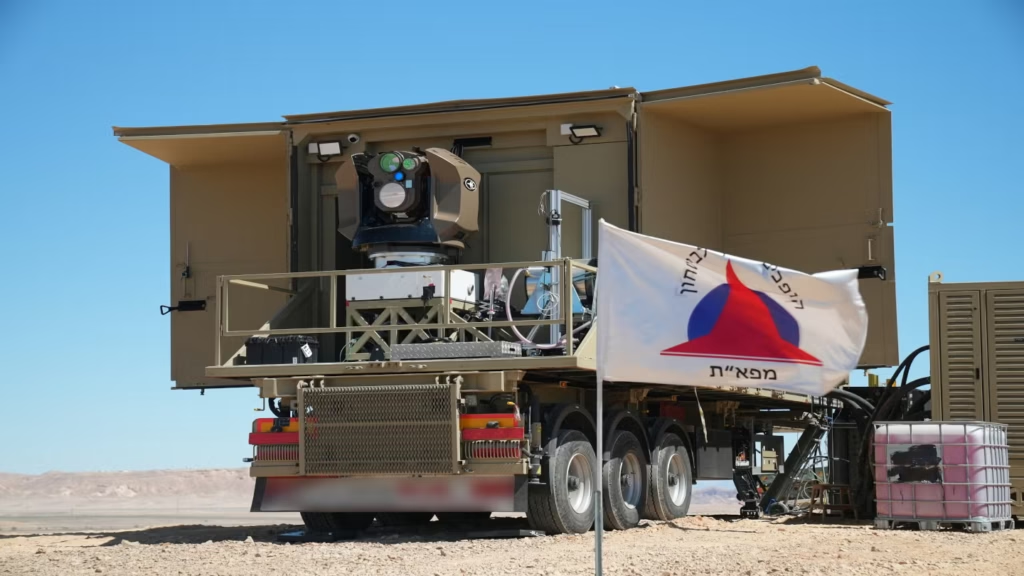
Israel’s Iron Beam
Israel is possibly the world leader in the field use of DEWs. The “Iron Beam” system adds to the Iron Dome. It uses high-energy lasers to intercept short-range rockets and mortars.
These targets are too cheap to justify a Tamir interceptor. Also, the “Scorpius” EW system uses multi-beam AESA technology to jam threats electronically over long distances.
France’s Dragon Fire
France is an important member in the European “Dragon Fire” group (with the UK). This consortium reached the first high-power laser firing against aerial targets in January 2024.
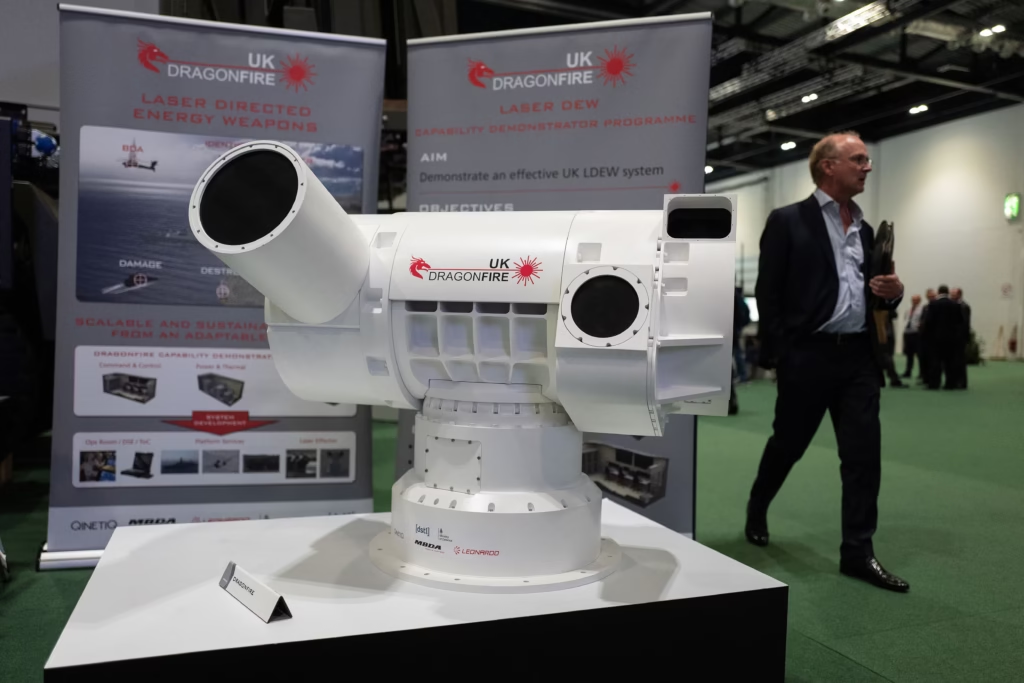
French research through the ISL is also leading ultra-compact power supplies. They’re trying to cut the size of gigawatt-class power units by a factor of ten.
Comparative Analysis: Global Directed Energy Programs
| Country | Key Program | Type | Power/Mechanism | Strategic Role | Status (2025) |
|---|---|---|---|---|---|
| India | DURGA II | Laser | 100 kW (Goal) | Tactical Hard-Kill | 30kW Field Tested |
| India | KALI-5000 | Particle Beam | Relativistic Electron Beam | Electronic Soft-Kill | Operational/ Tested |
| USA | HEL (BlueHalo) | Laser | 50-300 kW | C-UAS / Base Defense | Prototyping |
| China | Hurricane 3000 | HPM | Microwave Pulse | Swarm Suppression | Export/Deployed |
| Israel | Iron Beam | Laser | 100 kW+ | Rocket/Mortar Intercept | Operational Integration |
| Russia | Peresvet / Alabuga | Laser/EMP | Classified | Satellite Dazzling / EMP | Deployed (Limited) |
| France | DragonFire (Collab) | Laser | 50 kW class | Aerial Intercept | Successful Trials |
2. Hypersonic Electromagnetic Railguns: The Kinetic Revolution
What Are Electromagnetic Railguns?
Electromagnetic railguns use the Lorentz force to speed up projectiles along parallel rails. They reach hypersonic speeds (Mach 5-7) without explosive fuel.
This technology gives longer reach and large ammo supply. In addition, non-explosive rounds are safer and smaller than explosive shells.
2.1 India: The High-Altitude Advantage
India’s Railgun Development
India has become a surprisingly strong player in railgun work. The Armament Research & Development Establishment (ARDE) in Pune has successfully made a 10-megajoule (MJ) railgun. This gun is able to fire projectiles at Mach 6 (2,000 m/s).
Strategic Application in Himalayas
While naval uses are standard worldwide, India is alone testing land-based railguns for high-altitude warfare. Specifically, they’re focused on areas like Ladakh.
Regular chemical artillery works less well in the thin air with less oxygen of the Himalayas. However, electromagnetic propulsion is not affected by these air problems.
Study shows that at heights above 4,000 meters, railgun projectiles could see an 18% speed boost. This is because of less air drag.
Future Deployment Plans
The DRDO plans placing these systems on T-90 tank chassis or moving trucks. This gives a mobile, super-fast attack ability. Moreover, it makes supply easier by getting rid of the need for dangerous explosive charges.
2.2 China: Maritime Supremacy

Naval Railgun Testing
China is the only nation to have widely tested a railgun at sea. They’re using the Type 072III landing ship Haiyang Shan since 2018.
US intelligence reports show that China’s naval railgun could be working by 2025. It’s able to hit targets 200 kilometers away at Mach 7.
In July 2025, reports appeared of an “X-rail gun” test. This test was able to fire a 60kg projectile up to 400km. This ability is key to China’s strategy of forcing US carrier strike groups outside their working distance.
2.3 United States: The “Golden Dome” Revival

Program Restart
After stopping its railgun program in 2021, the US has restarted the technology. This is under the “Golden Dome” program—a many-level defense system for Guam.
General Atomics is offering the railgun not as an offensive weapon. Instead, it’s a hyper-velocity interceptor for missile defense.
The ability to fire rapid salvos of Mach 6 projectiles gives a cheap answer to stopping mass missile attacks. Consequently, this defends important island bases.
2.4 Japan and Europe: Regional Defense
Japan’s Defense Strategy
Japan’s defense strategy has turned to railguns to fight hypersonic threats from China and North Korea. The Japanese Ministry of Defense has successfully tried a railgun on the JS Asuka.
They got Mach 6.5 and fired 120 rounds in a row. This high rate of fire is key for its role as a point-defense weapon against missile waves.
France’s PILUM Project
France, through the ISL, heads the PILUM project. The PEGASUS facility in France is a 10MJ research railgun that has sped up projectiles to 2,500 m/s.
The European goal is a 200km-range artillery system by 2028. They’re working on accurate long-distance shots to add to regular artillery.
3. Invisibility and Adaptive Camouflage: Mastering the Spectrum
Understanding Stealth Technology
True invisibility—the bending of light around an object—has gone from science fiction to real science. This breakthrough uses metamaterials to achieve stealth capabilities.
3.1 India: The Anālakṣhya Project
Breakthrough Technology
In a big technology breakthrough, researchers at IIT Kanpur revealed the Anālakṣhya Metamaterial Surface Cloaking System (MSCS) in late 2024.
It uses a fabric-based wide-range metamaterial that takes in radar waves. In effect, this cancels Synthetic Aperture Radar (SAR) imaging.
Applications and Impact
The system is light and bendable. Therefore, it can be put on fighter jets, drones, and even ground vehicles. It greatly cuts the Radar Cross-Section (RCS) of assets. As a result, this improves survival chances in dangerous airspace.
This homegrown creation reduces India’s dependence on bought from abroad stealth coatings. Moreover, it makes India a possible seller of stealth technology.
3.2 China: Drone Cloaking
Chinese scientists at Zhejiang University have made an “aeroamphibious invisibility cloak” made for drones. This system uses metamaterials to control electromagnetic waves instantly.
This lets drones adjust to shifting radar frequencies and visual scenes. This is especially powerful for China’s huge drone fleet. Consequently, it enables secret watching and attack missions in the Taiwan Strait.
3.3 Israel: Thermal Invisibility for Infantry
Kit 300 System
Israel’s Polaris Solutions has put into use the “Kit 300”. This is a hiding sheet made of Thermal Visual Concealment (TVC) material.
The material mixes tiny fibers, metals, and plastics to stop the user’s heat pattern. Therefore, it hides soldiers from heat cameras and night vision devices.
Military Deployment
The IDF has added this technology into its buying plan. They’re using it widely for surprise attacks and sniper hiding in border areas.
3.4 Russia and France: Active Camouflage
Russia’s Sotnik Program
The “Sotnik” next-generation soldier program (generation 3) studies active camouflage materials. These can change color like a color-changing lizard.
The “Ratnik-3” test models reportedly have heat-hiding suits. These make soldiers invisible to heat sensors.
France’s Cameleon Project
The “Cameleon” project, backed by the Defense Innovation Agency, is making a changing skin for cars and trucks. It uses thousands of small squares that change color and temperature to match the surroundings.
4. Autonomous Robotic Systems: The Rise of Combat Robots
Legged vs. Wheeled Platforms
The change from wheels to legs lets unmanned ground vehicles (UGVs) cross land that only humans and carrying animals could reach before. This represents a major advance in autonomous military systems.
4.1 India: The MULES Program

Program Overview
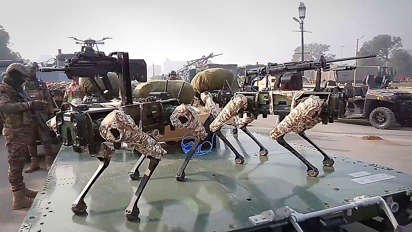
India has quickly grown its use of robotic quadrupeds. This is pushed by the combat needs of the Himalayan border.
MULES (Multi-Utility Legged Equipment) are made by AeroArc. These robot dogs are 51 kg and can hold a 12 kg load. They’re fitted with LiDAR and thermal sensors for 24/7 watching.
Deployment Scale
The Indian Army first ordered 100+ units in 2025. They showed them at the Army Day parade in Pune in 2025.
The system is varied, with firms like Zen Technologies (Prahasta) and Bhairav Robotics (Shvana) making weapon versions for fighting rebels.
4.2 Global Deployments: USA, China, and Russia
United States
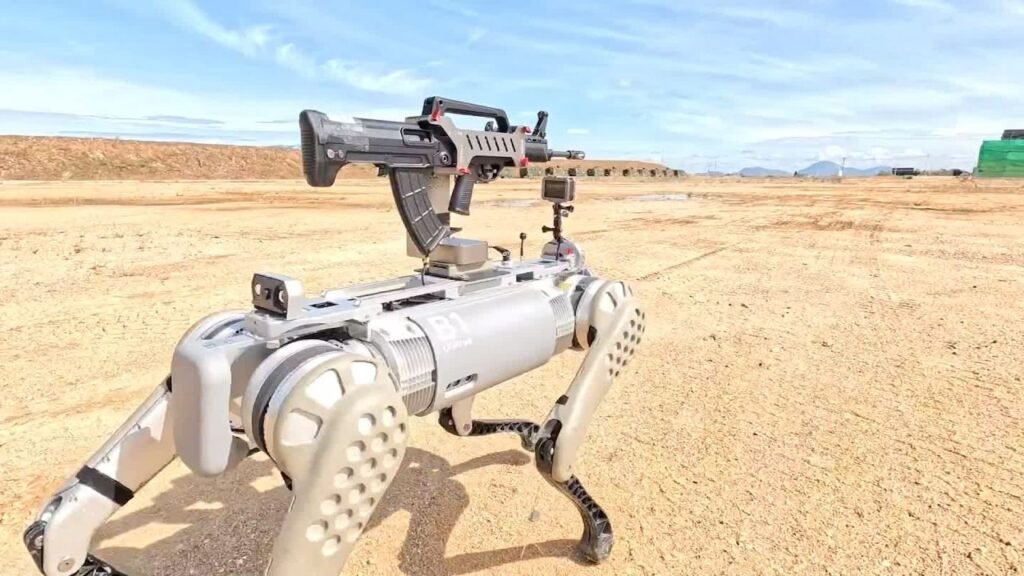
The US Department of Homeland Security uses Ghost Robotics dogs for border guarding. More boldly, the US Army has tried weapon versions carrying guns in the Middle East for border defense.
China
China has shown large groups of robotic dogs, stressing group tactics for city attacks. Their systems are combined with AI to do planned moves.
Russia
Russian defense experts say that robotic dogs will be the first self-driving systems to be widely used in combat. This is because they can move well in woods and wetlands, taking over from small vehicles in supply jobs.
5. Smart Munitions and Guided Small Arms
Precision Guidance Revolution
The making smaller of steering systems has enabled the making of “smart bullets.” These can fix their path while flying to strike moving targets.
5.1 USA: EXACTO Program
The Defense Advanced Research Projects Agency (DARPA) made the Extreme Accuracy Tasked Ordnance (EXACTO) project.
The .50 caliber bullet has light sensors in the front and steering fins in the back. It locks onto a laser-marked target, adjusting for wind and target motion.
Tests show that even new shooters can strike moving targets at very long sniper distances using this system.
5.2 India: Artillery and Rocket Precision
Smart Artillery Development
India’s method focuses on big gun accuracy. IIT Madras and Munitions India Limited are making 155mm guided shells with a Circular Error Probable (CEP) of only 10 meters.
This is a huge improvement from the normal 500m spread.
Guided Pinaka System
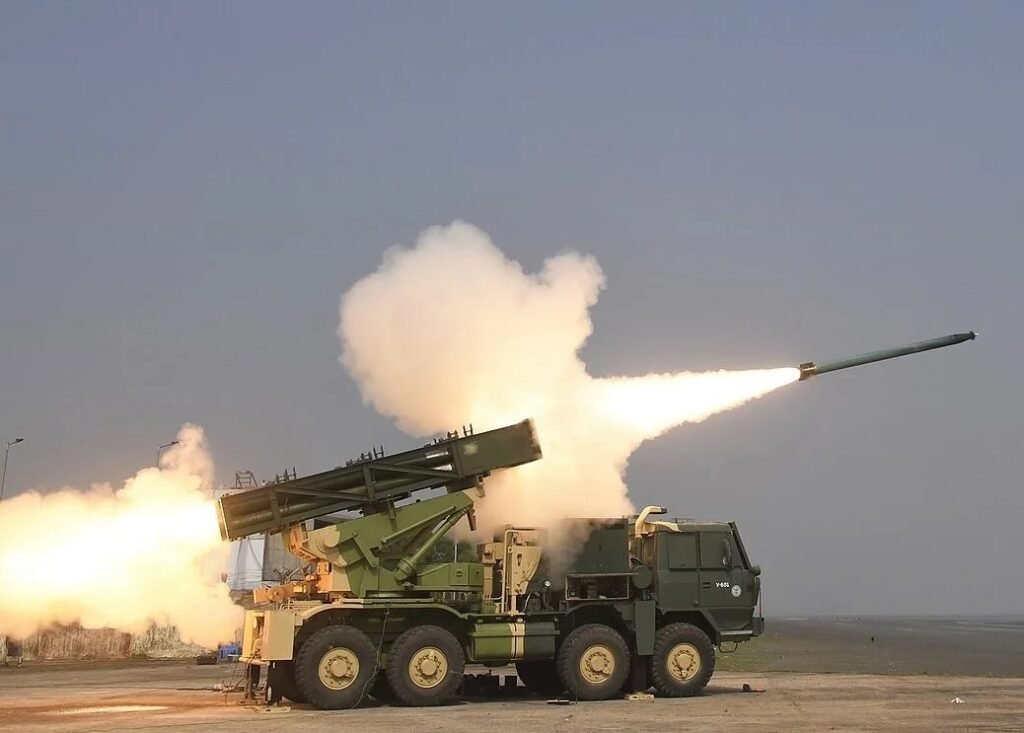
The homegrown Pinaka rocket system has been improved with a steering system (NavIC/GPS). It’s getting 2-3 meter accuracy at a distance of 75 km.
Essentially, this changes an area weapon into an accurate strike weapon.
5.3 Israel: The Spike Firefly
Though really a loitering munition, the Spike Firefly works like a smart bullet for city fighting. It is a tiny, tube-launched flying machine.
A soldier can control it around a corner or into a building to explode a 350g explosive against a hiding enemy. It was used a lot in the Jenin raids and the Gaza war.
6. Swarm Drones and Loitering Munitions
The Future of Air Warfare
The future of air warfare is “spread-out killing power.” This means groups of cheap drones that beat advanced air defenses by pure numbers. This represents a key aspect of military drone technology.
6.1 India: The Nagastra-1 and ALFA-S
Nagastra-1 System
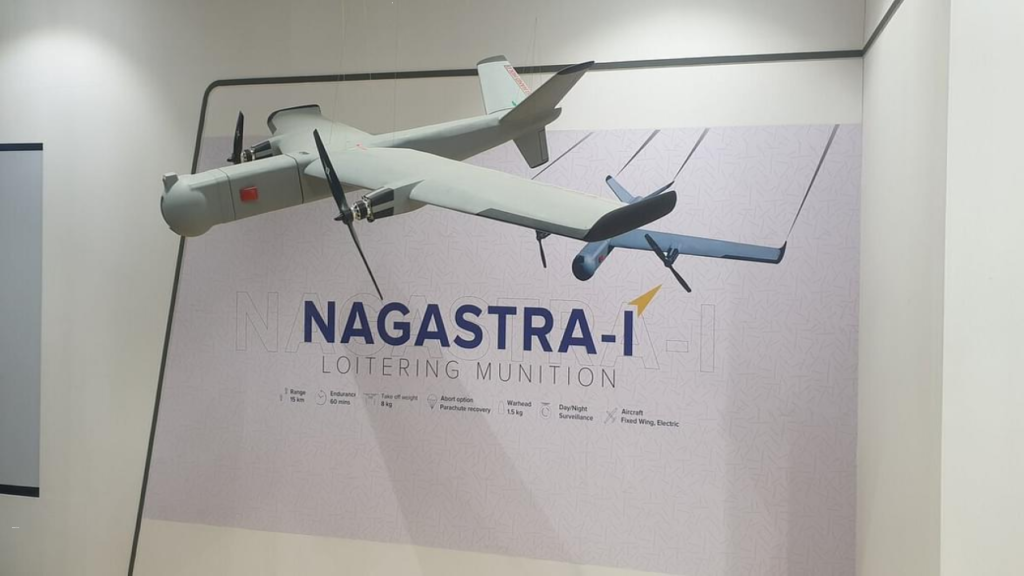
India has successfully put into use homegrown loitering munitions. This cuts dependence on buying from Israel.
Nagastra-1 is made by Solar Industries. This system can fly 30 km and has a flight time of 60 minutes. Importantly, it has a “parachute recovery system.”
This lets the weapon be taken back and used again if no target is hit—a big cost benefit. 480 units were bought by the Indian Army, with shipments starting in 2024.
ALFA-S Project
The Air-Launched Flexible Asset-Swarm (ALFA-S) is a future project. In this system, a fighter jet drops a container that sends out a group of drones. These find and attack enemy radars and missile bases.
6.2 Global Swarm Dynamics
Israel’s Combat Use
Israel was the first country to use drone groups in battle in May 2021. They used them to find and attack Hamas fighters.
USA’s Drone Dominance Programme
The “Drone Dominance Programme” (DDP) plans to deploy hundreds of thousands of low-cost, self-flying drones by 2027. This is to fight China’s large numbers.
China’s Naval Swarms
China keeps testing huge groups (1,000+ drones) for overwhelming attacks on ships. They’re using their control of civilian drone making supply lines.
7. EMP Missiles and Electronic Warfare
Non-Kinetic Warfare
Electromagnetic Pulse (EMP) and High-Power Microwave (HPM) weapons give a non-physical way to shut down an enemy’s command and control systems.
7.1 Russia: The Alabuga Program
System Overview
Russia’s “Alabuga” is a high-frequency electromagnetic missile. When it explodes, it creates a burst made to burn out all electronics in a 3.5 km circle.
While exact working details are secret, experts call it a “end-of-world” non-nuclear weapon. It’s able to make whole units unable to fight without shooting one bullet.
Also, worries exist about Russia making nuclear-powered anti-satellite weapons (like the COSMOS-2553 satellite) to make EMP effects in space.
7.2 China: HPM Dominance
China uses HPM technology for local defense and zone blocking. The “Yaoguang” simulation software lets Chinese engineers make HPM weapons quicker than their US rivals.
Working systems like the Hurricane 2000 are made to destroy the steering systems of incoming missiles and drone groups.
7.3 USA and Israel: Precise Electronic Warfare
USA’s CHAMP System
The CHAMP (Counter-electronics High Power Microwave Advanced Missile Project) is an air-launched cruise missile. It’s able to fly over a target building and shut down its computers without breaking the building.
Israel’s Scorpius System
The “Scorpius” system is a ground-based EW weapon that fires thin beams of energy. It jams certain frequencies used by enemy drones and missiles, working as a soft-kill shield.
8. Active Denial Systems: The “Heat Ray”
Non-Lethal Directed Energy
The Active Denial System (ADS) is a non-deadly directed energy weapon made for crowd control and border security.
How It Works
It sends out a 95 GHz millimeter-wave beam that goes into 1/64th of an inch into the skin. This warms water molecules to make a strong burning feeling.
The feeling stops right away when the person leaves the beam, causing no lasting harm.
Deployment Status
The US military sent ADS to Afghanistan in 2010 but pulled it back without using it in battle. This was because of image and political worries.
However, it stays in the weapons collection for possible use in riot control or handling prisoners.
Global Development
Both Russia and China are said to be making like systems for domestic security and border control. They see them as key tools for “grey zone warfare” when deadly force is not acceptable politically.
9. Conclusion: The New Balance of Military Power
Shifting Global Dynamics
The study of these nine next-generation military technologies shows a clear change in the world balance of military power. The total control on high-tech warfare owned by the United States and the West is weakening.
India’s Technological Rise
Maybe the biggest finding is India’s change from a buyer to a maker. Projects like the DURGA II laser, 10MJ Railgun, and Anālakṣhya cloaking system show advanced homegrown research ability.
India is not just copying current designs. Instead, they’re creating answers fitted to their special strategic needs. These are high-altitude warfare in the Himalayas and cheap border security.
The putting into use of the Nagastra-1 with its recovery ability shows a practical method to saving money. This is something many Western projects don’t have.
Strategic Differences by Nation
USA: Technology Leadership
The USA works on technology leadership and combining (Golden Dome, DDP). However, they have trouble with price and making in large amounts.
China: Scale and Denial
China focuses on size and blocking (Naval Railguns, Mass Swarms). Their goal is to force enemies back from their coasts.
Russia: Asymmetric Threats
Russia focuses on big unbalanced threats (EMP, Hypersonic Missiles). This helps them make up for regular weakness.
Israel: Tactical Survival
Israel focuses on short-term combat survival and accuracy (Iron Beam, FireFly). This is for city and border defense.
Future of Warfare (2025-2030)
As these technologies grow from 2025 to 2030, the main factor in winning will probably move. It will shift from who has the most tanks or ships. Instead, victory will go to who can best combine these self-operating, super-fast, and hidden systems into a unified fighting network.
Comparative Technology Table (2025)
This table compares next-generation military technologies across six major powers:
| Technology Domain | USA | India | China | Russia | Israel | France |
|---|---|---|---|---|---|---|
| Laser Weapons | 300kW+ Mobile HEL (BlueHalo) | DURGA II (100kW), KALI (Soft-kill) | Silent Hunter, Hurricane HPM | Peresvet, Alabuga | Iron Beam (Operational) | DragonFire (Collab) |
| Railguns | Golden Dome (Defensive) | 10MJ Land-Based (High Altitude) | Naval Railgun (Sea Tested) | Research Phase | Research Phase | PILUM (200km Range) |
| Invisibility | Quantum Stealth | Anālakṣhya (Metamaterial) | Drone Cloak (Zhejiang U) | Sotnik / Chameleon | Kit 300 (TVC Sheet) | Caméléon (Adaptive Tile) |
| Robot Dogs | Ghost Robotics (Armed) | MULES (AeroArc) | Massed AI Swarms | Frontline Logistics | Specialized UGV | Cameleon Mk3 |
| Smart Bullets | EXACTO (.50 cal) | 155mm Smart Shell / Pinaka | Guided Sniper Project | 10km Smart Bullet | Spike Firefly | Katana 155mm |
| Swarm Drones | Drone Dominance Program | Nagastra-1 (Recoverable) | Naval Saturation Swarms | Lancet Swarms | Combat Proven (2021) | Icarus / Future Combat Air |