

Understanding the Gilgit-Baltistan Conflict
The Gilgit-Baltistan issue remains one of India’s most significant territorial disputes. This region, lost in 1947, continues to shape India’s security challenges today. In this comprehensive analysis, we examine how British officers orchestrated the takeover, why India failed to prevent it, and what options exist for the future. The Gilgit-Baltistan conflict began with a planned military takeover in 1947. British Major William Brown led the operation, codenamed “Operation Datta Khel.” This action separated the region from Jammu and Kashmir and handed it to Pakistan. Today, the China-Pakistan Economic Corridor (CPEC) runs through this disputed territory, making it a three-way conflict between India, Pakistan, and China.
Let’s start by understanding the historical background of this critical region.
- Understanding the Gilgit-Baltistan Conflict
- Why Gilgit Mattered During British Rule (1846-1947)?
- The 1947 Takeover—How British Officers Executed the Plan
- What Really Happened to Brigadier Ghansara Singh?
- Key People in the 1947 Gilgit Takeover
- India’s Original Mistake—Why Gilgit Was Lost
- India’s 1947-48 war effectively ended at Kargil, establishing the boundary that became the Line of Control.
- India’s Future Options—What Can Realistically Be Done
- Non-Military Options That Could Work
- Four Possible Future Scenarios
- Conclusion:
Why Gilgit Mattered During British Rule (1846-1947)?
The Great Game and Gilgit’s Strategic Importance: Gilgit-Baltistan became strategically important during the 19th century Great Game between Britain and Russia. British India feared Russian expansion toward the Indian subcontinent. Gilgit, located at the junction of Afghanistan, Chinese Turkestan, and the Pamirs, served as the perfect northern guard post.
The British strategy focused on creating a buffer zone. They convinced the Maharaja of Jammu and Kashmir to extend control over independent principalities like Hunza, Nagar, Chitral, and Yasin. This arrangement was artificial—created for British imperial purposes rather than historical or cultural reasons.
How Britain Controlled Gilgit: The Gilgit Agency
Britain established the Gilgit Agency in 1877 to control this strategic frontier. Colonel Algernon Durand permanently re-established it in 1889. British forces, not the Maharaja’s troops, enforced control in the region. In December 1891, British forces invaded Hunza and removed its ruler, Safdar Ali. This invasion transformed Hunza into a forward observation post against potential Russian threats. The Gilgit Scouts, a semi-military force raised in 1913, became the primary security force. These scouts were local Muslim recruits commanded exclusively by British officers.
The 1935 Lease: Setting Up the 1947 Disaster
The 1935 lease agreement proved critical to the 1947 disaster. In March 1935, Britain forced Maharaja Hari Singh to lease the Gilgit region for 60 years. This lease removed all Maharaja’s authority over civil and military administration. For 12 years, the Maharaja’s government had zero presence in Gilgit. The British Political Agent and the Gilgit Scouts held all power. This created a dangerous situation when India gained independence in 1947.
The 1947 Return Created a Power Vacuum
When Britain decided to leave India in 1947, they ended the Gilgit lease early. On August 1, 1947, they returned Gilgit to Maharaja Hari Singh. This return created a perfect power vacuum. Prime Minister Jawaharlal Nehru made a critical mistake. He argued for delaying the return until spring 1948, viewing Gilgit as a minor administrative detail. Nehru failed to understand that securing the heavily armed Gilgit Agency was urgent, not optional. He thought like a lawyer when the situation needed military thinking.
On August 1, 1947, Britain handed over this dangerous situation to a single, unsupported governor appointed by the Maharaja. The stage was set for disaster
The 1947 Takeover—How British Officers Executed the Plan
Operation Datta Khel: A Planned British Conspiracy
The Gilgit takeover was not a spontaneous uprising. It was a carefully planned military operation called “Operation Datta Khel.” Lieutenant Colonel Roger Bacon, the outgoing British Political Agent, planned the operation well in advance.
The plan had three clear goals:
1) Remove the Maharaja’s newly appointed Dogra governor
2) Stop or neutralize the J&K State Forces at Bunji
3)Hand over the entire Gilgit Agency to Pakistan
Major William Brown executed this plan. His memoir, The Gilgit Rebellion, claims he acted out of moral duty. However, evidence shows Brown was the chosen executor of a plan set in motion by senior British command.
Major Brown and Captain Mathieson: The British Executors
Two British officers carried out the takeover: Major William Brown and Captain A.S. Mathieson. The Maharaja’s government fatally kept both officers in their command positions. On October 26, 1947, Maharaja Hari Singh legally joined all of Jammu and Kashmir, including Gilgit-Baltistan, to India. Any action against the Maharaja’s authority after this date was treason against India.
Brown and Mathieson acted five days later. On the night of October 31-November 1, 1947, Major Brown led the Gilgit Scouts to surround the Governor’s residence. They arrested Brigadier Ghansara Singh. On November 2 or 3, Brown personally raised the Pakistani flag at the Gilgit Scouts’ headquarters. Captain Mathieson handled the military operation at Bunji. After Sikh troops mutinied and tried to escape, Mathieson set up an ambush and killed many of them. This brutal action eliminated the only force capable of challenging the Gilgit Scouts
Britain Rewarded Brown
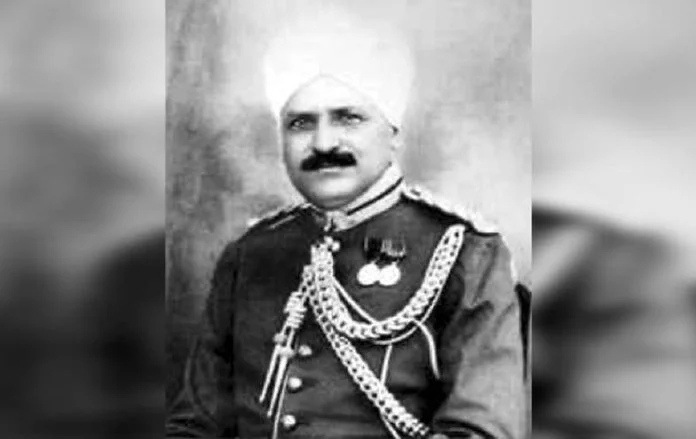
The strongest evidence of British approval came in July 1948. The British government awarded Major William Brown the MBE (Member of the Most Excellent Order of the British Empire). The award citation was deliberately vague, offering no details of his service. This award was a clear signal of approval from London. Britain rewarded Brown for securing the frontier for Pakistan and executing a perfect rebellion against legal Indian authority. Pakistan later gave Brown the Sitara-i-Imtiaz award after his death.
The Bunji Mutiny Sealed Gilgit’s Fate
The British takeover needed local support to succeed. The 6th J&K Infantry, stationed at Bunji 54 kilometers away, could have stopped the rebellion. This battalion had equal numbers of Sikh and Muslim troops. Captain Mirza Hassan Khan, a known Pakistani supporter, commanded the Muslim troops. He had been actively campaigning for Pakistan. An arrest order had been sent from Srinagar, but Governor Ghansara Singh cancelled it, fearing it would worsen the situation.
At Bunji, the Muslim troops rebelled on October 31, 1947. They arrested their commander, Colonel Abdul Majid, and eliminated the non-Muslim troops. This betrayal removed the only military force that could challenge the Gilgit Scouts.
With military control secured, local rulers quickly joined Pakistan. The Mirs of Hunza and Nagar, hostile to the Maharaja, declared their joining to Pakistan in the first week of November. The local population, having no cultural connection to the Dogra state, chose to join Pakistan.
What Really Happened to Brigadier Ghansara Singh?
Brigadier Ghansara Singh was not killed, as some accounts suggest. The truth is more revealing of the strategic failure. Brigadier Singh arrived in Gilgit at the end of July 1947 as the appointed Governor. He was sent alone with no budget powers and no legal authority. He had opposed keeping British officers in command, but his advice was ignored. On October 31, 1947, when the Gilgit Scouts surrounded his residence, Singh and his small staff fought back. In the morning, Major Brown delivered an ultimatum: “surrender or else all non-Muslims in Gilgit would be killed.” To prevent a civilian massacre, Brigadier Singh surrendered.
He was held prisoner for 19 months in harsh conditions. His prison diary details being kept in a tiny room for three months, unable to bath, deprived of light, and suffering from extreme cold. He was finally released and sent back to India on June 1, 1949.
Crucially, Brigadier Singh blamed both the J&K government and the Indian Central government for Gilgit’s fall. His survival and testimony confirm he was set up to fail by strategic negligence from Srinagar and New Delhi.

Key People in the 1947 Gilgit Takeover
| Person | Role | Key Actions | Result |
| Lt. Col. Roger Bacon | British political agent | Planned Operation Datta Khel to hand Gilgit to Pakistan. | Successful handover |
| Major William Brown | Gilgit Scouts Commander | -Led rebellion and arrested Governor Singh -Raised Pakistan flag | Awarded MBE by Britain 1948 |
| Capt. A.S. Mathieson | Deputy Commander | -Defeated J&K forces at Bunji – killed Sikh troops | Successful takeover |
| Capt. Mirza Hasan Khan | J&K Infantry Officer | – Led munity at Bunji – Eliminated non-Muslim troops | Joined Pakistan Forces |
| Mirs of Hunza and Nagar | Local Rulers | Local control | Joined Pakistan in November 1947 |
India’s Original Mistake—Why Gilgit Was Lost
Political Failures in New Delhi and Srinagar. The loss of Gilgit-Baltistan was not just J&K’s failure. It was a deep strategic mistake by India’s political and military leadership. The region was lost due to failures in political planning, military imagination, and supply operations.
Prime Minister Nehru personally managed the Kashmir file, unlike other princely state integrations handled by Sardar Vallabhbhai Patel. This led to two critical failures:
1) Failure in Srinagar: The Maharaja’s government sent Governor Ghansara Singh alone without budget, legal powers, or loyal troops. Their decision to keep Brown and Mathieson in command of the Gilgit Scouts was fatal.
2) Failure in New Delhi: Nehru’s July 1947 cable arguing to postpone Gilgit’s return was the first critical error. After the takeover, his idealism and reliance on Lord Mountbatten’s advice led him to take Kashmir to the United Nations. This move internationalized the issue and caused the permanent loss of Gilgit.
This single action could have stopped the takeover before it happened, provided a rallying point for loyalists, and secured the region. The failure to resupply and relieve the bases at Gilgit and Skardu was a great military mistake.
Evidence suggests British commanders of both Indian and Pakistani armies worked together to ensure the Indian Air Force did not stop Pakistani supply missions. By the time India recognized the disaster, winter had arrived and the ground war was stuck, making a counter-attack militarily impossible.
Operation Bison Saved Ladakh, Not Gilgit
Operation Bison in 1948 was not an offensive to retake Gilgit. It was a desperate operation to save Ladakh. By May 1948, the Gilgit Scouts under Pakistani command had advanced from Gilgit, captured the brave garrison at Skardu, and seized Kargil and Dras. They were about to capture Leh and cut off Ladakh permanently.
Operation Bison, launched on November 1, 1948, aimed to recapture the Zoji La pass, Dras, and Kargil. The operation was a supply miracle, using tanks at high altitude for the first time. M5 Stuart light tanks were pulled in pieces across bridges and over the 11,575-foot Zoji La pass. The appearance of tanks at that height shocked Pakistani defenders. Indian forces pushed them back and linked up with the Leh garrison at Kargil on November 24. The extreme effort required just to save Leh shows why pushing further to attack Gilgit was militarily impossible.
India’s 1947-48 war effectively ended at Kargil, establishing the boundary that became the Line of Control.
How CPEC Changed Everything—The Modern Strategic Situation
CPEC Makes Gilgit-Baltistan More Valuable Than Ever. The China-Pakistan Economic Corridor (CPEC) transformed Gilgit-Baltistan from a bilateral dispute into a three-way conflict. Gilgit-Baltistan is the essential gateway for this multi-billion-dollar project. CPEC physically connects China’s Xinjiang province to Pakistan’s Gwadar port on the Arabian Sea. The Karakoram Highway runs directly through Gilgit Baltistan. This makes the region indispensable to China’s Belt and Road Initiative.
China’s presence in Gilgit-Baltistan is now massive. Reports indicate:
1) PLA personnel presence.
2) Construction of missile bases.
3) Development of tunnels for nuclear devices.
4) Chinese financing of all critical infrastructure.
5)Building of tactical airstrips.
CPEC provides China with a vital trade route to the Arabian Sea and improves its Indian Ocean presence. This makes Gilgit-Baltistan more valuable to China and Pakistan today than it ever was to India.
From Two-Way Dispute to Three-Way Conflict
CPEC permanently changed the Kashmir dispute. It is no longer just between India and Pakistan. China now has direct, high-stakes financial and strategic interests in Gilgit-Baltistan. India’s main objection to CPEC is that it violates Indian territorial sovereignty. This multi-billion-dollar Chinese investment is based on Pakistan’s control over disputed territory. Pakistan’s illegal 1963 handover of the Shaksgam Valley to China strengthened this arrangement. CPEC now functions as a “poison pill” against Indian military action.
Any Indian military move to retake Gilgit-Baltistan is no longer just an attack on Pakistan. It is a direct physical threat to China’s core economic infrastructure. This almost guarantees Chinese intervention, creating the two-front war scenario Indian military planners want to avoid.
Internal Problems in Gilgit-Baltistan
Pakistan’s 75-year control of Gilgit-Baltistan has created significant internal problems. The region is the only Shia-majority area in Sunni-majority Pakistan, and its people have been denied constitutional rights.
Pakistani governments have encouraged Sunni settlers from southern areas, systematically changing the religious balance. This policy has led to deep anger and religious conflict. The 1988 Gilgit Massacre, where state-supported Sunni tribals killed hundreds of local Shias, was the worst example.
However, this presents a paradox for India. The local population is not pro-India. People in Gilgit-Baltistan oppose integration with Azad Kashmir and instead want Pakistani citizenship and constitutional status. To provide legal cover for CPEC and calm the population, Pakistan has promised to make Gilgit-Baltistan its fifth province.
This is India’s central problem: the local population’s main demand is the very thing India opposes—integration with Pakistan. This severely weakens any non-military strategy aimed at encouraging a pro-India movement.
The Water and Resource Factor
Beyond CPEC, Gilgit-Baltistan is critical for water resources. It is the “water tower” for the Indus River. The Indus and its tributaries, fed by massive glaciers, are Pakistan’s lifeline. About 90% of Pakistan’s food and 65% of its employment depend on the Indus basin. The region also has massive hydroelectric potential (40,000 MW) and significant mineral deposits, including gold, uranium, and precious stones. For Pakistan, losing control of the Indus sources would be an existential threat, far greater than losing CPEC.
This adds another layer of desperation to Pakistan’s strategic thinking, making any negotiated handover of the region completely impossible.
India’s Future Options—What Can Realistically Be Done
Why Military Action Is a Bad Idea
A full-scale conventional military operation to reclaim Gilgit-Baltistan is considered a bad idea by most military analysts. The talk of “retaking” the region serves a political purpose, but it is not a practical war plan.
The important challenges are:
1) Terrain Difficulties: The region is a high-altitude fortress. A conventional assault would require a multi-division operation. Mountains consume massive numbers of troops. Such an offensive would require long, exposed supply lines over the world’s highest passes, all while under air attack.
2) Two-Front War Risk: The Indian Army is already stretched with deployment on the Line of Actual Control (LAC) against China. Any operation in Gilgit-Baltistan would guarantee an active two-front situation with both Pakistan and China—a scenario no military commander wants.
3) CPEC Factor: A ground offensive in Gilgit-Baltistan is a direct attack on China’s core economic interests. This makes Chinese intervention almost certain.
4) Nuclear Threat: Such an offensive would cross multiple Pakistani nuclear red lines. It would threaten both Pakistan’s CPEC route and its water tower (the Indus sources). This would make escalation out of control nearly certain.
5) The Demography: The very highlighted and important challenge in front of India is the demographical situation. Because, presently the total area of Gilgit-Baltistan is dominated only by the Pakistani origin muslim population. It increases the risk for security and also for stability of Law and Order in the entire country.
Although Indian Armed Forces are capable to capture whole Gilgit-Baltistan region but after all it depends on the cost of war and as well as on cost of a precious soldier.
Therefore, military rhetoric serves to strengthen India’s legal claim and keep Pakistan’s military defensive. It is not a practical military objective.
Non-Military Options That Could Work
1) the 1994 Parliamentary Resolution: This is India’s core legal foundation. The 1994 resolution, passed by all parties, states that the entire state of J&K (including Gilgit-Baltistan) is an integral part of India. Pakistan must vacate areas under its illegal occupation. This resolution must be the firm basis for all foreign policy actions.
2) Attack CPEC’s Legality Systematically: This is India’s most powerful diplomatic weapon. By consistently protesting CPEC at every international forum as a violation of territorial sovereignty, India brands the project as a high-risk venture in a disputed warzone. This strategy aims to disrupt international financing and participation, framing CPEC as an unstable and illegal investment.
3) Highlight Human Rights Violations: While a pro-India movement is unlikely, India can become the primary global voice highlighting Pakistan’s grave human rights violations, exploitation and denial of freedom, state-sponsored population changes, and religious violence against the Shia population.
4) Use Water-Resource Diplomacy (e.g. after Operation Sindoor): India must use its legal claim over the Indus sources as a powerful pressure point in all negotiations, constantly reminding Pakistan of its vulnerability as a downstream state.
Four Possible Future Scenarios
The future of Gilgit-Baltistan will likely follow one of four scenarios:
Scenario 1: Current Situation Continues (Most Likely): Pakistan continues its real control, CPEC becomes further established, and China’s presence becomes permanent. India’s claim becomes purely symbolic on maps. India faces a permanently strengthened two-front land border with its two primary adversaries.
Scenario 2: Pakistani Integration: To solve the unclear constitutional status and provide legal cover for CPEC, Pakistan attempts to formally make Gilgit-Baltistan its 5th province. This would be a major crisis point for India, forcing a diplomatic or military response. It would also legally cancel Pakistan’s own argument for a vote in the rest of Kashmir.
Scenario 3: Indian Diplomatic Success: India’s non-military strategy successfully removes legitimacy from CPEC. Projects stop due to security risks and legal challenges. Internal religious tensions, increased by India, make the region ungovernable. This forces Pakistan and China to reconsider the cost of their alliance.
Scenario 4: Limited Military Action (High Risk): Recognizing the problems with a full war, India might choose a limited, Kargil-style military operation during a future crisis. The goal would not be to retake Gilgit, but to seize a few strategic empty heights overlooking the Karakoram Highway (the CPEC route). This high-risk action would aim to physically cut the CPEC link, but would almost certainly trigger a two front response from both Pakistan and China.
Conclusion:
The 1947 loss of Gilgit-Baltistan, organized by a handful of British officers, locked India into permanent three-way strategic containment. The actions of Brown, Bacon, and Mathieson were the enabling event for the 1963 handover of the Shaksgam Valley to China. This provided the territorial basis for the 21st-century CPEC. The 1947 takeover was the critical first step that allowed India’s two principal adversaries to physically link their territories. This established the permanent two-front strategic challenge that now defines and limits all of India’s national security planning. The long-term result of 1947 is not just the loss of territory. It is the creation of India’s single greatest strategic weakness. Understanding this history is essential for developing realistic policies for the future.