


1. Introduction:
The Indian Ocean Region (IOR), long seen as a place for shipping and an area where India’s Navy has power, has changed greatly in the first half of the 2020s. By November 2025, the region has become a main area for “hidden war,” marked by China’s slow but steady move into the region. This move is not done through big Navy fleets with aircraft carriers, but through a sneakier plan: turning science into a weapon.
- 1. Introduction:
- 2. The Idea of Two Uses: Mixing Civilian and Military in the Ocean
- 2. The Need to Know the “Battle Space”
- 3.Using Law as a Shield
- The Top Ships: The “Study” Fleet
- 1.The Yuan Wang Class: China’s Eyes in the Sky
- What They Can Do and How They Fight
- What They Have Done (2022–2025)
- 2.The Xiang Yang Hong and Shi Yan Classes: The Ocean Mappers
- I. What Survey Ships Are There
- II. Mapping the “Way In”
- III. The Dongdiao Class (Type 815): The Signal Listeners
- Under the Water: Submarines and the Unmanned Robot Race
- I. Submarine Sends: The New Normal
- II. How They Act
- The Growth of Underwater Robots (UUVs)
- I. The Sea Wing (Haiyi) Glider
- II. The HSU-001 Big Underwater Robot
- III. The JARI-USV-A “Killer Whale”: The Robot Fighter
- The High Ground: Hidden Flying and Space Watch
- I .The Balloon Danger
- India’s Air Answer
- The War Areas: Key Political Hot Spots
- I. The Maldives: A Big Change
- II. Sri Lanka: The Steady Hub
- III. Mauritius and the Diego Garcia Question
- Using the Facts: Links with Indian War Moves
- Operation Sindoor (May 2025) – The Big Test of Hidden War
- I. What Started the Fight and When It Happened
- II. The “Hidden Help”: China’s Role
- III. What Came After
- India’s Fight Back: From Stop to Active Block
- I. Watch Everything
- II. Active Block and Signal Fighting
- III. The Base Race: Agalega and the Andaman Line
- What May Come: The Path of the Fight (2026–2030)
- Conclusion
Through steady use of modern ocean-checking ships, underwater robots (UUVs), and hidden flying machines, Beijing has effectively put into action a plan of “Protection Far from Home.” This report says that these activities are no longer just science but are key parts of a “system of systems” war plan made to get the underwater battleground ready for future submarine fights, remove India’s natural benefits, and challenge the power that is in place now.
The study below looks closely at these changes up to late 2025. It breaks down what the ships can do, shows how the Maldives and Sri Lanka have changed their politics to help these ships, and gives a detailed look at “Operation Sindoor”—the May 2025 conflict where these dangers became real military help.
2. The Idea of Two Uses: Mixing Civilian and Military in the Ocean
To understand why Chinese ships move the way they do in the Indian Ocean, you need to first understand the thinking that drives them. The People’s Liberation Army Navy (PLAN) works under the order of “Civilian-Military Mixing” (CMF), which says that civilian skills and supplies must be mixed into national defense. In the ocean, this makes the line between a science check and a Navy search very unclear.
2. The Need to Know the “Battle Space”
For a big Navy to work well far from home, it must know exactly what the ocean is like. For submarine fighting, the ocean is not see-through; it is a tricky space run by sound. How sound moves—the main way submarines find and steer—depends on many things: water heat, salt level, pressure, and seafloor shape.
The PLAN’s move into the Indian Ocean is based on filling the “lack of information” about these things. Not like the US Navy, which has checked the world’s oceans for many years, China is new to the IOR. Using “study” ships is the main way to fill this gap. The facts these ships collect—mostly heat layers (thermoclines) and salt levels—help find “zones where sound gathers,” where sound waves travel far. For a submarine driver, this fact is the difference between staying hidden and being heard by enemy sound readers (sonar).
3.Using Law as a Shield
Beijing makes it easy for these activities through tough use of world law, mainly the United Nations Convention on the Law of the Sea (UNCLOS). As said by China’s Foreign Ministry, China says its “science activities” are for “peace” and follow UNCLOS rules. This story uses the fuzzy parts of UNCLOS about military checks in other countries’ Exclusive Economic Zones (EEZ). By calling exact water checks “sea science study,” China claims it has the right to work in waters that might be risky, putting countries like India in a hard spot: to stop these ships is to risk being told they are breaking sea laws.
The Top Ships: The “Study” Fleet
The clearest sign of China’s plan is its fleet of check and track ships. By 2025, this fleet is always in the Indian Ocean, with ships sent out to match India’s war times.
1.The Yuan Wang Class: China’s Eyes in the Sky
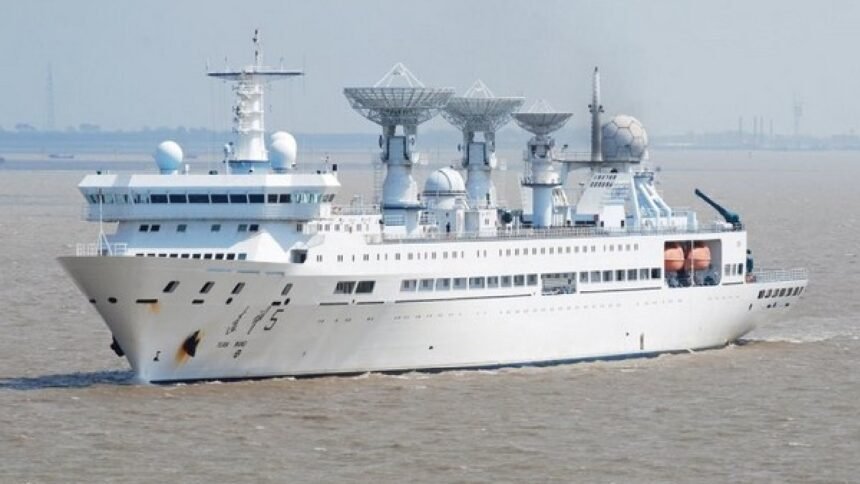
The Yuan Wang class ships are the best of China’s ocean track power. Run by the PLA’s Strategy Support Force (SSF), these ships are made to track where ballistic missiles and space things go. But they do much more than that.

What They Can Do and How They Fight
The Yuan Wang 5 and Yuan Wang 6, each weighing about 25,000 tons, have big round radar dishes and new phased-array radar systems.
Missile Track: Their main job is to follow where missiles fly, stage breaks, and come back down. When put in the Indian Ocean during an Indian missile test, these ships can get data that shows how right the missile is, how much it can carry, and how it blocks—key facts for making anti-missile systems.
Signals Listen (SIGINT): Beyond just tracking movement, these ships are strong at listening to signals. They catch a wide range of radio waves, from Navy talks to radar marks of shore defense guns. Where they are placed says they watch Indian war places, like the Satish Dhawan Space Centre and the Eastern Naval Command.
What They Have Done (2022–2025)
The Yuan Wang ships are now working much more.
2022 First Time: In November 2022, the Yuan Wang 6 came into the IOR just before India was going to test its Agni series ballistic missile. The ship made India say it was not safe to fly; the test was stopped to keep missile facts secret.
2024 Come Back: In August 2024, the Yang Wang 7 was part of a three-ship group that stayed near India’s underwater test zone in the Bay of Bengal, at the same time India was ready to test a missile again.
2025 Big Return: In September 2025, the Yuan Wang 5 came back to the Indian Ocean. This send-out was very bold as it was at the same time India was ready to test a fast missile. Where the ship was put let it watch the whole path of the test flight.
2.The Xiang Yang Hong and Shi Yan Classes: The Ocean Mappers
While Yuan Wang ships look up at the sky, Xiang Yang Hong and Shi Yan ships look down into the water. These ships are said to be owned by civilian groups like the Ministry of Natural Resources or the Chinese Academy of Sciences (CAS), but their jobs are deeply tied to what the PLAN needs.
I. What Survey Ships Are There
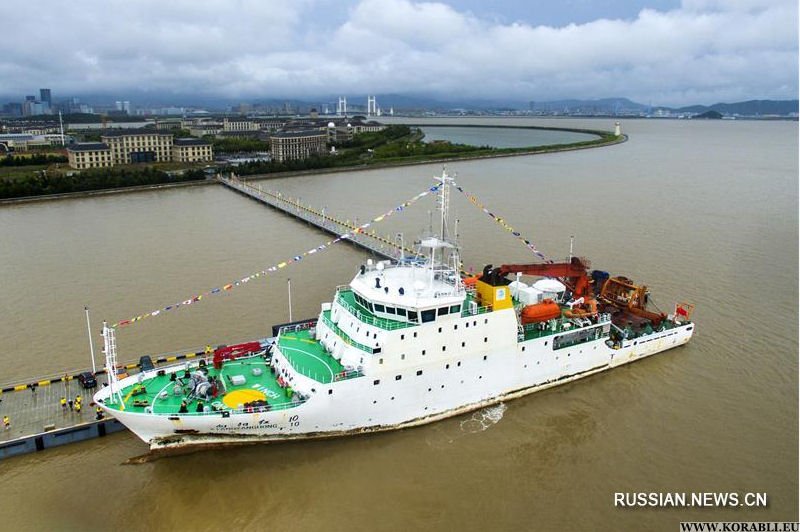
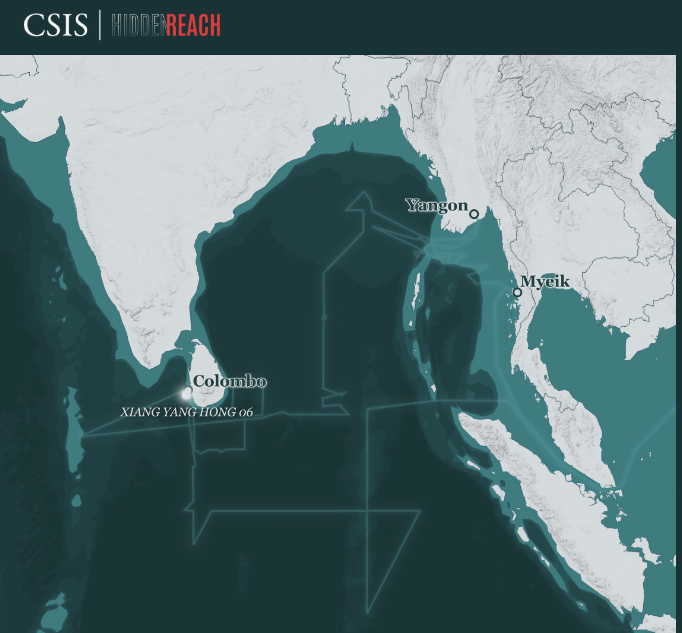
Xiang Yang Hong 03: This ship has been the most active in the area. It weighs 4,500 tons and has deep-water multi-beam sound checks and places for moving gliders and buoys. Through 2024 and 2025, it did big surveys in the Maldives EEZ and waters between Sri Lanka and the Maldives.
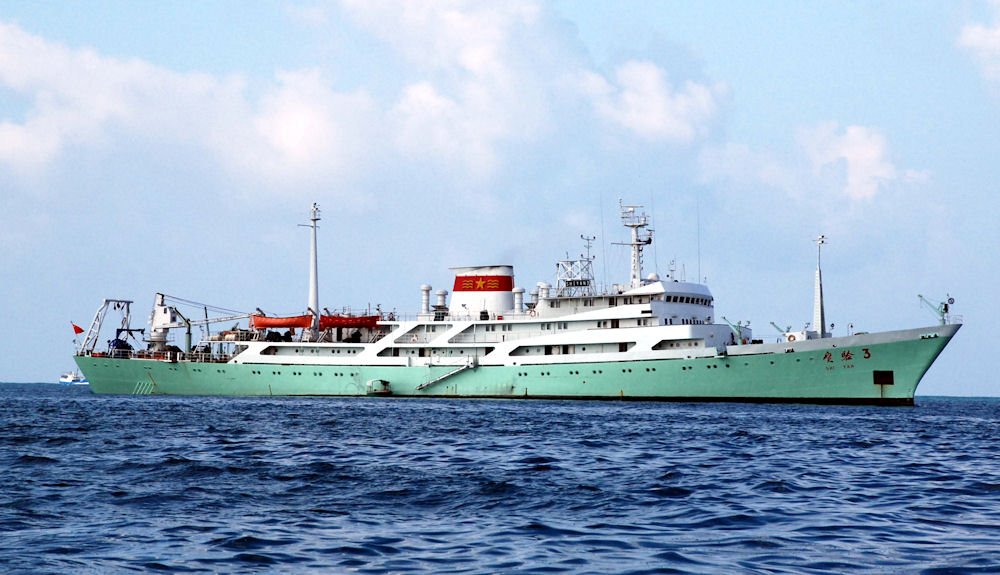
Shi Yan 6: A study ship made for checking seafloor rock layers, the Shi Yan 6 is made to look at the seabed shape. Its checks in late 2025 focused on the Ninety East Ridge, a big underwater mountain that changes how submarine sound works.
Da Yang Hao: A sea resource check ship that has modern underwater boats. Its place during the Operation Sindoor crisis in May 2025 made people worry about what it was doing.
II. Mapping the “Way In”
A big focus of these ships has been mapping the water shape of the “ways in” to the Indian Ocean—the deep ways near Indonesia (Sunda, Lombok, and Ombai-Wetar Straits). These are the main routes for submarines coming from the South China Sea.
Why This Matters: By mapping the heat and salt facts of these straits, the PLAN makes sure its submarines can move through these tight places with low risk of being heard. The Xiang Yang Hong ships have been seen doing “mow the grass” patterns—steady, back-and-forth check lines—in these exact areas, which shows very close fact work.
III. The Dongdiao Class (Type 815): The Signal Listeners
While often working in the Pacific, the Dongdiao-class help ships have started to be in the wider Indo-Pacific area, and sometimes get near the east sides of the Indian Ocean.
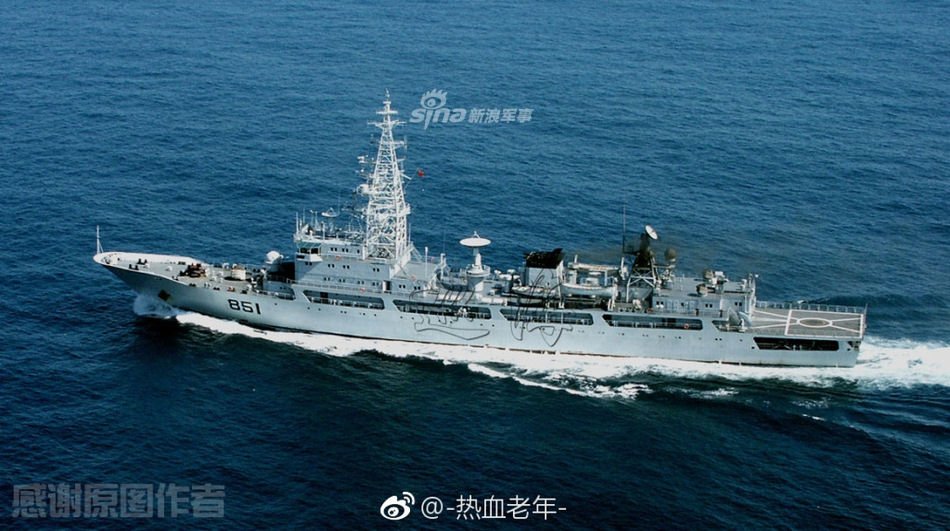
What They Do: These ships are known by their big round covers. They are made to listen to signals (ELINT), made to map the “signal order of battle” of other countries. They catch radar pulse facts, talk ways, and other radio waves to make a file of what other countries look like by their signs.
2025 Work: In late 2025, Dongdiao-class ships were seen moving through key ways in the West Pacific, often staying near US and Japan Navy practice. Whether they will be moved to the IOR is a big worry for Indian Navy planners.
Under the Water: Submarines and the Unmanned Robot Race
The top ships are just the helpers; the real danger is below. China is fast working on controlling the underwater space through a mix of crewed submarines and a fast-growing fleet of robot systems.
I. Submarine Sends: The New Normal
How often and how long PLAN submarine sends to the Indian Ocean are happening is going up fast. By 2025, the Indian Navy said it was watching a “steady presence” of outside groups, which is a soft way of saying Chinese submarines.
II. How They Act
Chinese submarines, with the Type 093 Shang-class attack submarines (nuclear-powered) and the Type 039 Yuan-class submarines (diesel-electric), use the water facts got by the study fleet to use the ocean as a shield.
Heat Layers: Submarines have been seen staying just below the heat layer, using the heat difference to bend active sound from top ships, making them very hard to see with ship sound readers.
Tight Spot Moves: The facts on the Indonesia straits let these submarines move through hard currents and shallow water under the sea, with no need to come up which would show them to space and air watch.
The Growth of Underwater Robots (UUVs)
Maybe the biggest change from 2020–2025 is the fast growth of Chinese UUVs in the Indian Ocean. These systems give cover and steady watch power that crewed ships cannot match.
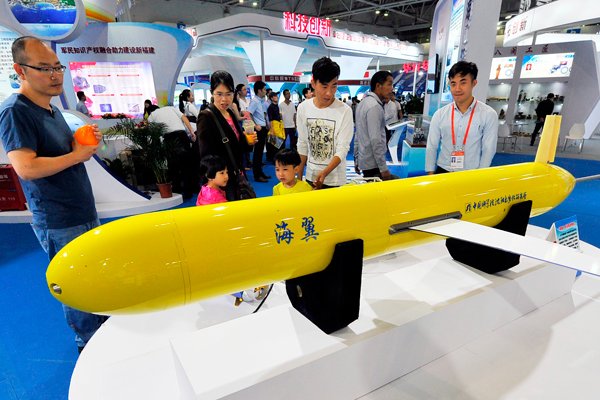
I. The Sea Wing (Haiyi) Glider
The Sea Wing is an underwater glider that uses weight changes to move, not a fan, which lets it work quietly for months.
How They Use It: The PLAN has sent these gliders in “big groups.” In December 2019, the study ship Xiang Yang Hong 06 sent out 12 of these gliders in the Indian Ocean. By 2025, gliders found in Indonesia show a steady, hidden sending plan.
What They Do: While they get ocean facts (salt, heat), they also have sound listeners. A group of these gliders can act as a moving “sound watch system” (SOSUS), listening for the sound signs of moving Indian or US submarines. The fact that these drones were found near the way in gates shows they are watching submarine traffic going in and out of the zone.
II. The HSU-001 Big Underwater Robot
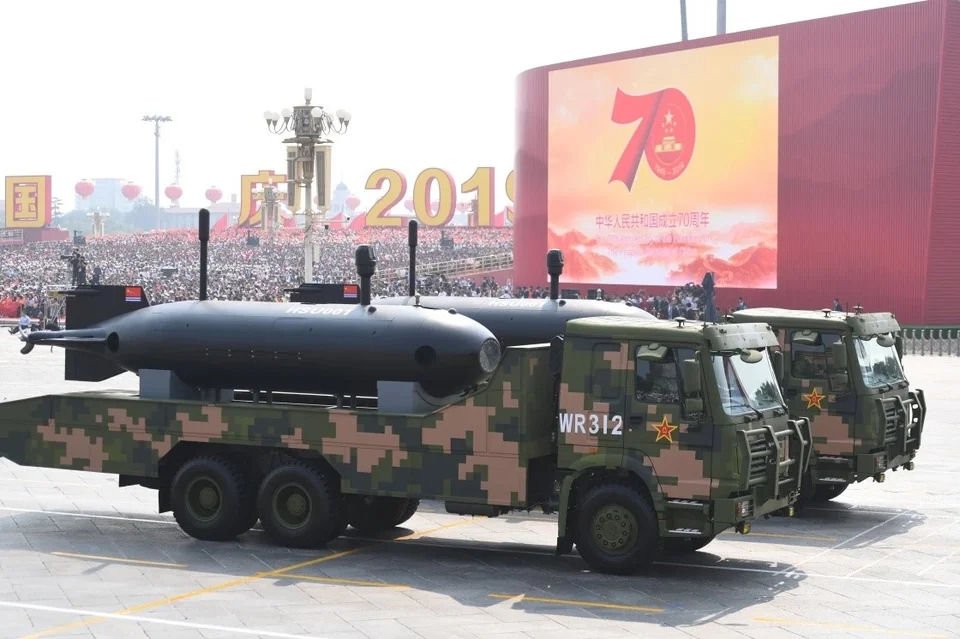
First shown in 2019, the HSU-001 is a higher level of power. Not like the quiet gliders, the HSU-001 is a big, fan-moved free-thinking machine that can carry big loads.
Seabed War: Smart checks say the HSU-001 is made for seabed war—watching underwater wires, sound networks, and seafloor tools. The sending of “mother ships” like the Xiang Yang Hong 01 that can launch such big robots means the power to tap or break key underwater talk wires in the IOR.
III. The JARI-USV-A “Killer Whale”: The Robot Fighter
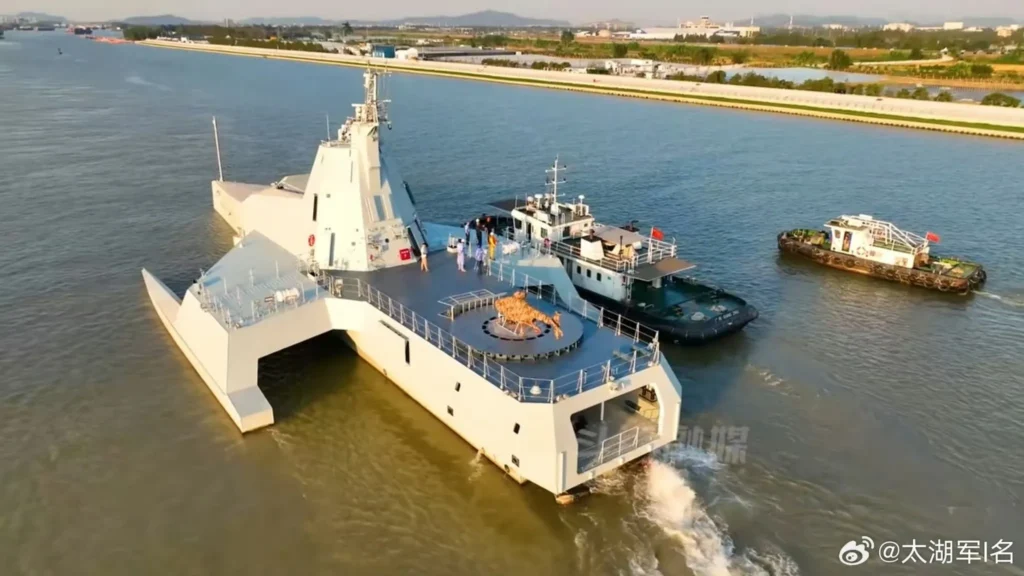
In late 2025, the way of thinking about robot systems changed from watching to fighting with the sighting of the JARI-USV-A in the area.
What It Is: A 58-meter, 420-ton three-part hull no-crew drone ship. It has a phased-array radar, a launch system for missiles that fight ships and air, and fish-shooting tubes.
Why It Matters: The JARI-USV-A is made for free-thinking “wolf pack” ways of fighting. Its place in the Indian Ocean shows China’s plan to fight for sea control with no risk to crewed big ships. Its small radar mark (stealth) lets it get near Indian top group ships without being seen to send a hitting strike or give facts to long-way missile forces.
The High Ground: Hidden Flying and Space Watch
The use of the Indian Ocean as a war tool is not just in the water; it also goes into space. The use of high-height watch balloons is a big, low-cost uneven danger to Indian air guard.
I .The Balloon Danger
After the well-known bringing down of a Chinese watch balloon over the US in 2023, looking at the same things in the Indian Ocean got more focus.
Over Andaman and Nicobar: In January 2022, a high-height watch balloon was seen over the Andaman and Nicobar Islands, home to India’s three-part war command. At that time, how to answer was not sure because the danger was not clear.
The Tech: Study of the trash from the US event showed these balloons are not just weather machines. They carry smart loads with radar that sees through clouds (SAR) and signal listen (SIGINT) arrays that can find where talks come from. Key thing is, they often use goods you can buy from the West to hide what they really are.
Why It Works: Working at heights above 60,000 feet, these balloons are higher than most fighter jets and business planes can go. They can stay in one place for a very long time, which lets them watch a fixed spot (like a missile test place or Navy yard) in a way that satellites that go around Earth cannot.
India’s Air Answer
By 2025, the Indian Air Force (IAF) had changed its battle plan to meet this danger.
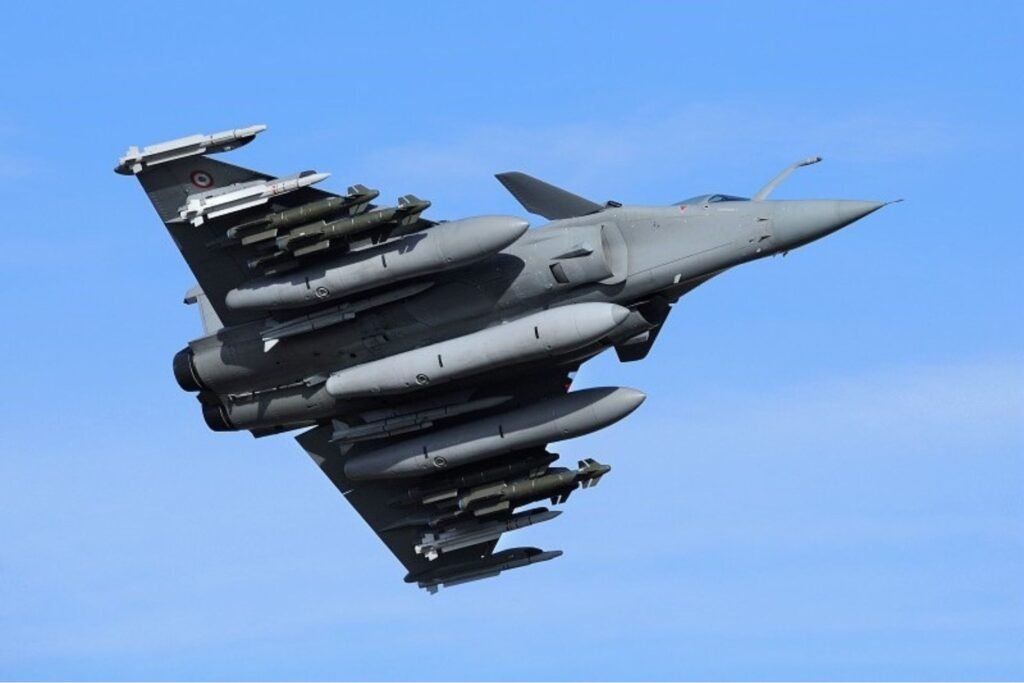
Rafale Hits: The IAF made special ways to hit high things. Practice with Rafale jets with Meteor and MICA missiles showed they can hit things at 55,000+ feet, which says they are ready to bring down future balloons.
The War Areas: Key Political Hot Spots
How well China’s ocean and air tools work is made bigger by a web of war access points. Between 2020 and 2025, the map of the Indian Ocean changed, giving the PLAN key supply hubs.
I. The Maldives: A Big Change
The Maldives, sitting on the key shipping ways of the center Indian Ocean, has become the main focus of China’s “areas, not bases” plan.
The Muizzu Change: The pick of President Mohamed Muizzu brought a sharp move away from India. In early 2024, his group signed many war and trade deals with Beijing, which ended India’s job as the main security helper for the islands.
Feydhoo Finolhu: One of the most argued about changes is the lease of Feydhoo Finolhu, an island just 3 sea miles from the main city, Male, to a Chinese group for 50 years. While officially a tour work, smart checks fear its spot—over the main global port and Navy way—makes it a great spot for a signal listen (SIGINT) post.
Putting It to Work: What really happens is that Chinese study ships are given leave to dock. The Xiang Yang Hong 03 docked in Male in early 2024 and again in 2025, even though India said no. These port visits let Chinese ships get new supplies and change crews, which lets them keep doing surveys for months with no need to go back to China.
II. Sri Lanka: The Steady Hub
Even though India pushed, which led to a brief stop of study ship visits in 2024, Sri Lanka’s Hambantota Port stays a key spot.
Going Around the Ban: Chinese ships often change their names or use holes (like saying “fish farm study” for the Lan Hai 101) to keep going to Sri Lankan ports. The debt trap world around Hambantota means that Colombo finds it hard to say no for long to Beijing’s asks.
III. Mauritius and the Diego Garcia Question
The south Indian Ocean has also seen more friction.
Chagos Question: The 2025 deal where the UK gave Chagos Islands to Mauritius brought in new war doubt. While the US base on Diego Garcia is kept safe with a 99-year lease, fears stay that Mauritius may let Chinese trade or study folks be in the near waters, which could hurt how the base works safe.
China Wanting Mauritius: Beijing has strongly courted Mauritius with build-up gifts, aiming to set up a place that could watch traffic around the Cape of Good Hope and the US work at Diego Garcia.
Using the Facts: Links with Indian War Moves
The sending of Chinese ships is not random; it is closely tied to India’s war plan times. A time-by-time study of ship moves versus Indian war work shows a clear pattern of watching.
| Date | Indian Event | Chinese Asset Deployment | Activity/ Impact |
| Nov. 2022 | Planned Agni Missile test. | Yuan Wang 6 enters IOR | -India issued NOTAM. -Test postponed due to Spy ship presence. |
| Aug. 2024 | Missile Test (Bay of Bengal) | Xiang Wang 03, Yang Wang 7 | -Vessels positioned near NOTAM zone -Loitered during test window. |
| Jan.2025 | Submarine Exercises | Xiang Yang Hong 03 | -Extensive surveys in Maldive’s EEZ -Mapping acoustic conditions. |
| May 2025 | Operation Sindoor | Da Yang Hao | -Positioned in Arabian Sea. -Provided intel support to Pakistan. |
| Sep. 2025 | Hypersonic missile test | Yuan Wang 5 | -Re-entered IOR -Tracked full trajectory of the test. |
| Dec. 2025 | Planned long range test | Lan Hai 101, Shi Yan 6, Shen Hai Yi Hao, Lan Hai 201 | -“Swarm” deployment of 4 vessels to cover multiple tracking angles. |
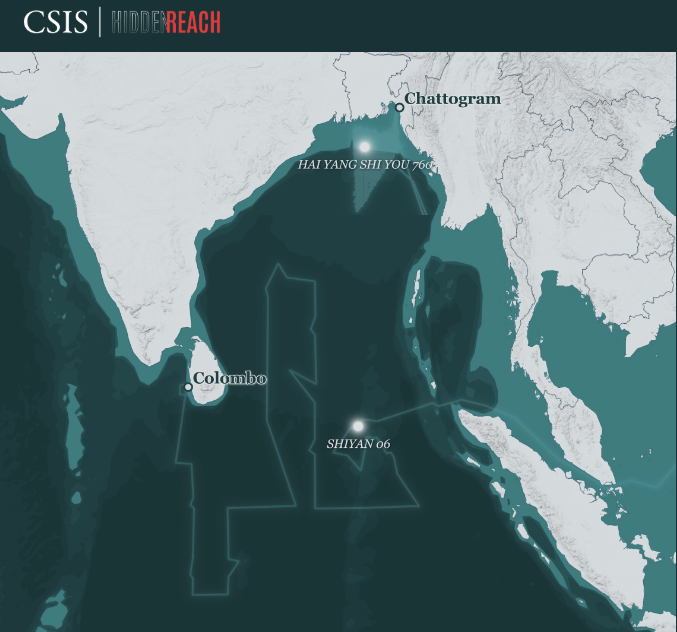
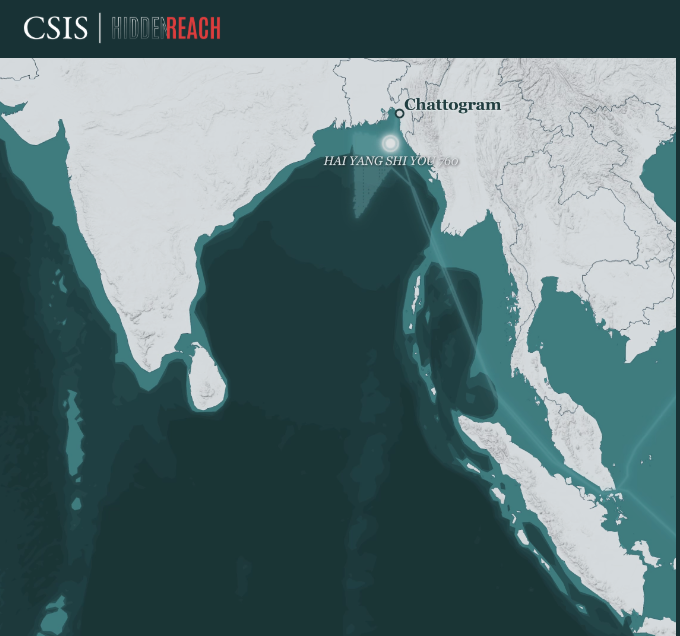
This pattern shows that the “study” fleet works as a helper smart group of the PLA, giving real-time hard facts on India’s most risky war skills.
Operation Sindoor (May 2025) – The Big Test of Hidden War
The possible danger posed by Chinese ships became real during “Operation Sindoor” in May 2025. This fight is a clear case study of how China backs its friends through “non-hit” ways.
I. What Started the Fight and When It Happened
April 2025: A huge terror act in Pahalgam by Pakistani Radical Islamist terrorist, Kashmir, killed 26 people.
May 6, 2025: India did “Operation Sindoor,” a hitting war push at major terror places in Pakistan-held Kashmir and Punjab.
May 7-10, 2025: Pakistan hit back with “Operation Bunyan-un-Marsoos.” The fight had air strikes, missile trades, but not hitting a single one at target.
II. The “Hidden Help”: China’s Role
While China did not fight with guns, its help for Pakistan was wide and key in the smart and talk parts.
Ocean Watch: The Chinese study ship Da Yang Hao was set in the Arabian Sea. Smart checks say it watched the moves of the Indian Navy’s West Fleet, with the carrier group around INS Vikrant. This fact, with what the carrier sent out in signals and when its air group flew out, was said to be sent to the Pakistan Navy.
Talk War: At the same time as the hitting strikes, a smart lie plan was done. Talk apps were full of computer-made images that said to show trash from French made Indian Rafale jets, said to have been hit down by Pakistani (Chinese-made) J-35 fighters. The goal was to hurt how the Indian people felt and make the power of the Rafale seem bad.
War Sign: The fact that Chinese ships were there worked as a soft stop, making it hard for India to block the Pakistan Navy. The Indian Navy had to use big power to watch these Chinese ships, which took them away from hitting the Pakistan Navy.
III. What Came After
Operation Sindoor was a win for India, with good hits on terror places. But it showed a war problem: in any future fight with Pakistan, India must think about the “hidden help” of Chinese smart work, which makes a fight with two sides into a fight with three.
India’s Fight Back: From Stop to Active Block
In answer to this tightening around, India’s ocean strategy has moved from quiet stop to active “Watch All Ocean Space” and active block.
I. Watch Everything
By late 2025, the Indian Navy had put in place a full watch web.
“Every Ship Watched”: Navy Second Chief Vice Admiral Sanjay Vatsayan said in public that the Navy watches “each and every Chinese ship” going into the IOR. This is done through a mix of space facts (RISAT/GSAT group), long-way patrol planes (P-8I Poseidon), and high-altitude long-time (HALE) drones.
Drone Following: The US-given Sea Guardian drones are now the top tool for this. In September 2025, a Sea Guardian watched the Yuan Wang 5 all through its move, sending live video and signal facts back to Navy command spots.
II. Active Block and Signal Fighting
India has begun to make Chinese spy work cost more.
Push Out and Block: Building on past uses like the 2019 push out of the Shi Yan 1 from the Andaman EEZ, Indian Navy ships now roughly follow and question Chinese ships working in risky zones.
Signal Block (ECM): Facts from 2025 say the Indian Navy has used jamming ways to make Chinese catch less good. A Chinese ship watched by the group Unseen labs was seen turning off its spot tracker and working in a “talk dark” way, likely because India was using signal pressure.
III. The Base Race: Agalega and the Andaman Line
To meet China’s “areas,” India is making its own bases strong.
Agalega Island (Mauritius): The new base on Agalega Island is now fully working. With a 3,000-meter run-way and deep-water dock, it hosts P-8I planes in turns. This base gives India a “south eye,” letting it watch the Mozambique way and the ways near Diego Garcia, which in effect stops China’s power in Mauritius.
Andaman and Nicobar Command (ANC): The ANC has been made much stronger. Build-up work now lets it have fighter jets (Rafales) all the time and more watch gear to fight the balloon and drone dangers from the east.
What May Come: The Path of the Fight (2026–2030)
As we look past November 2025, the path of how the Indian Ocean will be safe points to more rough times.
More Robot Ships: The good tests of the JARI-USV-A say that no-crew war ships will soon be a steady part of PLAN sends. India will need to make special ways to fight no-crew ships and hard stop power.
The Atom Shadow: With the deep ocean mapping done, the sending of Chinese atom sub ships (SSBNs) on war steps in the Indian Ocean is the next set step. The sound facts got by the Xiang Yang Hong fleet has made this possible.
Rough Politics: The cases in the Maldives and Mauritius are still shaky. The fight for the power in these island lands will keep being the main thing that changes the war balance.
Conclusion
The use of the Indian Ocean by the People’s Republic of China is a very easy. Through a calm, steady push of sea science study, Beijing has taken away the sound cover of the ocean, turning the once depths into a clear fight space. The “study” ships are the front; the submarines and stealth drones are the main force.
For India, the time of having all power in its own sea back yard is over. The things that happened in Operation Sindoor and the steady place of the Yuan Wang and Xiang Yang Hong fleets show that the danger is real, smart, and deeply part of China’s world war strategy. The answer has been strong—with base building, watching, and active block but the tech and strategy race for the Indian Ocean is only just starting.